
Last updated November 16, 2026
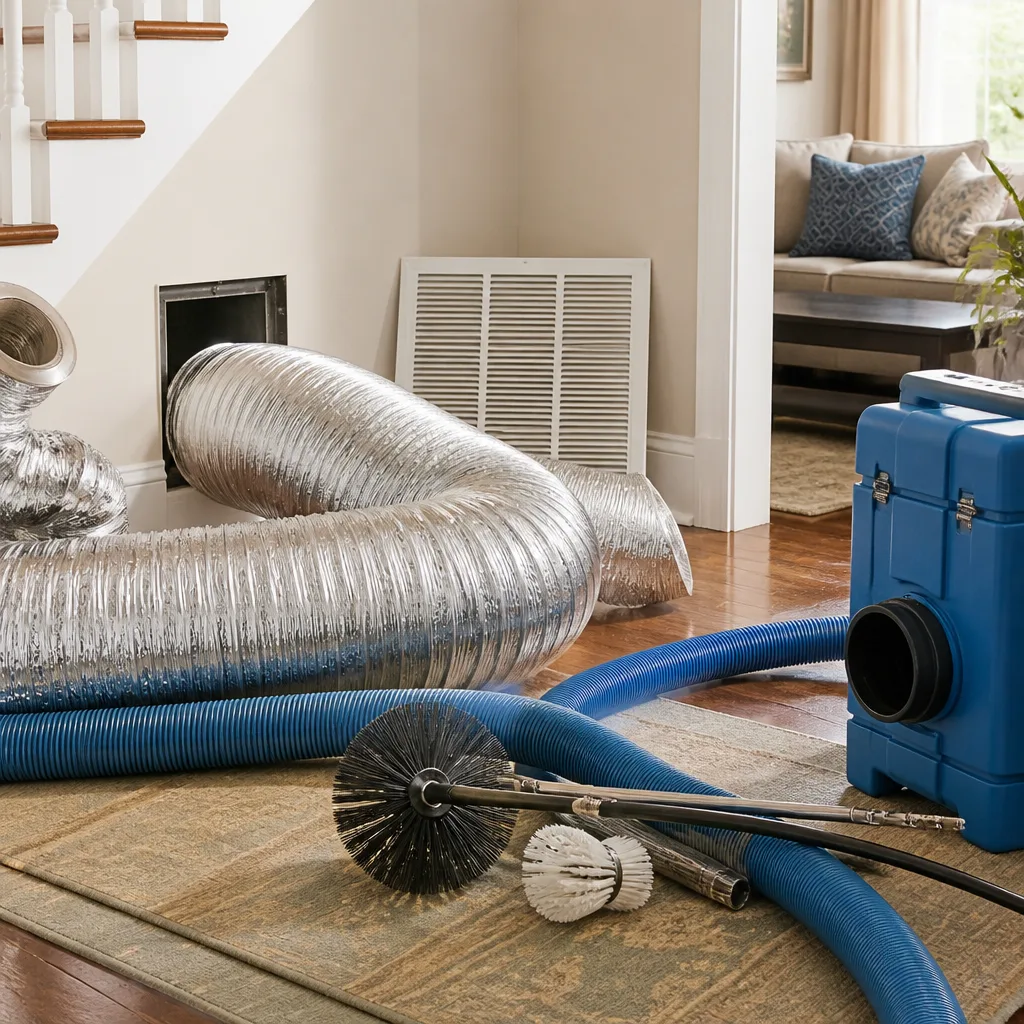 Whole-home duct cleaning
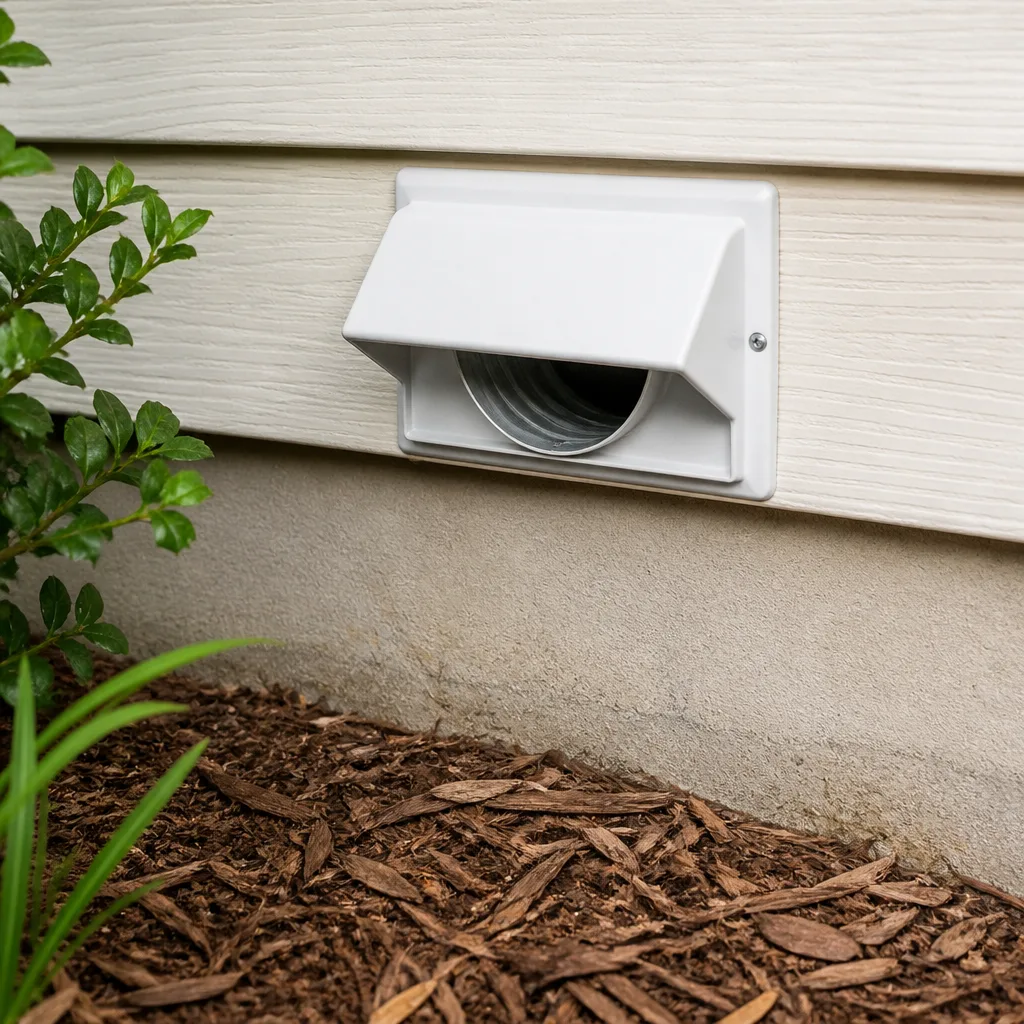 Dryer vent cleaning
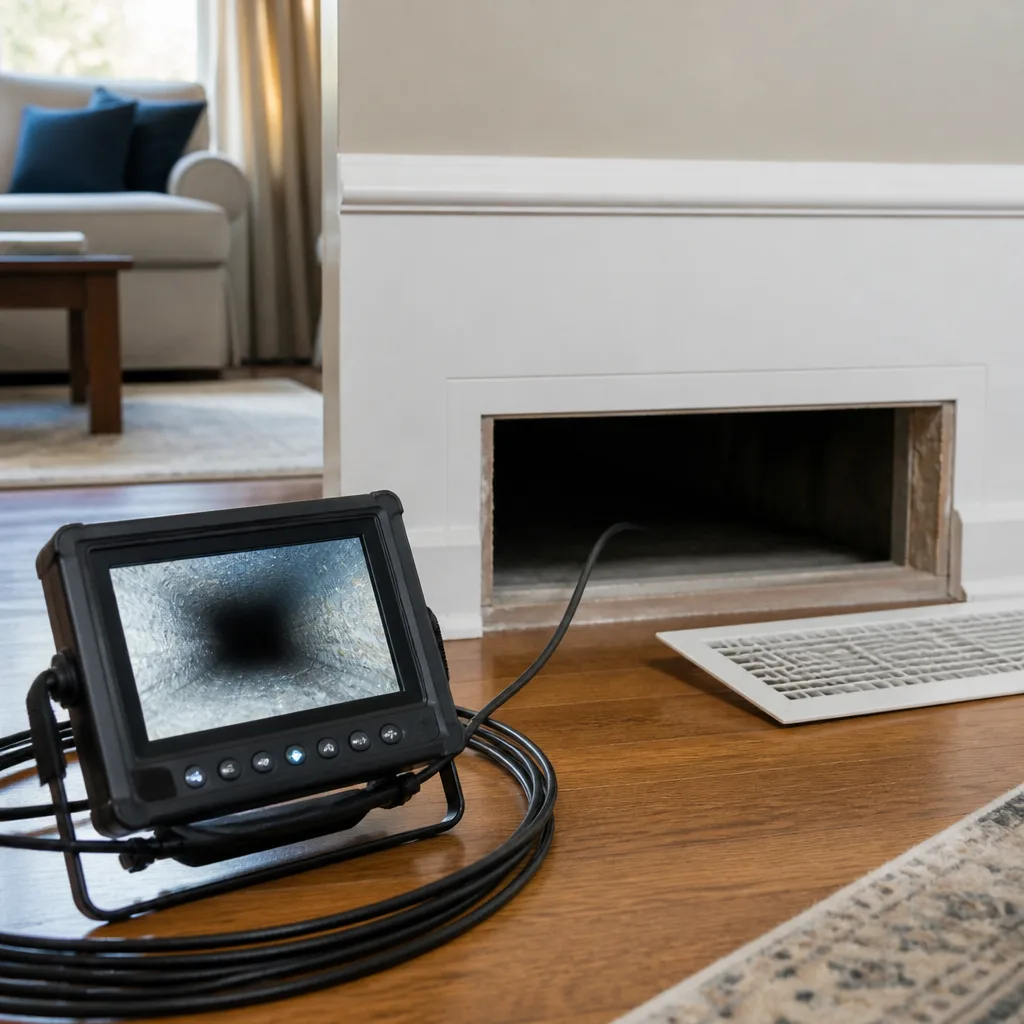 Camera inspection
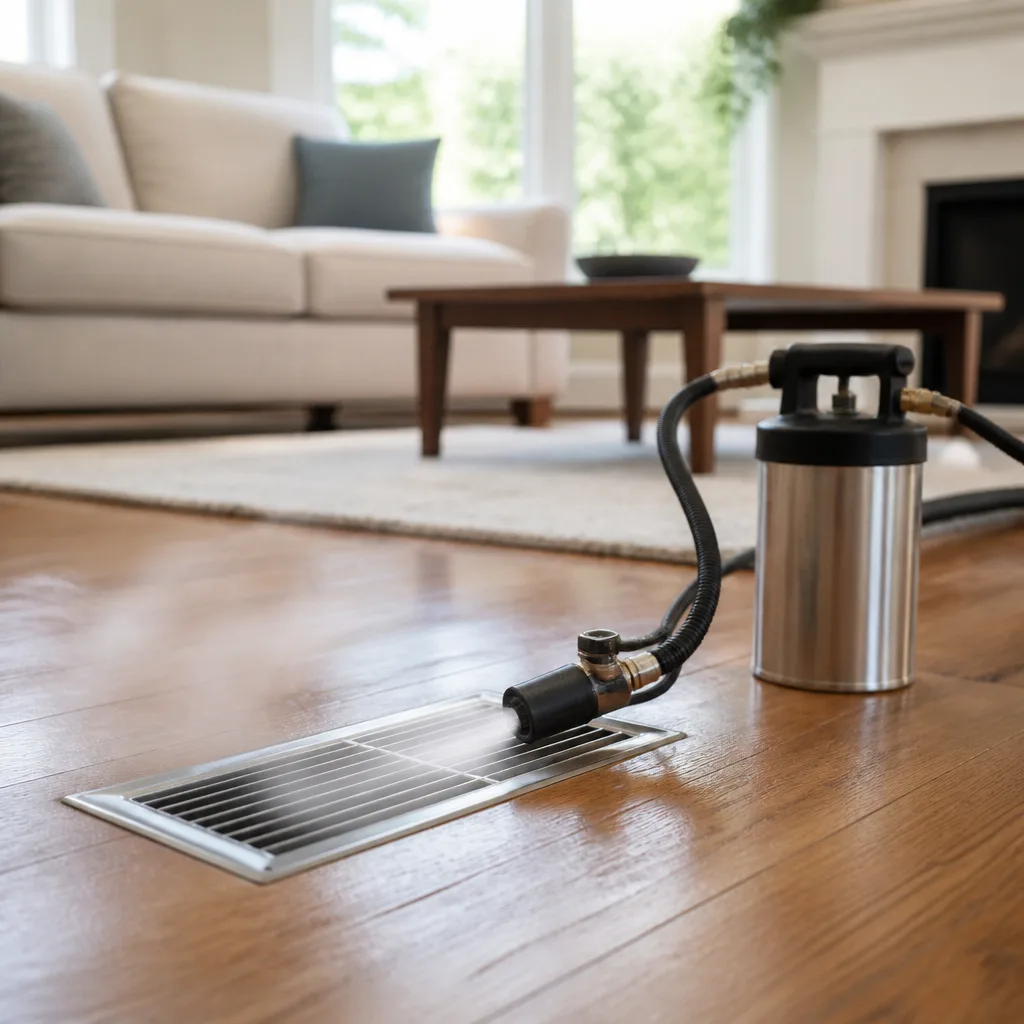 Sanitizing & deodorizing
Whole-system duct and dryer vent check with before-and-after photos - you see exactly what came out of your vents
That "$99 whole-house special" is a bait ad - the real number appears once they are in your hallway, or the "clean" is a shop-vac at the register. We photograph the inside of your ducts before and after instead.
How to Hire an Air Duct Cleaning Contractor in Clearwater: A Step-by-Step Guide
Florida does not require a specialty license to run a duct cleaning business. That single fact explains most of what goes wrong in this market, because the operator quoting you $89 for a whole house is counting on you not knowing it. No state board reviews their equipment, their training, or their workmanship. When the barrier to entry is a van and a phone number, the vetting has to come from you, and it has to be specific. This guide gives you the exact questions that separate a capable operator from a vacuum with a business card, what a credible answer sounds like, and how to read a quote line by line before you sign anything. We’ll cover equipment, credentials, pricing structure, and the Florida red flags worth walking away from.
Quick Answer
To hire an air duct cleaning contractor in Clearwater, verify the equipment first (ask about negative air machine CFM, brush system type, and truck-mount versus portable), confirm whether the company is a NADCA member or actually NADCA-certified, and insist on whole-system pricing rather than per-vent quotes. Get before-and-after photos, ask for references with similar homes, and refuse any “mold treatment” add-on offered before testing. A credible contractor answers all of it without flinching.
Styles & brands we work with
- Whole-home duct cleaning
- Dryer vent cleaning
- Camera inspection
- Sanitizing & deodorizing
Table of Contents
- Why Florida’s Licensing Gap Changes How You Vet
- The Equipment Questions That Reveal Real Capability
- NADCA Membership vs. NADCA Certification: Know the Difference
- How to Read a Duct Cleaning Quote Line by Line
- Florida Red Flags: Bait-and-Switch and Upsell Traps
- Reference Checks and Before/After Documentation
- A Step-by-Step Hiring Process
- What Clearwater Homes Need From a Contractor
Why Florida’s Licensing Gap Changes How You Vet
Most states require some form of registration or specialty license for duct cleaning. Florida does not. The state licenses HVAC contractors for installation and repair work, but routine duct cleaning falls outside that requirement, which means anyone with a shop vacuum and a magnetic sign can advertise the service legally. That’s not a knock on every small operator, but it does mean the credential you’d normally lean on to filter the market simply isn’t there in Clearwater.
So what replaces it? A combination of equipment disclosure, professional association standing, and documentation practices. A legitimate operator will volunteer this information because they’ve invested in it. A van-and-vacuum outfit will get vague and defensive, or pivot to price.
Here’s what the licensing gap actually means for you in practical terms:
- You can’t check a license number. There’s no state database to verify. Any number offered as a “duct cleaning license” deserves a follow-up question about what agency issued it.
- Insurance is your real check. Ask for a certificate of insurance. General liability coverage is the only meaningful protection if something gets damaged in your home.
- Equipment investment signals seriousness. Professional platforms cost real money. A contractor who owns Rotobrush or Nikro systems has capital committed to the trade.
- Association standing carries weight. NADCA (the National Air Duct Cleaners Association) sets the industry standard even where the state doesn’t.
The good news is that Clearwater has genuine specialists alongside the fly-by-night operators. The work is telling them apart before they’re in your living room. If you want a baseline on what professional duct cleaning in Clearwater actually involves, our service page breaks down the process. But read the rest of this guide first, because knowing the right questions matters more than knowing the right company name.
The Equipment Questions That Reveal Real Capability
Equipment is the most reliable proxy for capability in this trade, because it’s expensive, specific, and impossible to fake convincingly. A contractor running professional-grade gear will name their equipment without hesitation. One running a consumer vacuum will change the subject. Ask these questions directly and listen for specifics, not adjectives.
What negative air machine do you use, and what’s its CFM rating?
The negative air machine is the heart of a proper cleaning. It creates negative pressure in the duct system so dislodged debris is captured rather than blown into your living space. CFM (cubic feet per minute) is the airflow rating. Ask the number. A real answer sounds like “we run Abatement Technologies units” or specific CFM figures. “We’ve got a strong vacuum” is not an answer. High CFM plus HEPA filtration is what keeps particulate out of your air during the job.
What brush system do you use for the ducts themselves?
Mechanical agitation matters as much as suction. A vacuum alone won’t loosen caked dust from duct walls. Professional platforms like Rotobrush use rotating brush systems driven through the duct to scrub surfaces while the vacuum pulls debris out. Ask whether they use a mechanical brush system or compressed air only. Air-only “cleaning” is a blowout, and it moves debris around rather than removing it.
Truck-mount or portable?
Truck-mount units generally deliver higher sustained airflow and are common on larger jobs. Portable units are more flexible for access and can work well in residential settings where driveways or hose runs are tight. Neither is inherently wrong, but a contractor should be able to explain why they use what they use. A vague answer here is a warning sign.
Do you run HEPA filtration on the exhaust?
This is where operators separate. HEPA-level filtration captures fine particulate down to very small sizes, which matters for households with allergy sufferers, pets, or anyone sensitive to airborne dust during the work. Ask whether the exhaust passes through HEPA filtration and whether they set up containment. Our technicians have up to 13 years of experience, and the equipment question is usually where the conversation gets interesting. A capable operator will light up talking about it.
NADCA Membership vs. NADCA Certification: Know the Difference
NADCA membership and NADCA certification are two different things, and some contractors blur them on purpose. NADCA is the National Air Duct Cleaners Association, the trade body that publishes the ACR (Assessment, Cleaning, and Restoration) standard most credible operators work to. Membership means a company has joined and, in good standing, has committed to the association’s code of ethics. Certification means an individual technician or firm has met a specific assessment standard and passed a qualifying process.
Here’s how to read the distinction:
- NADCA member: the company belongs to the association. This is a baseline credibility signal. It’s verifiable on NADCA’s website.
- NADCA certified: typically applies to individuals who have passed the association’s certification exam, or to firms meeting a defined certification standard. Also verifiable.
- “NADCA trained” or “NADCA standards”: means nothing specific. It’s a phrase, not a credential.
- Unverifiable claims: if a contractor says “certified” but can’t tell you certified by whom, treat it as marketing.
Ask the direct question: “Are you a NADCA member, and are you NADCA-certified?” Then check. The association publishes a member directory. A contractor who’s legitimate won’t mind you looking it up while they’re still in the room. This matters even more in a state that doesn’t require licensing, because the association’s standard becomes your only written benchmark for what “clean” means in your Clearwater home.
One practical note: NADCA membership isn’t a guarantee of good work, and plenty of solid operators aren’t members. But it is a verifiable claim, and verification is the whole point of this exercise. A contractor making a checkable claim is a contractor you can start to trust.
How to Read a Duct Cleaning Quote Line by Line
Per-vent pricing and whole-system pricing sound similar and produce very different outcomes. A per-vent quote prices each register individually, which creates an incentive structure where the finished cost depends on how many vents the contractor counts and how they count them. A whole-system quote prices the entire job as one agreed figure, before any work starts. The second structure is what you want, because it removes the incentive to inflate the count once the equipment is already in your driveway.
| Quote Structure | What It Actually Means | What to Watch For |
|---|---|---|
| Per-vent pricing | Each register is a line item; total grows with vent count | Vent counts inflated on arrival; “additional vent” fees after the fact |
| Whole-system pricing | One agreed price for the full duct system | Confirm what “full system” covers in writing: returns, plenum, main trunk |
| Add-on billing | Base price plus separate charges for brush work, sanitizing, filter service | Add-ons that should be part of standard cleaning; treatment before testing |
| Inspection-first quotes | Assessment before pricing, written estimate sets the final cost | Best practice; ask what the inspection covers |
When you read a quote, walk down the line items and ask three questions about each: What exactly is this? Is this part of cleaning the system, or an extra? And is this price final, or does it depend on what you find? A contractor with a clear process will answer these without frustration.
What “full system” should cover
A complete quote should name the supply and return sides, the main trunk, the branch runs to each register, and the air handler cabinet itself. If a quote says “duct cleaning” and nothing else, you don’t yet know whether the return side is included. Ask. The return side is often the dirtier half of the system, and a “cleaning” that skips it is a partial job at a full price.
Where the estimate language matters
A written estimate should state the price and the scope. Not “starting at.” Not “typical range.” If a contractor won’t put a firm scope and price in writing before work starts, that’s the single biggest red flag in this trade. Our approach is one flat price per system agreed before work begins, no per-vent pricing, and before-and-after photos of your own ducts so you can see what was actually removed. For more on how professional air duct cleaning is scoped in this market, that’s the standard to hold every contractor to.
Florida Red Flags: Bait-and-Switch and Upsell Traps
The cheapest quote in Clearwater is usually the most expensive job in the end, and the mechanism is predictable. A teaser price gets a van to your door. Once the equipment is inside, the price changes. The add-ons appear as findings, and the customer, already committed and slightly embarrassed to push back, pays. Knowing the playbook is how you avoid it.
- The teaser price that triples on arrival. A whole-house quote that’s a fraction of any realistic range is not a bargain; it’s a door-opener. Ask what the quote includes in writing before they arrive, and confirm the figure is final.
- “Mold treatment” offered before any testing. Mold remediation requires a finding, and a finding requires an assessment. A contractor who offers antimicrobial fogging as a standard add-on before anyone has tested for moisture or microbial growth is selling a chemical application, not solving a problem.
- Unlicensed chemical applications. Fogging a duct system with an antimicrobial or sanitizer is a chemical application. With no specialty licensing in Florida, the only check on what goes into your air is the contractor’s judgment. Ask what product they use, why, and what its label says about occupied spaces. If they can’t answer, decline.
- “We found duct damage” once the job starts. Damage happens, but it should be photographed and shown to you before any repair price is quoted. A damage claim without a picture is a sales pitch.
- No before-and-after documentation offered. A crew that cleans thoroughly photographs what they pulled out. If photos aren’t part of the process, ask why.
- Pressure to decide on the spot. A legitimate estimate is something you can sit with. Urgency is a tactic.
There’s a cleaner version of the same trap on the repair side: a contractor “discovers” that a section of duct needs replacing and quotes it without showing you the problem. Repairs are real and common in older Clearwater homes, and we offer duct repair as a separate service precisely because we find damaged runs during cleaning often. But the standard is the same: show the customer the problem before quoting the fix. If a contractor won’t crawl back under the house to show you, be skeptical.
Reference Checks and Before/After Documentation
References are only useful if you ask the right questions, and most people ask the wrong ones. “Were you happy?” invites politeness. You want specifics about the job, the process, and the follow-through. Ask for references from homes similar to yours in size and age, because a duct system in a 1970s Clearwater ranch house is a different job than one in a newer build.
What to ask a past customer
- Did the price they quoted match the price you paid? This is the single most important question.
- Did they show you before-and-after photos of your own ducts, or only a generic gallery?
- Did they explain what equipment they’d use before starting, or just arrive with a van?
- Did anything in the quote change once work began, and what was the reason given?
- Did they clean up after themselves and leave the registers sealed and reinstalled properly?
- Would you use them again, and why?
What before-and-after documentation should look like
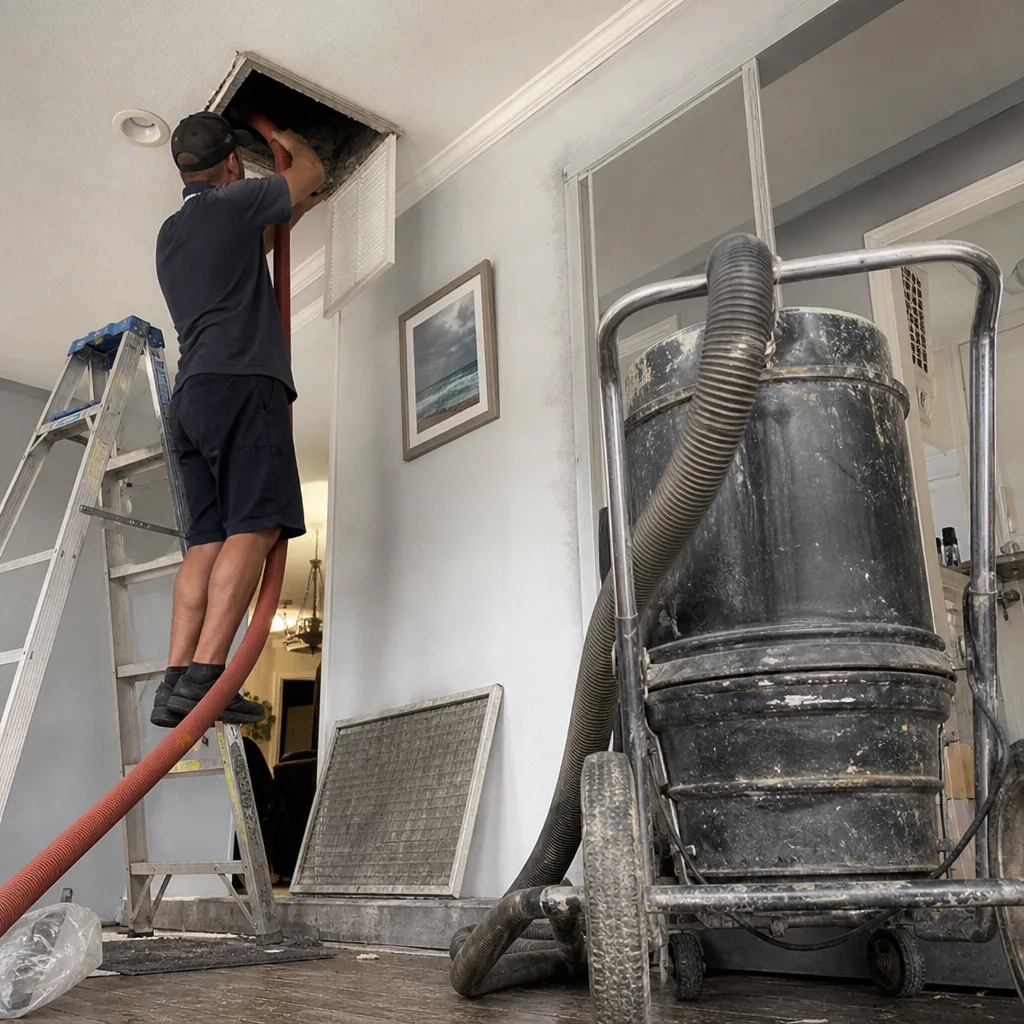
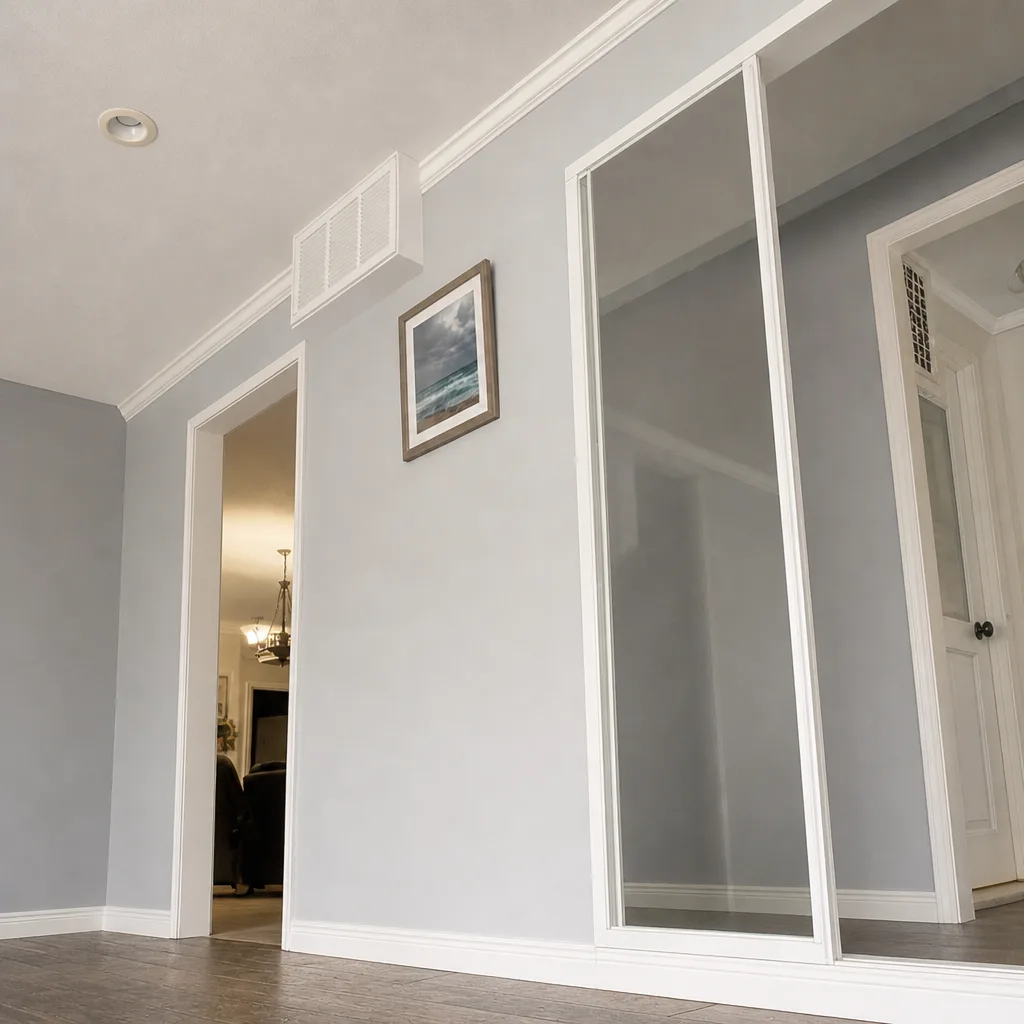
Proper documentation shows your ducts, from inside, before the equipment went in and after it came out. It shows the debris captured in the vacuum chamber or filter, not just a smiling technician. It’s labeled so you know which register is which. If a contractor’s idea of proof is a stock photo of clean-looking ductwork, that’s not documentation; that’s marketing.
Ask to see a sample of what a real report looks like before you book. A capable operator has one ready. That’s also a fair test of whether the work is thorough enough to be worth photographing. For a sense of what that process looks like for a Clearwater home with its own quirks, our local page walks through it.
A Step-by-Step Hiring Process
Here’s the process in order, from first search to signed estimate. It takes a couple of phone calls and one site visit, which is a reasonable investment given that the contractor will be working inside your home’s ventilation system for a few hours.
- Shortlist three contractors. Look for ones who name their equipment on their website or in their advertising. That’s a filter in itself.
- Ask the equipment questions by phone. Negative air CFM, brush system, truck-mount versus portable, HEPA filtration. If the person on the phone can’t answer, ask for someone who can.
- Ask about NADCA standing. “Are you a member, and are you certified?” Write down the answer and verify it on the association’s site.
- Request a written estimate. Whole-system scope and price. Confirm what’s included: supply, returns, main trunk, branch runs, air handler cabinet.
- Ask for the insurance certificate. General liability at minimum. No certificate, no booking.
- Request a sample before-and-after report. See what documentation you’ll actually receive.
- Call two references. Use the questions above. Listen for the price-match answer especially.
- Read the estimate line by line. Anything vague gets a phone call before you approve it.
- Confirm the price is final. One flat price per system, agreed before work starts. Put it in writing.
- Book, and ask what to expect. A contractor with a clear process will tell you how long it takes, what they’ll need access to, and whether you should plan on being home.
That’s the whole game. Anyone who passes all ten without flinching is worth hiring. Anyone who stumbles on more than one is worth passing on, even if they’re the lowest quote.
What Clearwater Homes Need From a Contractor
Clearwater’s housing stock runs from mid-century block homes to newer construction, and the duct systems inside them differ accordingly. Older homes often have flex duct that’s been retrofitted, patched, or rerouted over the years, and those systems benefit from a contractor who can do repair as well as cleaning. It’s a regular occurrence on a cleaning job to find a disconnected run, crushed flex, or a joint that’s been leaking into an attic for years. A clean-only contractor has to hand that job off to someone else. A contractor with a repair scope can correct it and then clean the system it belongs to.
Filtration hardware matters here too. Homeowners with allergy concerns or pets often want more than a filter change, and some systems benefit from assessing the filter cabinet and components themselves. Familiarity with Honeywell and Aprilaire components means a contractor can clean the system and address the filtration hardware in a single visit rather than sending you to a second company for parts.
One thing local homeowners ask about regularly is dryer vents, and it’s worth raising in the vetting process. Lint buildup in a dryer vent is a documented fire risk, and a contractor who treats dryer vent cleaning as a real safety service rather than a cheap add-on is signaling how they think about the rest of the ventilation system. Our scope covers all three: cleaning, repair, and dryer vent service. That’s deliberate, because the system in a home interconnects.
The bottom line for local context: ask any contractor whether they can assess and document what they find, repair the problems they discover, and clean the full system including the filtration side. If the answer to all three is yes, you’re dealing with a specialist. If any is “we don’t do that,” you know the limit of the job before you book it.
Common Mistakes to Avoid
- Booking on price alone. The lowest quote is almost always the door-opener for a bait-and-switch. Compare scope, equipment, and price together, and treat a quote that’s far below every other number as a warning rather than a win.
- Accepting a per-vent quote. Per-vent pricing turns the finished cost into a negotiation once the contractor is on site. Insist on whole-system pricing with a written scope that names the returns, main trunk, and branch runs.
- Taking “NADCA certified” at face value. Membership and certification are different credentials. Ask which one applies and verify it on the association’s site before you book.
- Letting a contractor fog your ducts without testing. Antimicrobial treatments offered before any moisture or microbial assessment are a chemical application sold as a solution. In a state without specialty licensing, the only check on what’s applied is your own questions.
- Skipping the insurance check. Florida doesn’t require a duct cleaning license, so insurance is your main protection. Ask for the certificate before anyone arrives.
- Not asking for your own before-and-after photos. Documentation of your ducts is the proof the work happened. Generic gallery photos prove nothing about your system.
- Assuming a cleaning is all you need. Older Clearwater homes regularly turn up disconnected or damaged duct runs during cleaning. Ask up front whether the contractor can repair what they find, or whether you’ll need a second service call from a different company.
See the difference
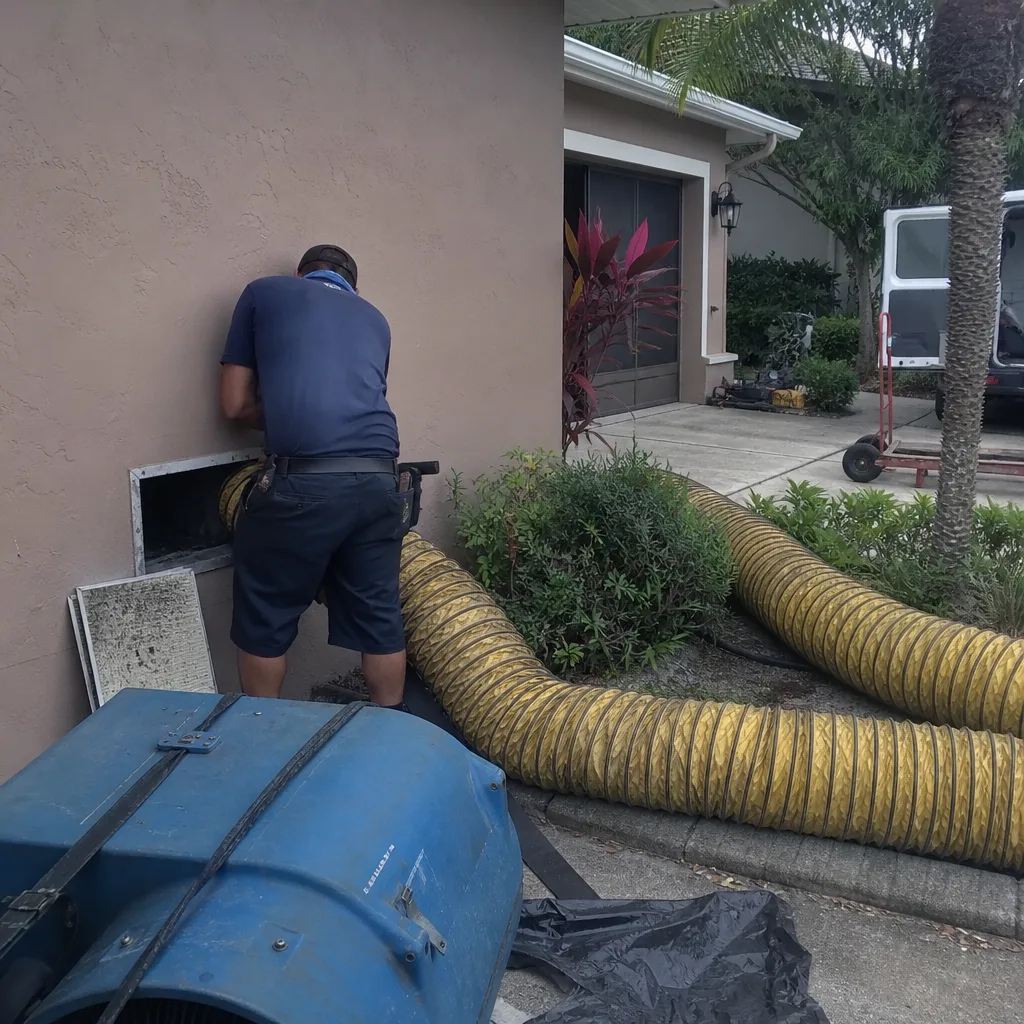 Before
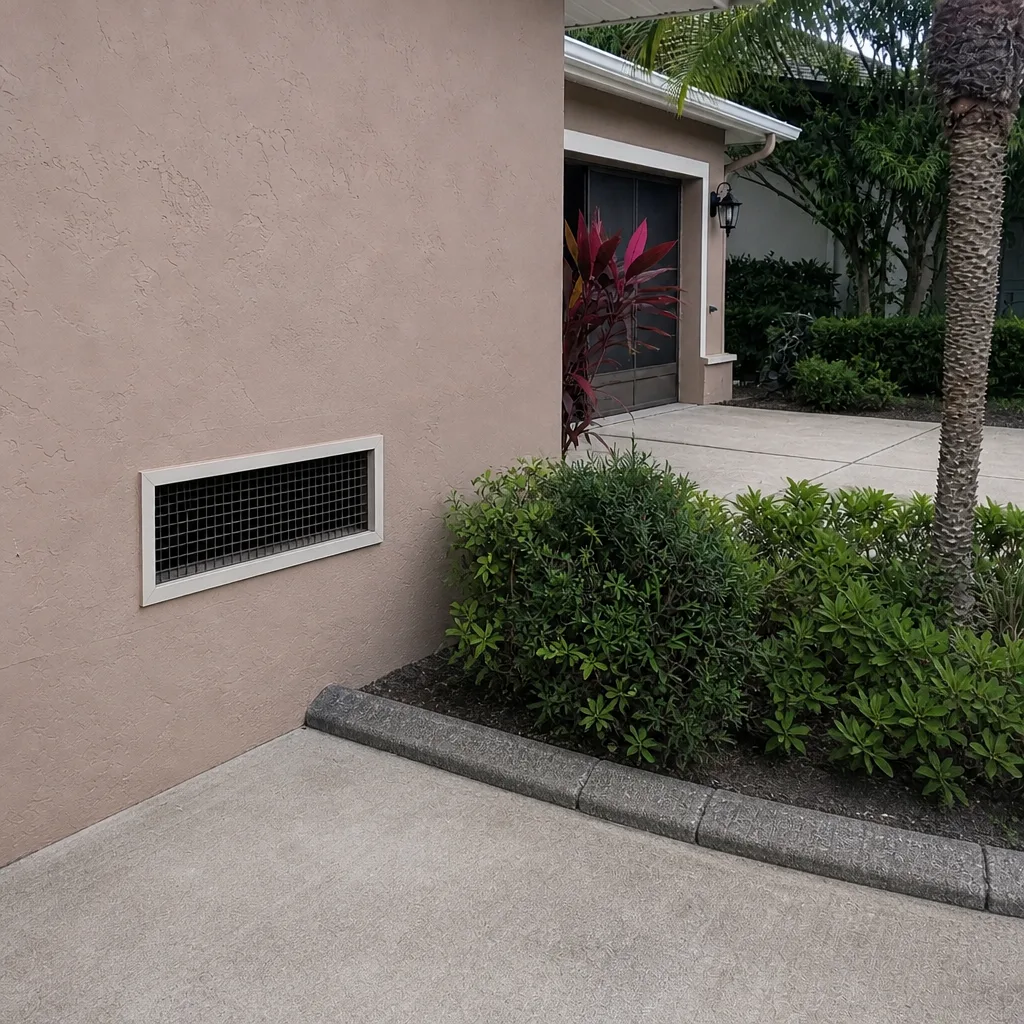 After
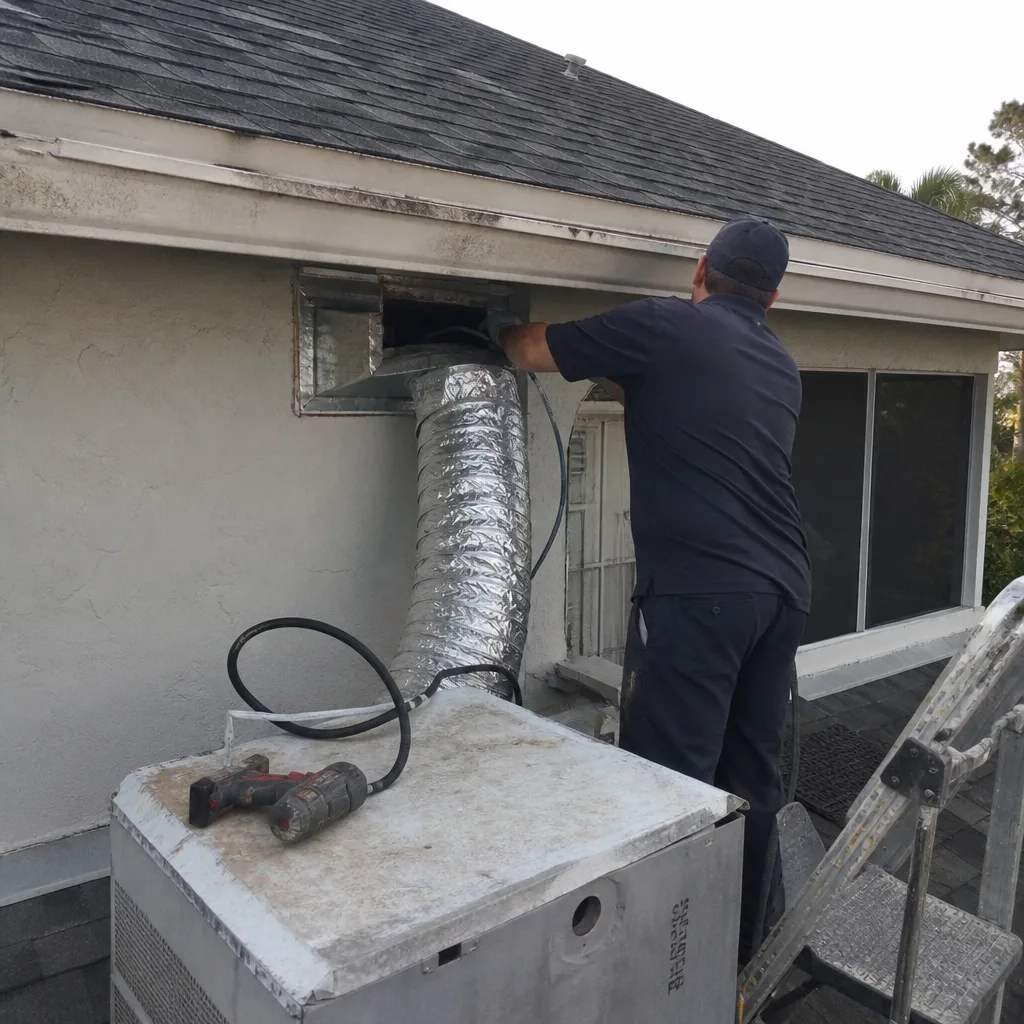 Before
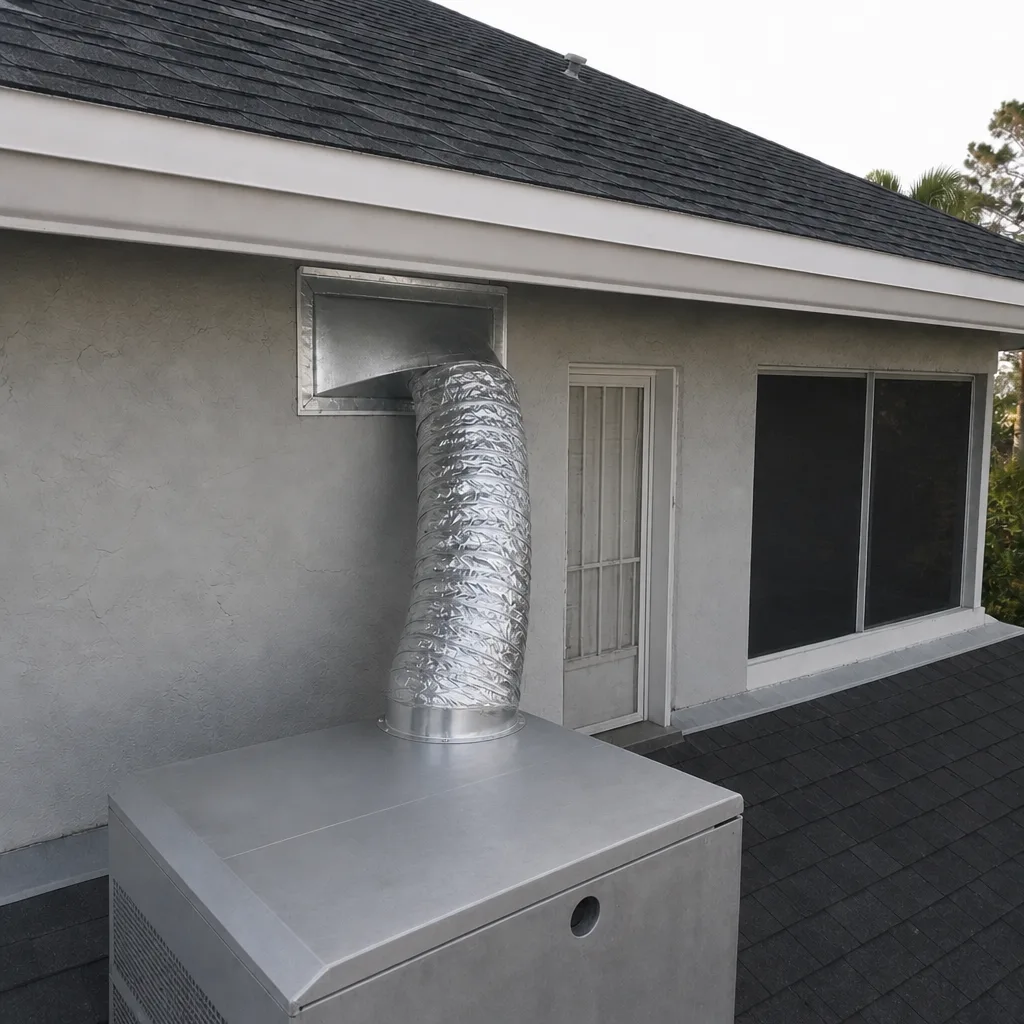 After
 Before
 After
When to Call a Professional
Some duct conditions are worth professional attention without delay. If you can see visible dust building up on registers or hear debris moving in the ducts when the air handler runs, that’s a system that needs more than a filter change. If anyone in the house has worsening allergy or respiratory symptoms that track with the HVAC running, a professional assessment makes sense. Pets that shed, recent renovation work that generated dust, and older homes with duct runs that have never been inspected all point the same direction. Disconnected or crumbling ductwork inside an attic or crawlspace is a repair problem that cleaning alone won’t solve, and it’s worth having a contractor look. Duct Cleaning Clearwater offers free estimates in Clearwater. Call (844) 238-0931. We answer 24/7. Fast dispatch from 7am to 7pm, Sunday through Friday.
Frequently Asked Questions
No. Florida does not require a specialty license to operate a duct cleaning business, which is why vetting has to substitute for licensing. Ask about equipment, insurance, and NADCA standing instead, and verify any claim you can. Call (844) 238-0931 for an exact quote; estimates are free.
Membership means the company belongs to the association and commits to its code of ethics; certification means an individual technician or firm has met a defined assessment standard and passed a qualification process. They are separate credentials, both verifiable on NADCA’s site, and a company making the claim should be able to tell you which one applies. When in doubt, call us at (844) 238-0931 and we’ll walk you through what to check.
Typical whole-system cleaning in the Clearwater market runs in a broad range depending on home size, system layout, and how accessible the ductwork is, with the written estimate setting the final price. What you should not accept is a per-vent quote, because that structure lets the finished cost move once the crew is on site. Call (844) 238-0931 for an exact, no-obligation estimate.
Because the cheap quote isn’t the price of the job; it’s the price of getting in the door. Teaser pricing is followed by add-ons, inflated vent counts, or “findings” once the equipment is inside, and the true cost lands well above the honest quote you didn’t take. Insist on one flat price per system agreed before work starts. Call (844) 238-0931 for a written estimate you can compare line by line.
You ask for before-and-after photos of your own ductwork, not a stock gallery, along with documentation of the debris captured. A contractor with a clear process photographs the system as part of the job. Every estimate includes before-and-after photos of your ducts. Call (844) 238-0931 to book.
It depends on the home: pets, allergy sufferers, recent renovations, and older duct systems all shorten the interval. There’s no universal calendar, which is why an assessment matters more than a schedule someone tries to sell you over the phone. Call (844) 238-0931 and we’ll give you an honest read on your system.
Not if you hire a contractor with a repair scope. If cleaning turns up a disconnected or damaged run, the same visit can correct it and clean the system properly. Ask about repair capability before you book, so you’re not left scheduling a second company. Call (844) 238-0931 and ask.
The Bottom Line
In a state that doesn’t license duct cleaning, the vetting is the job. Ask the equipment questions (negative air CFM, brush system, truck-mount versus portable, HEPA filtration) and listen for specifics. Confirm whether a contractor is a NADCA member or actually NADCA-certified, and verify it. Insist on whole-system pricing with a written scope that names the returns, main trunk, and branch runs, and walk away from per-vent quotes. Refuse any fogging or “mold treatment” offered before testing, and ask for before-and-after photos of your own ducts. A capable contractor passes all of it without hesitation, answers plainly, and puts the price in writing before work starts. That’s the contractor you hire.
Duct Cleaning Clearwater offers free estimates in Clearwater. Call (844) 238-0931. We answer 24/7. Fast dispatch from 7am to 7pm, Sunday through Friday. We run professional Rotobrush and Nikro platforms and Abatement Technologies negative-air equipment, we repair what we find, and we put one flat price per system in writing before work begins, with before-and-after photos of your own ducts when we’re done.
Written by the team at Duct Cleaning Clearwater.