
Last updated November 16, 2026
 Whole-home duct cleaning
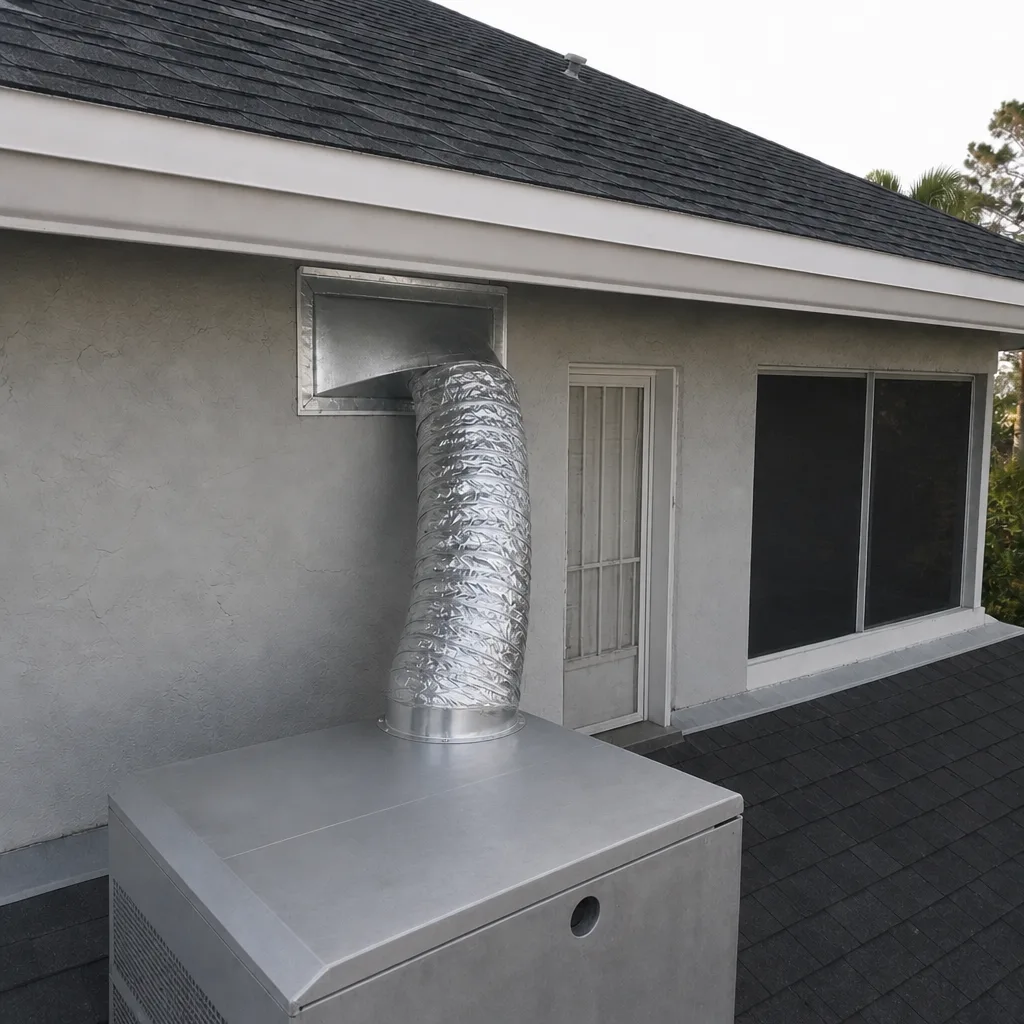
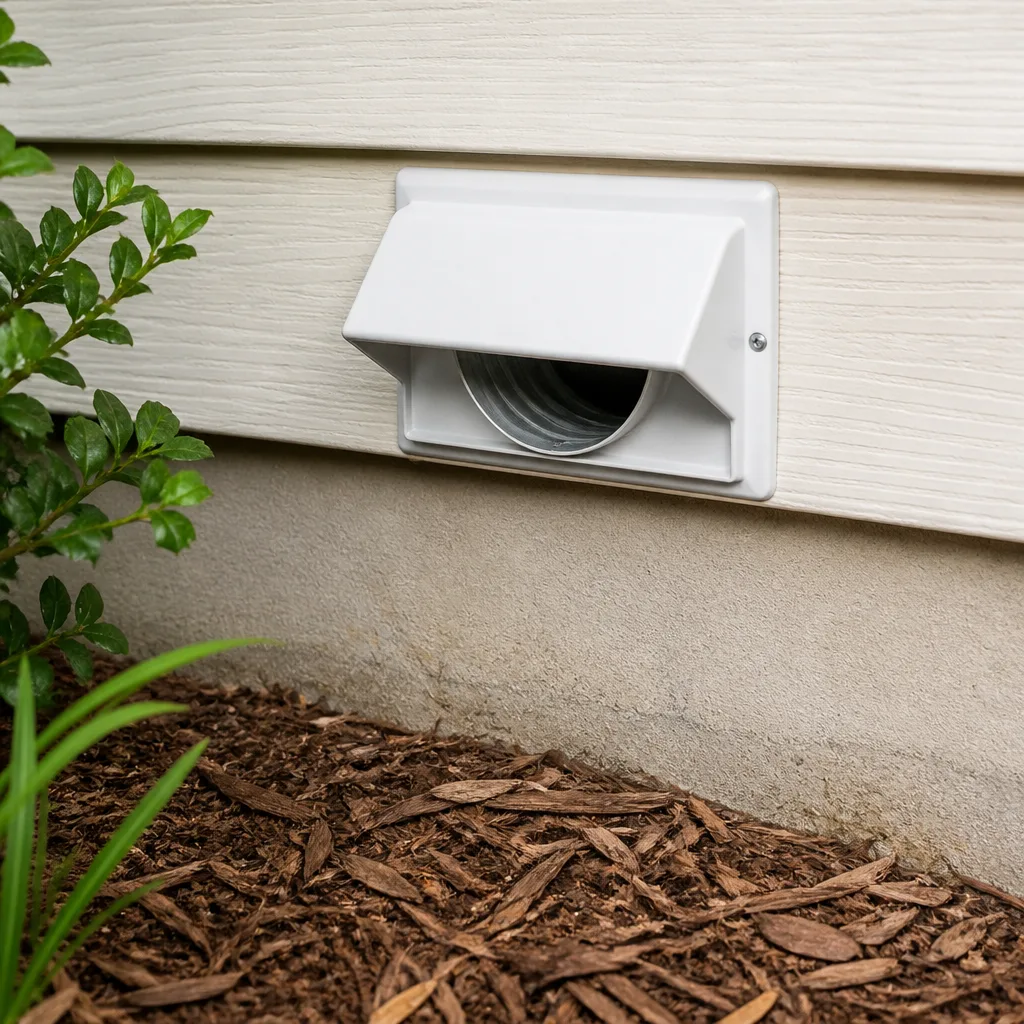 Dryer vent cleaning
 Camera inspection
 Sanitizing & deodorizing
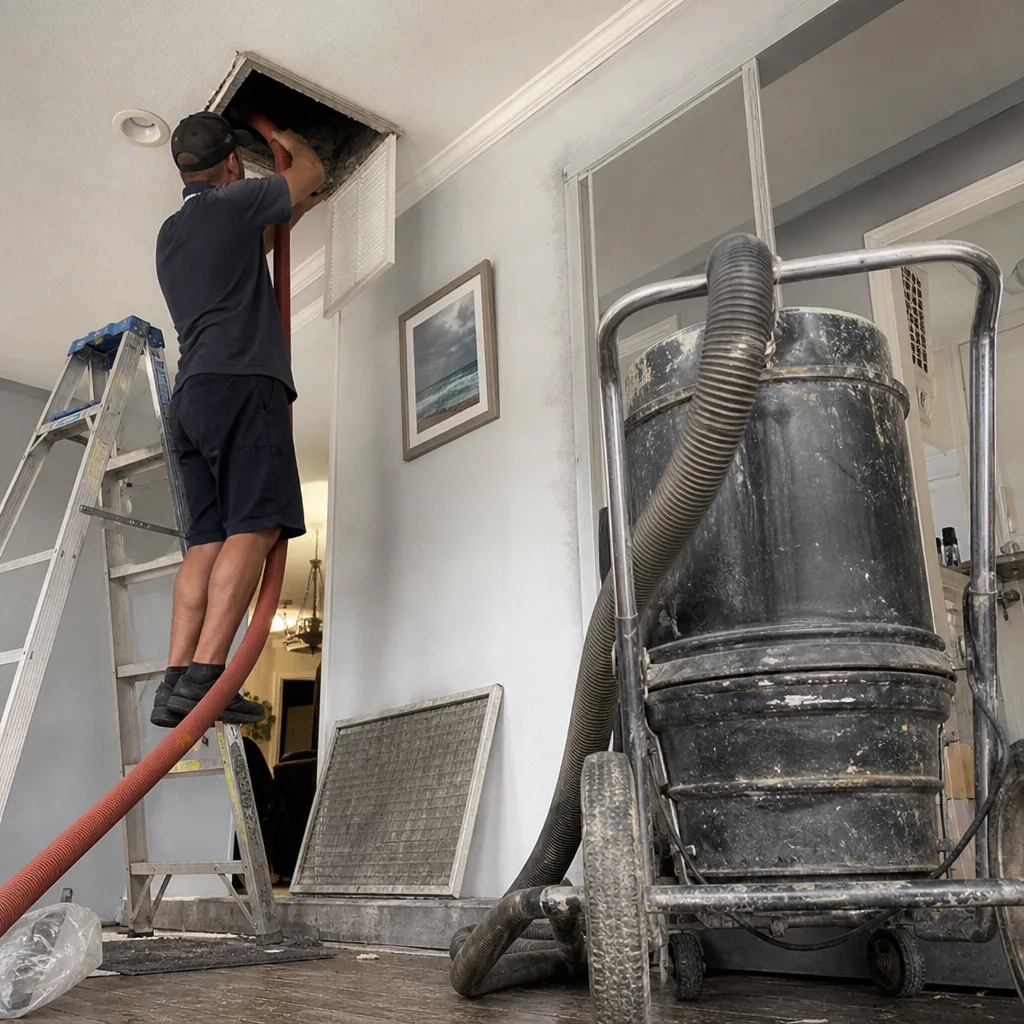
Whole-system duct and dryer vent check with before-and-after photos - you see exactly what came out of your vents
That "$99 whole-house special" is a bait ad - the real number appears once they are in your hallway, or the "clean" is a shop-vac at the register. We photograph the inside of your ducts before and after instead.
Seasonal Air Duct Cleaning Care for Clearwater: Year-Round Homeowner’s Guide
Most homeowners in Clearwater schedule duct cleaning in July, when the AC is running flat out and the house feels stale. That’s the worst time to do it. Peak cooling season is exactly when you don’t want your system offline for half a day, and it’s when contractors are booked out furthest. The better window is the one almost nobody uses: the short stretch from December into February, when relative humidity in Clearwater drops enough to slow microbial growth inside ductwork and give a cleaning job a clean baseline to hold. This guide maps the real Clearwater climate calendar to specific maintenance actions, so you’re not guessing which month to call. You’ll get a month-by-month picture, pre-summer and post-summer checklists, and how hurricane season fits in.
Quick Answer
Air duct cleaning in Clearwater is best scheduled in the December to February dry window, when humidity drops and ductwork can be cleaned and dried properly, rather than during peak summer cooling demand. Before summer load-up (roughly March to April), inspect the system and address any damage or disconnected runs so you enter the high-runtime months with a sealed, efficient system. After peak humidity season ends, do a post-summer inspection for the moisture-driven contamination that builds during those months. Year-round care means three touchpoints, not one annual appointment stuffed into the busiest month.
Styles & brands we work with
- Whole-home duct cleaning
- Dryer vent cleaning
- Camera inspection
- Sanitizing & deodorizing
Table of Contents
- What Does Clearwater’s Climate Actually Do to Your Ductwork?
- Why Is Winter the Best Window for Duct Cleaning in Clearwater?
- Pre-Summer Prep: What to Inspect Before Cooling Demand Peaks
- Managing Peak Humidity Months: What Contamination Actually Builds
- Post-Summer Inspection: The Checklist That Matters
- Hurricane Season and Your Ductwork: What to Check After a Near-Miss
- Filtration Hardware: The Half of the Job Most People Skip
- Dryer Vent Care on the Same Seasonal Calendar
What Does Clearwater’s Climate Actually Do to Your Ductwork?
Clearwater doesn’t get four equal seasons. It gets a long, humid cooling season with a brief, mild, drier window in the middle of winter, and that asymmetry should drive every maintenance decision you make. Understanding what each part of the year does to your ductwork is the foundation for timing cleaning correctly.
Here’s how the climate calendar actually maps to duct conditions in Clearwater:
- Late spring into early summer: outdoor humidity climbs steadily, AC runtime increases, and your system starts moving large volumes of cooled, moisture-laden air through the ducts for hours a day.
- Peak summer: the longest daily AC runtimes of the year. Duct surfaces stay cold and damp, condensate is constant, and any settled dust or biological material in the system sits in near-ideal growth conditions.
- Late summer into early fall: still warm and humid, but daily runtime begins a slow decline as overnight temperatures ease.
- December through February: the one stretch when relative humidity outdoors drops and AC runtime shortens. This is the dry window, and it’s the best time to clean and set a new baseline.
The core problem in a Clearwater home isn’t dust from outside. It’s what happens when that dust, pollen and lint get wetted by condensate and held at room temperature for months. That’s the condition that turns a light dust film into something more stubborn, and it’s why timing matters more than frequency. Cleaning in the dry months means surfaces stay dry after the job and the system re-seals clean. Cleaning at the height of summer means you’re fighting a moisture load the whole time.
Pollen adds another layer. Clearwater’s growing season runs long, and airborne pollen from grasses, oaks and other landscape plants works its way into return-air pathways. A system that pulls pollen in all spring and never gets cleaned carries that load into summer when the moisture arrives. That’s why the pre-summer period is inspection time, not cleaning time.
Why Is Winter the Best Window for Duct Cleaning in Clearwater?
Winter is the best time for air duct cleaning in Clearwater because outdoor relative humidity drops enough to reduce microbial growth conditions inside ductwork, letting the system be cleaned and thoroughly dried in a controlled window. It’s also the one time of year AC runtime is short enough that a half-day job doesn’t cost you comfort.
This is the counterintuitive part. The instinct is to clean when the problem feels worst, which is July. But scheduling cleaning in the dry window produces better results for three concrete reasons:
- Dry surfaces stay dry. After cleaning, the duct interiors need to dry. In the humid months, that takes longer and gives anything remaining in the system a chance to re-establish. In the dry window, surfaces come back to a stable, dry baseline quickly.
- You’re not interrupting peak cooling. A cleaning job takes the system offline for part of the day. In the summer, that’s a real comfort issue. In January or February in Clearwater, the house holds temperature through a mild day without strain.
- Contractor availability is better. Summer is the busiest season for duct and HVAC work in Clearwater. Book in the dry window and you’re working against a lighter calendar, which typically means sooner appointment dates and less rushing between jobs.
Here’s the practical consequence: if you wait until summer to try to book, you’re competing with every homeowner who just noticed their house smells stale. If you book in December or January, you’re ahead of that wave. Our technicians have up to 13 years of experience and have watched the Clearwater season cycle play out year after year; the pattern is consistent. The homeowners who get the best results clean in the quiet months and inspect in the loud ones.
The dry window isn’t just about outdoor humidity. It’s about AC runtime. In winter, your system may run only for short periods or not at all on mild days. That means any cleaning dust and debris that gets disturbed during the job has time to settle before the system is running at full load again. In summer, cleaning kicks off a full-load cooling cycle immediately, which can leave residual moisture in low spots if the job wasn’t done thoroughly.
For a market where most people schedule on instinct in the worst possible month, the person who books in January gets a faster appointment and a better result. Call (844) 238-0931 to lock in a dry-window booking. We answer 24/7, and estimates are free.
Pre-Summer Prep: What to Inspect Before Cooling Demand Peaks
Pre-summer prep in Clearwater means one thing: making sure your system is clean, sealed and ready before the most expensive months to run the AC. March and April are the right time. You’re ahead of peak demand, ahead of the contractor rush, and you can still fix anything you find before the system is working hardest.
This is inspection and readiness, not necessarily cleaning. If your ducts were cleaned in the winter dry window, pre-summer is about confirming the system held its condition through the transition. If you didn’t clean in winter, this is your last good window before summer.
Work through this checklist before the cooling season ramps up:
- Walk the visible duct runs. Look for disconnected joints, crushed flex duct, sagging sections and any spot where the insulation jacket has come loose. A disconnected return in an attic or crawl space pulls unconditioned, humid air directly into your system all summer, which is both an efficiency loss and a contamination source.
- Check the supply registers. Streaking around the register face, visible dust buildup on the diffuser, or uneven airflow from one room to the next are all signals worth having looked at before summer, not after.
- Inspect the return-air path. The return is where most contaminants enter. A clogged or undersized return filter, or a return grille packed with lint, forces the system to work harder in the months when it runs longest.
- Check the filter and the filtration hardware. Confirm the filter is seated properly and matches the cabinet. If you have a Honeywell or Aprilaire filtration component, spring is the time to confirm the media or the electronic cell is serviced and functioning. A filtration system that isn’t working lets everything downstream do the filtering, which is exactly backwards.
- Look for moisture signs. Condensate staining, rust at duct seams, or any musty smell at the register warrants a closer look. Moisture is the root of most contamination problems in Clearwater ductwork.
- Confirm the system is sealed at the air handler. Gaps at the air-handler connection are common and cheap to fix when caught early.
If the inspection turns up damaged or disconnected ductwork, that’s an Air Duct Repair issue, not just a cleaning issue. Duct Cleaning Clearwater offers Air Duct Repair alongside cleaning, so a damaged run found during inspection or during a cleaning job can be corrected on the spot rather than requiring a separate contractor visit. Catching it in spring means you enter the expensive months with a sealed system, which matters because summer is when every point of leakage costs the most.
The pre-summer window is also when we recommend addressing any repair before cleaning. Cleaning a system with a disconnected run is a waste; the cleaned section just gets recontaminated through the gap. Repair first, then clean, then confirm the system is sealed.
Managing Peak Humidity Months: What Contamination Actually Builds
During Clearwater’s peak humidity months, the contamination that builds inside ductwork is moisture-driven, not just dust-driven. Dust, pollen and lint that settle in the system during spring get wetted by condensate and constant cooled-air flow, and that’s the condition that turns a light film into a persistent problem. Understanding what actually builds helps you recognize it and know when it warrants attention.
The pattern in a typical Clearwater home during peak summer looks like this:
- Dust and lint bind to cold duct surfaces. The supply side stays cool and damp through long runtimes, so airborne particles stick rather than pass through. Over a season, that builds into a visible film at the registers.
- Biological growth conditions peak. Persistent moisture, mild temperatures and a steady dust supply are the three inputs for microbial growth. It doesn’t guarantee growth, but it’s the combination that makes it possible.
- Pollen carries into the system all season. Clearwater’s long growing season means pollen loads don’t fully clear out of the outdoor air the way they do in colder regions. That pollen rides in on return air all summer.
- Pet dander accumulates. Homes with pets see the buildup faster. Dander is fine, sticky and travels deep into the system, and it does not simply blow through.
What you should do during peak humidity months is simple: don’t clean, monitor. Change filters on schedule (more often if you have pets or allergy sufferers in the house), keep an eye on register streaking, and note any musty odor at a supply. If you smell something musty coming from a register in August, that’s a signal worth acting on, and it’s worth having inspected rather than ignored until fall.
One practical note: peak humidity is when a system that wasn’t cleaned in the dry window starts to show its condition. That’s useful information. Note what you see in July and August, then schedule the cleaning in December or January when the conditions favor a good result. Booking in the peak months is what most Clearwater homeowners do, and it’s why the summer calendar fills first.
If you want a professional read on what’s building in your system before you commit to cleaning, our air duct cleaning service includes a full assessment of the system’s condition, using Rotobrush and Nikro platforms that mechanically agitate and capture debris rather than blowing it around. That matters most in a humid climate, where loosening debris without full capture just redistributes it.
Post-Summer Inspection: The Checklist That Matters
Post-summer inspection in Clearwater is about confirming what the peak months left behind and spotting the damage that a long, high-runtime season can cause. Do this in late September or October, once daily runtime has eased but before you shift into the winter dry window. It’s the step that tells you whether the winter cleaning is routine or urgent.
Run through this list after the cooling season winds down:
- Look at every register. Compare the register faces to where they were in spring. New streaking or heavy buildup over one summer tells you the system is moving more debris than it should.
- Smell the supply air. A musty or earthy odor at a register that increases as the system runs is worth a professional look, not just a new filter.
- Check for moisture at the duct seams. Rust, staining or discoloration at seams or near the air handler points to condensate where it shouldn’t be. That’s a repair issue as much as a cleaning one.
- Confirm the insulation jacket. The long, hot season is hard on duct insulation, particularly in attics where temperatures climb. Torn or compressed insulation on flex duct reduces the system’s efficiency all summer and lets condensation form on cold surfaces.
- Inspect the visible runs for sagging or disconnection. A run that came loose over the season may not announce itself; the symptom is often one room that’s warmer than the rest.
- Note the overall condition. This is your reference point for deciding whether to clean in the winter dry window or push it a year. Most Clearwater homes that ran a full cooling season without a winter cleaning will benefit from cleaning, especially if pets or allergy sufferers share the house.
The value of the post-summer inspection is that it lets you plan the winter cleaning intelligently. If the system looks clean and dry, you might have a lighter year. If it looks loaded, you know to book early. Either way, inspecting in fall means you’re making a decision with information rather than scheduling on the calendar.
For property managers running multiple units in Clearwater, the post-summer inspection is also a chance to catch one unit that failed a repair and needs attention before winter. A disconnected run found in October is a cheap fix; the same run found in March after a full season of pulling humid attic air would have run up cooling costs all summer. Our team works with both homeowners and light-commercial property managers, and the seasonal calendar applies to both.
Hurricane Season and Your Ductwork: What to Check After a Near-Miss
Hurricane season runs from June through November in Clearwater, and even a near-miss that doesn’t damage your home can affect your ductwork through pressure changes and moisture intrusion. The right response after a close call is a specific, careful inspection, not a knee-jerk full disassembly. Knowing what to check protects both your system and your safety.
When a storm passes close but doesn’t strike, the effects on a home’s ductwork usually show up in two ways: pressure events and moisture. A rapid outdoor pressure swing can stress duct connections, particularly in attics and any section that’s already marginal, and rain driven into a vent, soffit or roof penetration can get moisture into the system. Neither is guaranteed to cause a problem, but both are worth checking.
After a near-miss, work through this in order:
- Check the air handler and its connections first. If the unit isn’t running, or is running strangely, stop and have it looked at rather than forcing it.
- Inspect visible duct runs for separations. Look for disconnected joints, sections that have shifted, or duct that’s been crushed by anything that moved. A separated run after a storm pulls in unconditioned air and, potentially, moisture.
- Look for water intrusion. Water staining on insulation, moisture at the air handler, or a damp smell after the storm are all signs that moisture got in. Ductwork that took on water needs professional drying and assessment before it runs again, not just cleaning.
- Check the registers and return grille. Debris blown in through an open window or a damaged return can end up in the system. If the return grille is packed, have it looked at.
- Don’t run the system if you suspect water intrusion. Moisture in ductwork that then circulates through the house is a real problem. Have it assessed first.
The safety caveat here is straightforward: ductwork carries electrical components, condensation, and, in some homes, components that connect to the air handler. If you see water where it shouldn’t be, or a component that’s been damaged, have a professional assess it. This isn’t the place for a DIY repair to save a call-out.
If the assessment finds damage, Duct Cleaning Clearwater’s Clearwater team offers Air Duct Repair as a service precisely for this scenario, alongside cleaning. We can inspect the system, repair what we find, and clean it with Abatement Technologies equipment that provides containment and HEPA-level capture during the work. That matters after a moisture event, because particulate you loosen needs to be captured at the source rather than pushed through the house. If you’re not sure whether your system took on water, call (844) 238-0931 and we’ll talk it through. Estimates are free.
Filtration Hardware: The Half of the Job Most People Skip
Filtration hardware is the part of the system that determines how clean the air is between cleanings, and it’s the piece most homeowners never think about. In Clearwater, where the cooling season is long and the dust and pollen load is high, the filtration component does most of the daily work, and a system that’s bypassing or not servicing its filtration hardware is a system that’s letting the ductwork do the filtering instead.
This matters more than it sounds. A filter cabinet that isn’t sealed, a media filter that’s been pushed past its load, or an electronic filter that isn’t functioning means the downstream system takes the full load. Over a Clearwater summer, that’s months of continuous duty. The ductwork absorbs what the filter should have caught, and the next cleaning is heavier than it needed to be.
Where filtration hardware fits in the seasonal calendar:
- Spring (pre-summer): confirm the filtration component is seated, sized correctly and functioning. If you have a Honeywell or Aprilaire filtration system, this is the time to confirm the media or electronic cell is serviced. Spring is also the right time to correct a filter-cabinet leak before the heavy-load months.
- Summer (peak): change or service the filter on schedule. Peak runtime means peak filter loading, and a filter loaded past its capacity is worse than a clean one of lower rating.
- Fall (post-summer): inspect the filtration hardware for damage or wear from the long season, and note whether it did its job. If you saw heavy dust buildup despite a functioning filter, the filter sizing or the cabinet seal may be the culprit.
- Winter (dry window): service or replace filtration components as part of the cleaning visit, so the system re-enters spring with filtration and ductwork both at baseline.
Because Duct Cleaning Clearwater stocks and services Honeywell and Aprilaire air-quality components, we can clean the system and address the filtration hardware in a single visit rather than splitting the work between a duct cleaner and an HVAC contractor. That’s the practical difference between cleaning that lasts a winter and cleaning that needs redoing because the filtration side was never fixed.
Dryer Vent Care on the Same Seasonal Calendar
Dryer vent cleaning is a safety service, not optional upkeep, and it belongs on the same seasonal calendar as ductwork. Lint buildup in a dryer vent is a documented residential fire hazard, and a Clearwater home that runs laundry through a long, humid summer should not go a full year without a vent inspection.
The seasonal logic for dryer vent care is slightly different from ductwork, because dryer vent clogging is driven by laundry volume and lint, not by humidity. But the timing still maps to the same calendar:
- Pre-summer: clear the vent before the season when laundry volume tends to rise and the vent is working hardest.
- Post-summer: inspect after the peak months, since that’s when lint accumulates fastest and a vent that was already marginal can tip into a restriction.
- Dry window: clean on the same visit as ductwork if the timing works, so the whole ventilation system is serviced together.
The other thing to watch for: a dryer that takes longer to dry a load, or a laundry room that feels hotter and more humid than usual, both point to a restricted vent. Those are safety signals, not just efficiency complaints. Duct Cleaning Clearwater treats dryer vent cleaning as a discrete, fire-safety-focused service rather than a throwaway add-on, and it’s part of why we cover the full ventilation system of a home rather than just the HVAC ducts.
If the vent is restricted, cleaning is the fix, and it’s worth doing before the restriction becomes a fire risk. Call (844) 238-0931 for a free estimate on dryer vent cleaning in Clearwater. Fast dispatch, 7am-7pm, Sunday through Friday.
Common Mistakes to Avoid
- Scheduling cleaning in July because that’s when it feels worst. Peak summer is the most expensive month to have the system offline and the busiest month for contractors. Clean in the winter dry window instead.
- Cleaning without checking for damage first. If a duct run is disconnected, cleaning it just recontaminates the clean section. Inspect and repair before cleaning, not after.
- Treating filtration as an afterthought. A system with a bypassing or non-functioning filter is a system whose ductwork does the filtering. Confirm the filtration hardware works before the heavy-load months.
- Ignoring a musty smell at the register. In Clearwater’s humidity, a smell is a signal. Address it before it becomes a bigger problem, not after the season ends.
- Running the system after suspected water intrusion. If a storm near-miss or a condensate problem put moisture into the ducts, have it assessed before running the system, not after.
- Forgetting the dryer vent. It’s a fire hazard and it belongs on the calendar. A dryer that takes longer to dry is telling you something.
- Assuming a full-year gap is fine because the house “seems clean.” Dust and pollen loads in Clearwater build quietly. The post-summer inspection is what tells you the real condition, not your nose.
See the difference
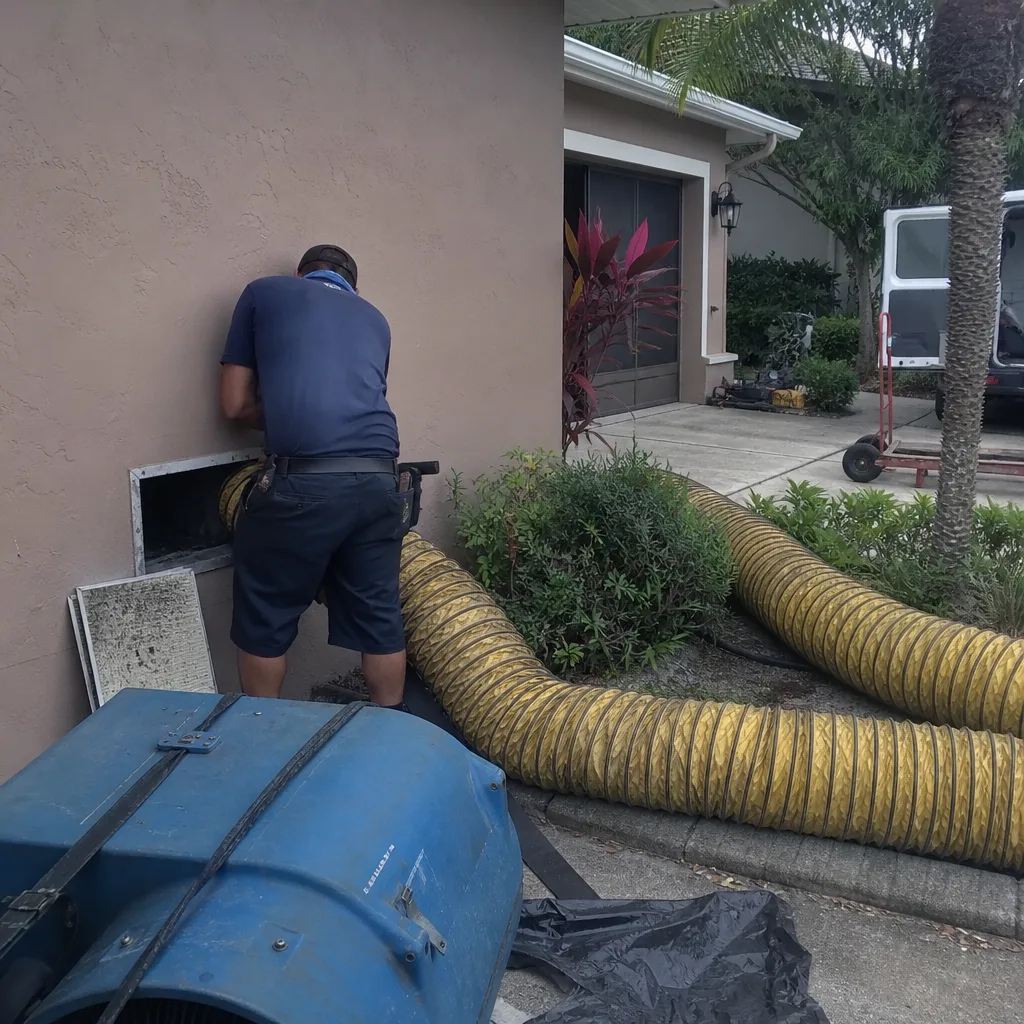 Before
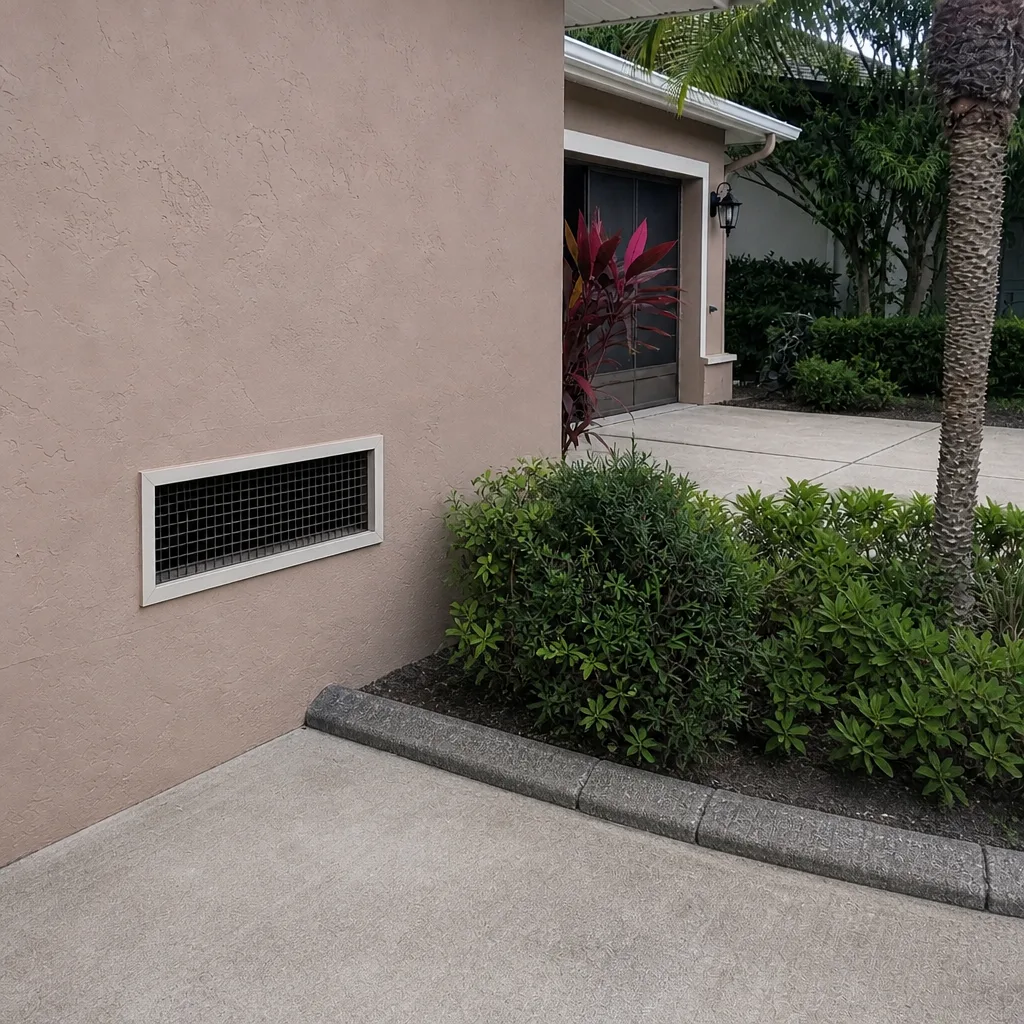 After
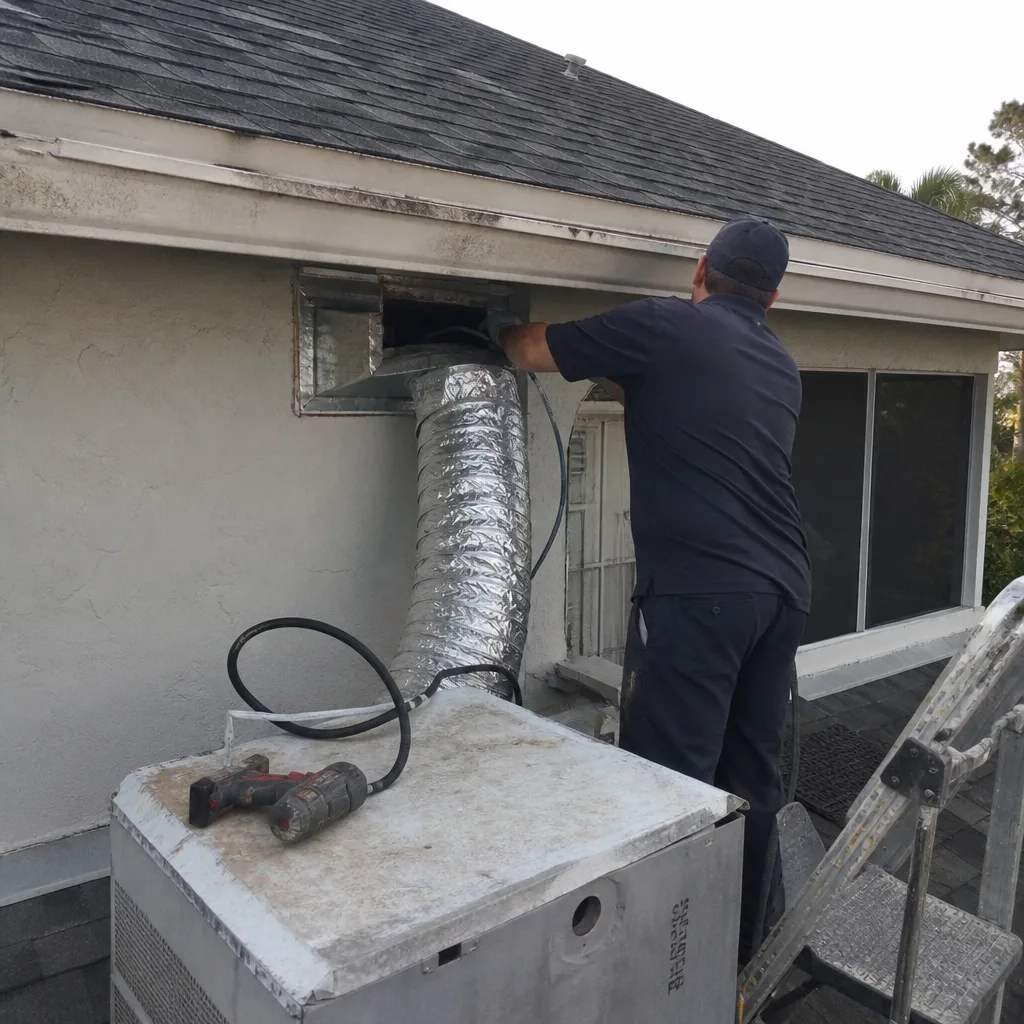 Before
 After
 Before
 After
When to Call a Professional
Some seasonal care you can do yourself: change filters, look at registers, and note changes. But several scenarios warrant a professional, especially in a climate where moisture is a constant. If you see water staining or moisture where it shouldn’t be, if a register smells musty and stays that way after a filter change, if you suspect a duct run is disconnected or crushed, or if your system took on water after a storm near-miss, have it assessed. Visible heavy buildup at multiple registers, a home with allergy sufferers or pets where the system hasn’t been cleaned in a full cycle, and any dryer vent that’s restricting airflow are all good reasons to call. Duct Cleaning Clearwater offers free estimates in Clearwater. Call (844) 238-0931. We answer 24/7, and fast dispatch runs from 7am to 7pm, Sunday through Friday.
Frequently Asked Questions
The most useful cycle in Clearwater is one cleaning in the December to February dry window, with an inspection before summer and another after peak season. That’s one cleaning and two inspections a year, not a single annual appointment. Homes with pets, allergy sufferers or older ductwork may benefit from a more frequent cleaning cycle; the inspection tells you which. Call (844) 238-0931 for an exact quote; estimates are free.
Low quotes usually reflect a shallower job, often a blowout tool that loosens debris without capturing it, which in a humid Clearwater home just redistributes contamination. Professional cleaning uses mechanical agitation and full capture, which takes longer and costs more to do properly. Ask what equipment the company uses and whether it agitates and captures or just blows. Call (844) 238-0931 to compare against a real whole-system quote.
Ask for before-and-after photos of your own ducts. That’s the check that tells you whether the job was real; a camera image of your system before and after is specific to your home and can’t come from another job. Any reputable cleaner should be able to show you. Call (844) 238-0931 if you’d like to see what the process looks like. Estimates are free.
You can, but it’s worth waiting for the dry window if the system is otherwise in good condition. Hurricane season overlaps with peak humidity, which is the worst time for cleaning results, and a storm near-miss can introduce moisture that changes the plan anyway. Inspect after a near-miss, then schedule cleaning in the dry months. Call (844) 238-0931 to book ahead. Estimates are free.
Air duct cleaning addresses the HVAC ductwork that circulates cooled and heated air; dryer vent cleaning addresses the exhaust path for your dryer. They’re separate systems with separate risks, and dryer vent buildup is a fire hazard, which makes its cleaning a safety service rather than optional upkeep. Duct Cleaning Clearwater handles both as part of covering the full ventilation system. Call (844) 238-0931 for a free estimate on either service.
It can, particularly when the system has heavy buildup, when filtration hardware is serviced at the same time, and when the cleaning uses full capture rather than a blowout. In Clearwater’s humidity, the biggest gains come from cleaning in the dry window and confirming the filtration side works, because a clean system with a broken filter recontaminates quickly. Call (844) 238-0931 to discuss your system. Estimates are free.
The Bottom Line
Clearwater’s year has three meaningful touchpoints for ductwork, not four seasons: the pre-summer inspection, the post-summer inspection, and the winter dry-window cleaning. Cleaning is best done from December into February, when humidity is low and the system can be cleaned and dried to a stable baseline. Inspect in spring and fall to catch the damage and contamination that the long cooling season produces, and don’t skip the filtration hardware or the dryer vent; both do real work and both call for attention on the same calendar. The result is a system that enters each summer clean, sealed and efficient rather than loaded. For a free estimate, call Duct Cleaning Clearwater. We answer 24/7. Fast dispatch, 7am-7pm, Sunday through Friday. Visit Duct Cleaning Clearwater to get started.
Written by the team at Duct Cleaning Clearwater.