
Last updated November 16, 2026
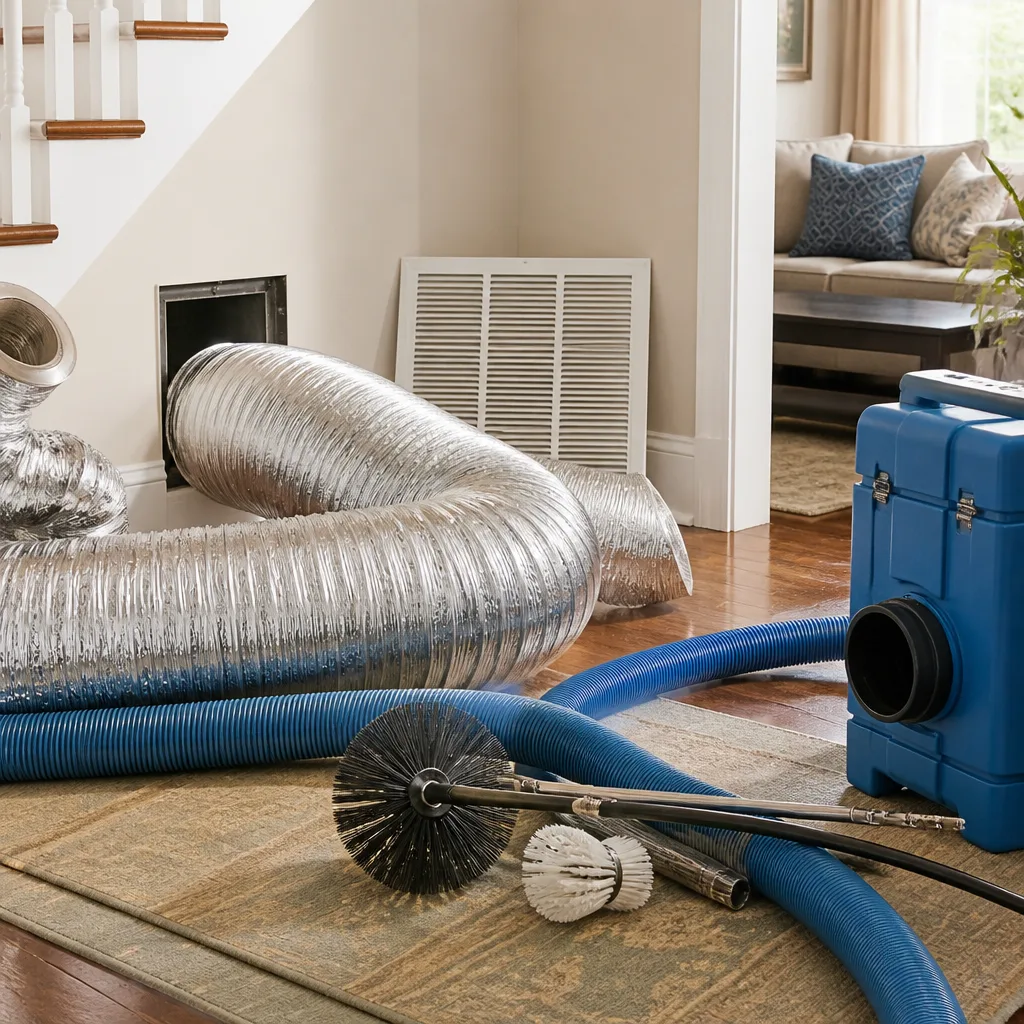 Whole-home duct cleaning
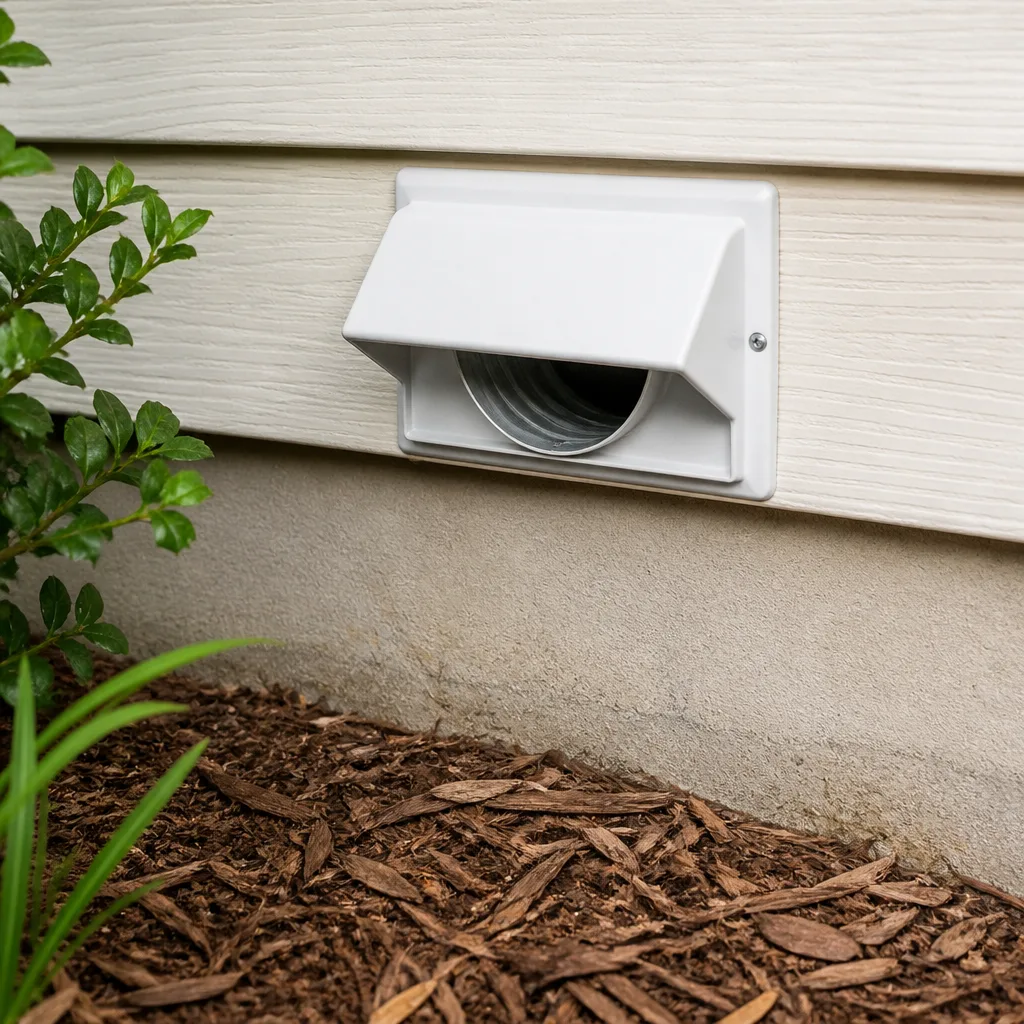 Dryer vent cleaning
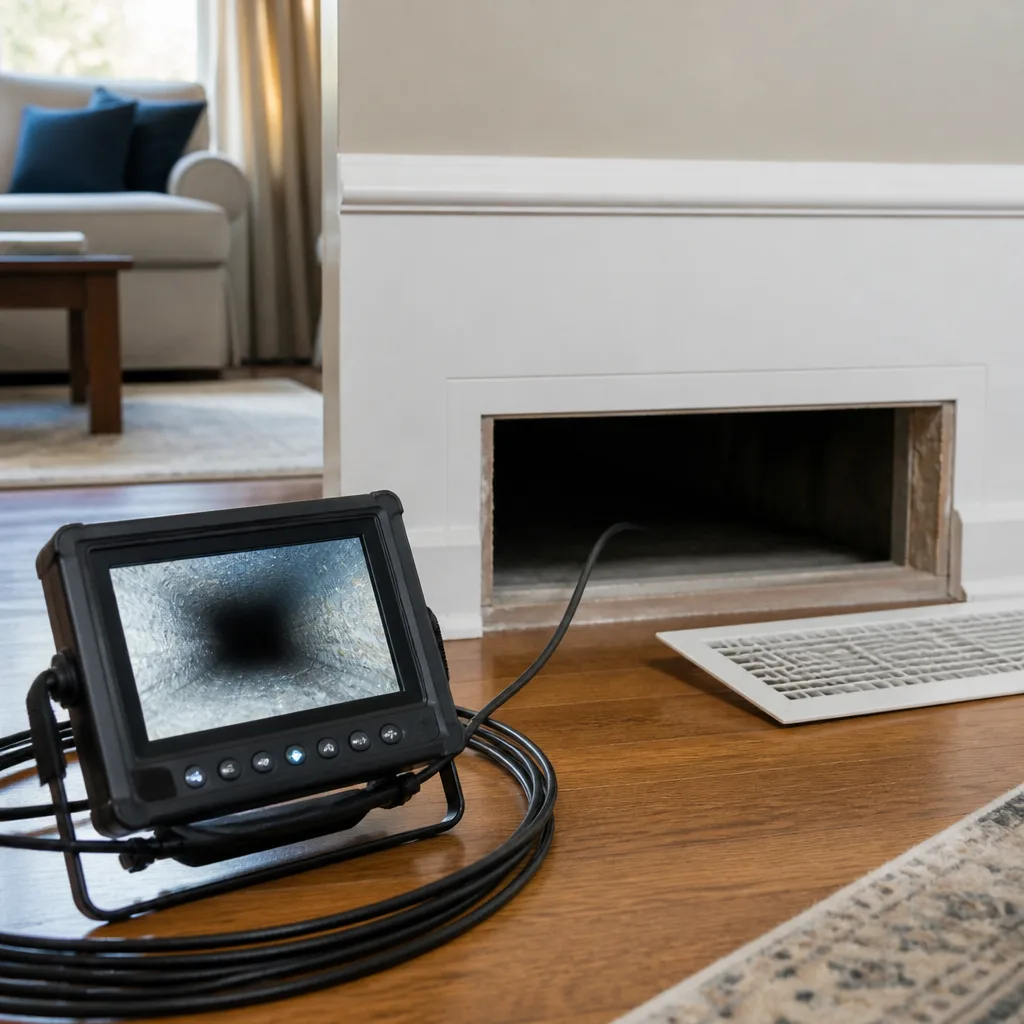 Camera inspection
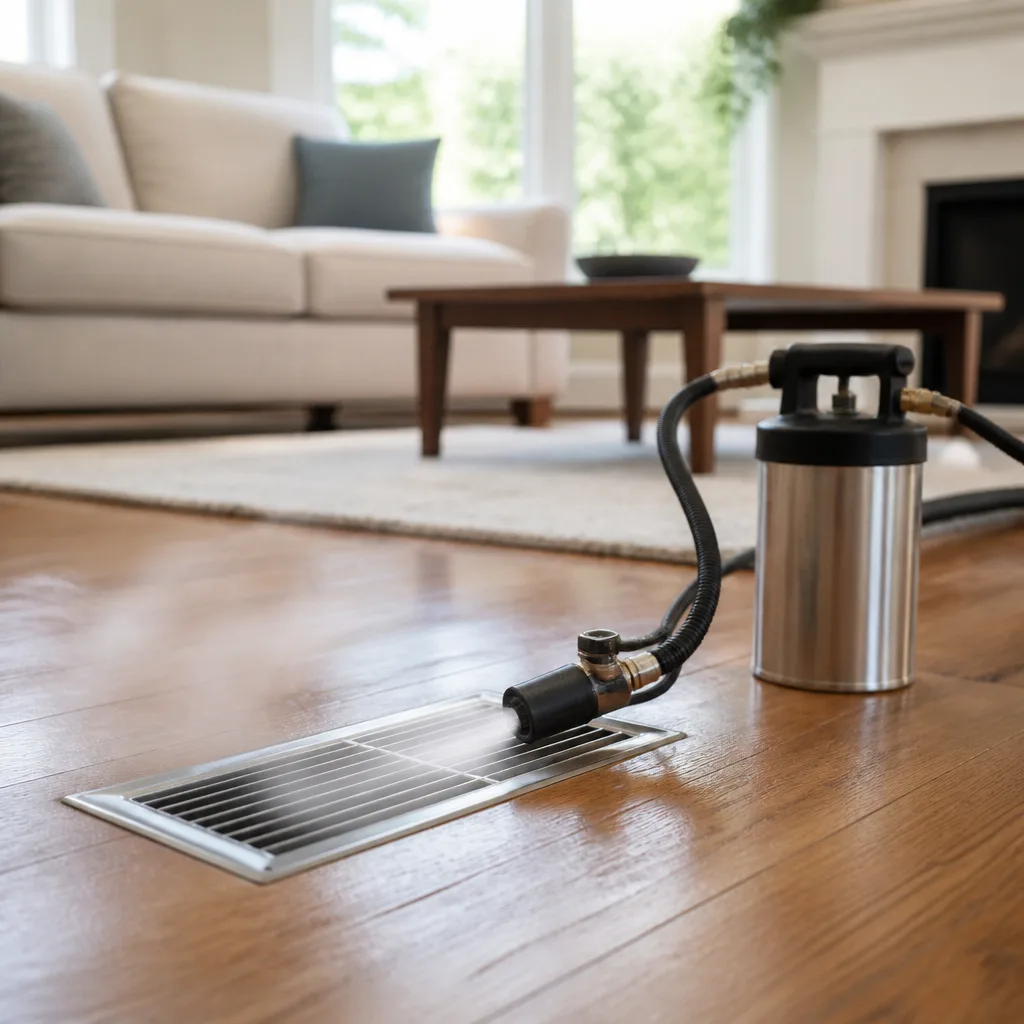 Sanitizing & deodorizing
Whole-system duct and dryer vent check with before-and-after photos - you see exactly what came out of your vents
That "$99 whole-house special" is a bait ad - the real number appears once they are in your hallway, or the "clean" is a shop-vac at the register. We photograph the inside of your ducts before and after instead.
DIY vs Professional Air Duct Cleaning: The Clearwater Homeowner’s Decision Guide
Your shop vac can absolutely clean part of your duct system. A dryer vent brush kit can reach into a register boot and pull out a wad of lint and dust. So the DIY question isn’t whether homeowners can do something useful with a vacuum and an afternoon. It’s whether that equipment can reach the places where contamination actually builds up in a Clearwater home, and whether the movement of air inside the ducts cooperates with the attempt or works against it. This guide walks through the physics of negative pressure, the duct sections where DIY works and where it fails, and the Clearwater-specific conditions that change the answer. You’ll finish with a clear way to decide for your own house.
Quick Answer
DIY air duct cleaning works for surfaces you can see and reach: register grilles, short branch runs, and the return grille near the air handler. It fails inside the main trunk line, the return plenum, and the air handler cabinet, where consumer vacuums can’t pull enough negative pressure to lift settled debris and where a brush on a drill extension can damage flex duct or duct liner. In Clearwater’s humid climate, where flex duct and longer single-story runs are common, most homes with visible dust or allergy issues need professional equipment at least once, then DIY maintenance in between.
Styles & brands we work with
- Whole-home duct cleaning
- Dryer vent cleaning
- Camera inspection
- Sanitizing & deodorizing
Table of Contents
- What Consumer Vacuums Can and Cannot Do
- Where DIY Cleaning Works and Where It Doesn’t
- Clearwater Conditions That Change the Equation
- The Real Risks of a DIY Attempt
- What Professional Equipment Actually Does Differently
- A Step-by-Step DIY Maintenance Routine
- How to Decide for Your Home
- Common Mistakes to Avoid
What Consumer Vacuums Can and Cannot Do
The limiting factor in any duct cleaning is not the brush. It’s airflow. To lift dust, lint, pet hair, and biofilm off a duct wall and carry it out of the system, you need enough negative pressure at the point of cleaning to move the material toward the vacuum, not just stir it up. Consumer shop vacs and household vacuums top out well below what a truck-mounted or portable HEPA duct cleaning unit produces. That gap isn’t small. It’s the difference between pulling air and creating a controlled air stream through the whole duct run.
Three specific limits affect any DIY attempt:
- Negative pressure: A shop vac creates suction at the hose end, and that suction drops sharply as soon as the hose is more than a few feet inside a duct. Professional equipment creates negative pressure across the entire duct system at once, holding the whole run under vacuum while agitation happens.
- Reach: A drill-mounted brush or a flexible rod kit reaches maybe 10 to 15 feet down a straight run. Most branch runs in Clearwater homes turn at least once, and the places where debris settles are usually past the first turn, not before it.
- Dislodgment: Loose dust on the top of a duct can be wiped away. Compacted lint, biofilm, and construction debris stuck to the walls of a return plenum need mechanical agitation, which is what rotating brush systems and air whips are designed to deliver. A hand-held brush doesn’t generate that kind of contact pressure.
That said, consumer equipment can do real work at the contact points. A vacuum attachment on a register grille, a brush run through a short branch, and a wiped-down return grille all reduce the load on the system. The mistake is assuming that a shop vac in a register does what a professional system does to the trunk line. It doesn’t, and no amount of effort closes that gap.
Where DIY Air Duct Cleaning Works and Where It Doesn’t
The most useful way to think about DIY duct cleaning is by duct section, not by whole-house cleaning. Some parts of the system respond well to homeowner effort. Others are dead ends.
Sections where DIY cleaning is effective
- Supply and return register grilles: The face of every register collects dust and lint from room air. Removing the grille, washing it in a sink, and vacuuming the boot behind it removes visible debris and improves airflow slightly.
- Short, straight branch runs: A branch duct that runs 6 to 10 feet from a trunk with no turns can be reached with a flexible brush. Small homes and newer Clearwater construction with compact layouts often fall into this category.
- The return grille and filter housing: The return side accumulates the most visible dust because it pulls from the living space. Vacuuming the return grille face and the filter slot is worthwhile monthly maintenance.
Sections where DIY cleaning doesn’t reach the problem
- The main trunk line: Trunk lines are the largest ducts in the house and where the highest volume of air moves. They collect the most settled debris, and they’re the hardest to access from a register. A shop vac at a register pulls almost nothing from a trunk 15 feet away.
- The return plenum: The return plenum connects the return grille to the air handler and often has a different interior surface than the branch ducts. Biofilm and compaction build here, and the plenum is usually sealed or only opens at the air handler.
- The air handler interior: The blower wheel, evaporator coil face, and drain pan sit inside the air handler cabinet. Dust on a blower wheel reduces airflow and strains the system. Nobody should open an air handler cabinet without training and the right tools; even many DIY-focused guides leave this section out for good reason.
If your ducts are visibly dirty at the grilles and the trunk is decades old, DIY gets the top layer. Professional cleaning is what removes the layer underneath. That’s the split worth understanding before you decide, and it’s the basis for how we approach air duct cleaning across the area.
Clearwater Conditions That Change the Equation
Air duct cleaning is more demanding here than in a dry, temperate climate, and the difference comes down to three things: humidity, duct type, and house layout.
Humidity and biofilm
Clearwater’s warm, humid air keeps interior surfaces of ductwork closer to the dew point than in drier parts of the country. That moisture supports the growth of mold and bacteria on duct surfaces, especially the return side where air passes over the air handler coil and picks up condensation. A dry dust load is easy to vacuum. A microbial film needs mechanical agitation to break the bond with the duct wall. Consumer equipment generally can’t deliver that; rotating brush systems and air whips can. If you’ve noticed a musty smell from the supply registers when the system first kicks on, that’s a biofilm signal, not a dust signal, and it’s a strong argument for professional cleaning.
Flex duct prevalence
Much of the residential construction in Clearwater uses flex duct, which has a thin inner liner wrapped in insulation. That inner liner is easy to damage. A brush run too aggressively, or a drill-mounted brush that catches an edge, can tear the liner or pull it loose from the duct wall. A torn liner becomes a permanent source of dust and a restriction in the air path. Professional technicians working with flex duct use lower-agitation techniques and inspect the liner as they go. Homeowners rarely know to check for this until they’ve already caused the problem.
Long runs in single-story layouts
Clearwater’s single-story ranch and block home stock has characteristic long horizontal duct runs. A branch to a back bedroom can run 30 to 40 feet from the air handler. A shop vac loses most of its suction long before it reaches that far, and a flexible brush kit struggles to negotiate the turns between the trunk and the far register. Longer runs also collect more debris, because more air volume passes through them. That combination, long runs plus flex duct, is where DIY cleaning falls short most often.
Older homes with mixed duct systems
Many homes in Clearwater have been updated piecemeal, with metal trunk lines retrofitted to flex branches or the reverse. Mixed systems are harder to clean because the cleaning method has to change depending on the duct material. That’s a job for someone who can see what they’re working with. It’s also why we keep repair in scope, since older ductwork sometimes reveals a disconnected joint or crushed section while it’s being cleaned.
The Real Risks of a DIY Attempt
The common DIY failure isn’t a ruined house. It’s wasted effort, plus a couple of very specific problems that can make air quality worse.
Duct liner damage. A brush moving at the wrong angle or speed can tear the interior liner of flex or insulated duct. Once torn, the exposed insulation becomes a dust source and a fire safety concern near the air handler. This is the reason most professional flex duct cleaning uses gentler tools than a metal-duct clean does.
Pressure imbalance. A common DIY move is to seal every register and force the vacuum to pull through the system. That’s the wrong approach. Sealing registers changes the pressure relationship between supply and return, and in some configurations it can pull dust and debris in through gaps at joints or behind baseboards. Professional cleaning holds the system under controlled negative pressure and works section by section.
Dislodged debris moving toward the air handler. When a brush loosens a mass of lint or dust without enough vacuum to catch it, the debris doesn’t disappear. It travels to the point of lowest pressure, which is usually the return plenum or the face of the evaporator coil. That clogs the coil, cuts airflow, and pushes the system to work harder. The result can be a service call that costs more than the cleaning you tried to do yourself.
Electrical and mechanical exposure. Reaching inside an air handler, opening cabinet panels, or running tools near wiring and controls carries real risk. Air handlers and wiring are not a DIY zone. Leave the cabinet closed and call a technician if the blower or coil looks fouled.
None of this means a homeowner shouldn’t touch their ducts. Handling a register or the return grille is fine. Going further in assumes the person understands the duct construction and the pressure dynamics. That’s the honest dividing line.
What Professional Equipment Actually Does Differently
Professional duct cleaning is not a bigger version of what you’d do with a shop vac. It’s a different process built around negative pressure and mechanical agitation, working together.
The most common professional platform uses a rotating brush system on a flexible shaft. The brush is driven by a motor, so it creates continuous contact pressure against the duct wall while a truck-mounted or portable HEPA vacuum unit holds the entire duct system under negative pressure. Debris that the brush loosens gets captured and pulled into the vacuum rather than blown back into the room or pushed toward the air handler. That combination of continuous agitation and continuous capture is what consumer equipment can’t reproduce.
HEPA-level filtration matters here because it’s what keeps the particulate from drifting back into the house. Commercial HEPA units capture the fine dust and microbial particulate that a shop vac filter lets through. Negative-air equipment, which is common in restoration and remediation work, takes this a step further by holding the working area under containment so that nothing escapes into the room.
What this looks like in practice for a Clearwater home:
- We assess the duct system, identify flex versus metal, and locate the return plenum and air handler access points.
- We connect a HEPA vacuum unit to the system and establish negative pressure before any agitation begins.
- We work through the trunk and branches with the rotating brush system, section by section, keeping the vacuum running continuously.
- We inspect the air handler face and, if the filtration hardware needs it, check Honeywell and Aprilaire components so filtration is addressed in the same visit.
- We take before-and-after photos of the ducts so you can see the change, not just hear about it.
Our technicians have up to 13 years of experience on residential and light-commercial systems, and the equipment we use is the same class of tooling that remediation crews rely on. If we find a disconnected joint, a crushed section, or a failed filter housing while we’re working, we can handle the repair on the spot rather than leaving you to schedule a second contractor. That’s one reason we offer duct cleaning in Clearwater with repair in the same scope.
A Step-by-Step DIY Maintenance Routine
Between professional cleanings, there’s a lot a homeowner can do that genuinely helps. This routine takes an hour or so per season and reduces how often you need full service.
- Change the filter on schedule. Check the filter monthly. In Clearwater’s humid air, a clogged filter strains the system and pushes dirt toward the coil. Match the filter to the housing, and if it’s a Honeywell or Aprilaire cabinet filter, use the correct replacement size.
- Remove and wash the register grilles. A screwdriver and a sink of warm water is all you need. Do this twice a year minimum, more often if you have pets.
- Vacuum the return grille face and filter slot. Use a brush attachment. This is where visible dust builds fastest.
- Vacuum inside the register boot behind each grille. A flexible crevice tool reaches most of the way. Don’t force a brush past the boot; the point where the boot meets the branch is where liner damage happens.
- Check the outdoor unit and condensate line. Clear debris from the outdoor condenser coil and make sure the condensate drain is flowing. Neither is a duct task, but both affect system pressure.
- Look for signs of a duct problem. Loose tape at joints, visible gaps at registers, musty smells, or uneven room temperatures all signal that something needs professional attention. Write it down and mention it when you call.
What this routine does not replace is the mechanical cleaning of the trunk, the return plenum, and the air handler interior. Those sections need professional equipment. The rest is preventive upkeep, and it’s worth doing.
Alongside ductwork, remember the other ventilation pathway in your home: the dryer vent. Lint buildup restricts airflow and is a documented fire risk. That’s not an optional add-on in our service list. Dryer vent cleaning is safety maintenance, and it belongs in the same annual routine as the duct check.
How to Decide for Your Home
The choice usually comes down to a short set of questions. Answer them honestly; the pattern that emerges is the right answer.
- How old is the duct system? Newer systems (under 10 years) and recently cleaned ducts mostly need the maintenance routine above. Older systems, mixed-material systems, or anything that’s never been cleaned likely needs a professional visit first.
- Is anyone in the home sensitive to dust, pollen, or mold? Households with allergy sufferers, asthma, or immunocompromised family members benefit most from professional cleaning, because the particulate capture is what matters, not the visual effort.
- Do you have pets? Pet hair migrates past the filter and settles in ducts. Heavy pet households need professional cleaning more often than the national average.
- Are there visible signs of moisture or microbial growth? Musty smells, water stains near registers, or visible dark patches on duct surfaces mean professional cleaning with containment, not a DIY attempt. This is where HEPA-level capture is essential.
- Are there rooms that never seem to get enough air? Uneven airflow usually points to a restriction or leak in the duct system, which is a repair question, not a cleaning one. That’s a call-a-professional signal.
- Have you recently moved in or finished a renovation? Construction debris is one of the most common reasons for a first professional cleaning. Drywall dust in ducts doesn’t come out with a shop vac.
For a house that fails two or more of these tests, a professional cleaning is the honest starting point, and the DIY routine above becomes what you do afterward. For a house that passes all of them, keep the maintenance routine going and plan for professional cleaning on the longer interval. Either way, you’re making the decision on the condition of the system, not on a generic schedule.
Common Mistakes to Avoid
- Sealing every register to “boost” the vacuum. This changes the pressure relationship inside the system and can pull debris in from gaps rather than out of the ducts. Professional cleaning holds the system under controlled negative pressure, not forced suction at every opening.
- Running a stiff brush through flex duct. The inner liner of flex duct tears easily, and a torn liner becomes a permanent dust source. Use gentler tools on flex, or leave that section to a technician who can gauge the liner’s condition.
- Stirring debris without capturing it. A brush with no HEPA vacuum behind it just moves the dust. In Clearwater’s humid air, loosened particulate settles back onto duct surfaces and the problem returns within weeks.
- Treating a musty smell as a dust problem. A persistent musty smell at the registers usually means microbial growth inside the ductwork, and a shop vac doesn’t address it. That’s a professional cleaning job with containment equipment.
- Skipping the return plenum. Many homeowners clean the supply side because it’s visible at the registers, and forget the return side where dust and biofilm build fastest. The return is where the air picks up contaminants before it reaches the coil.
- Assuming a professional cleaning means opening the air handler. It doesn’t. Cleaning the ducts and servicing the filtration hardware (Honeywell and Aprilaire components, for example) covers most of what affects air quality. Opening the air handler is a separate service.
- Forgetting the dryer vent. Dryer vents are part of the home’s ventilation system, and lint buildup restricts airflow. Clean the vent on a schedule and check the outdoor flap works freely.
See the difference
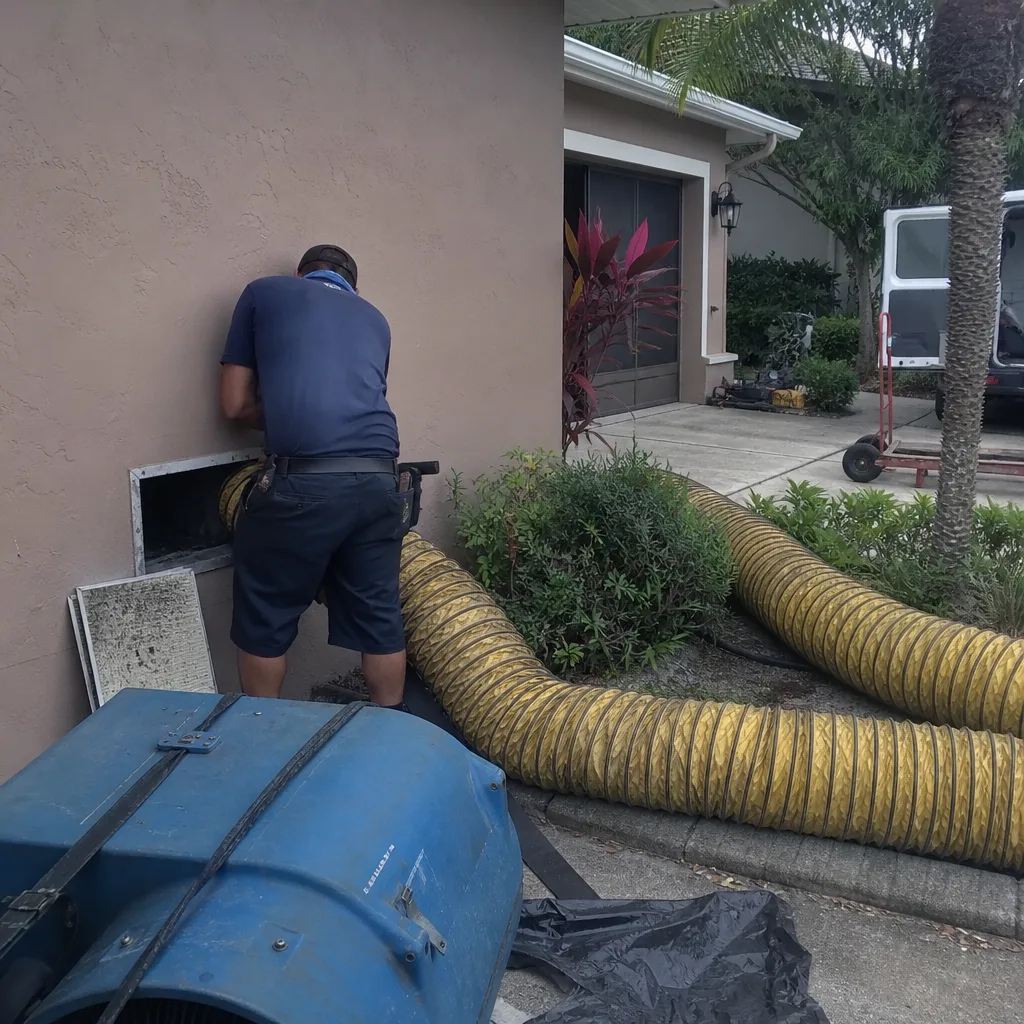 Before
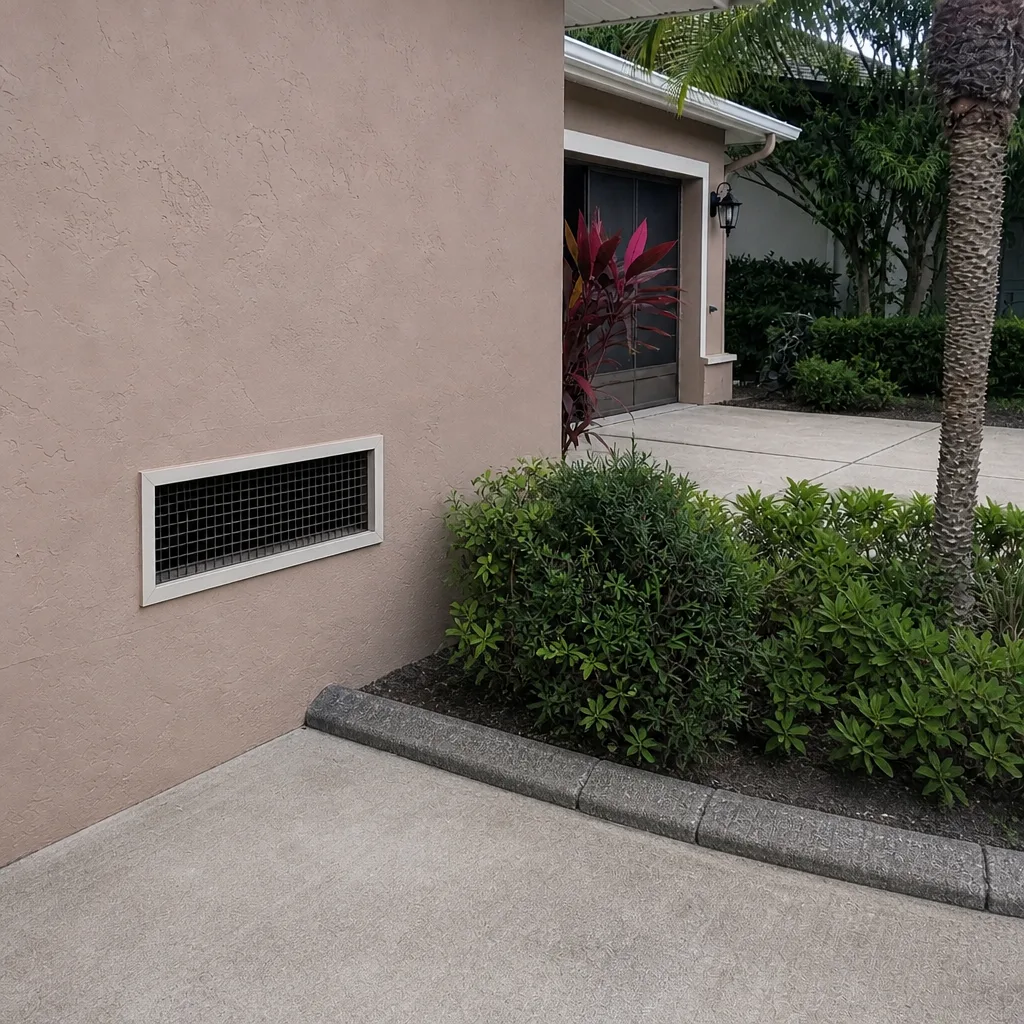 After
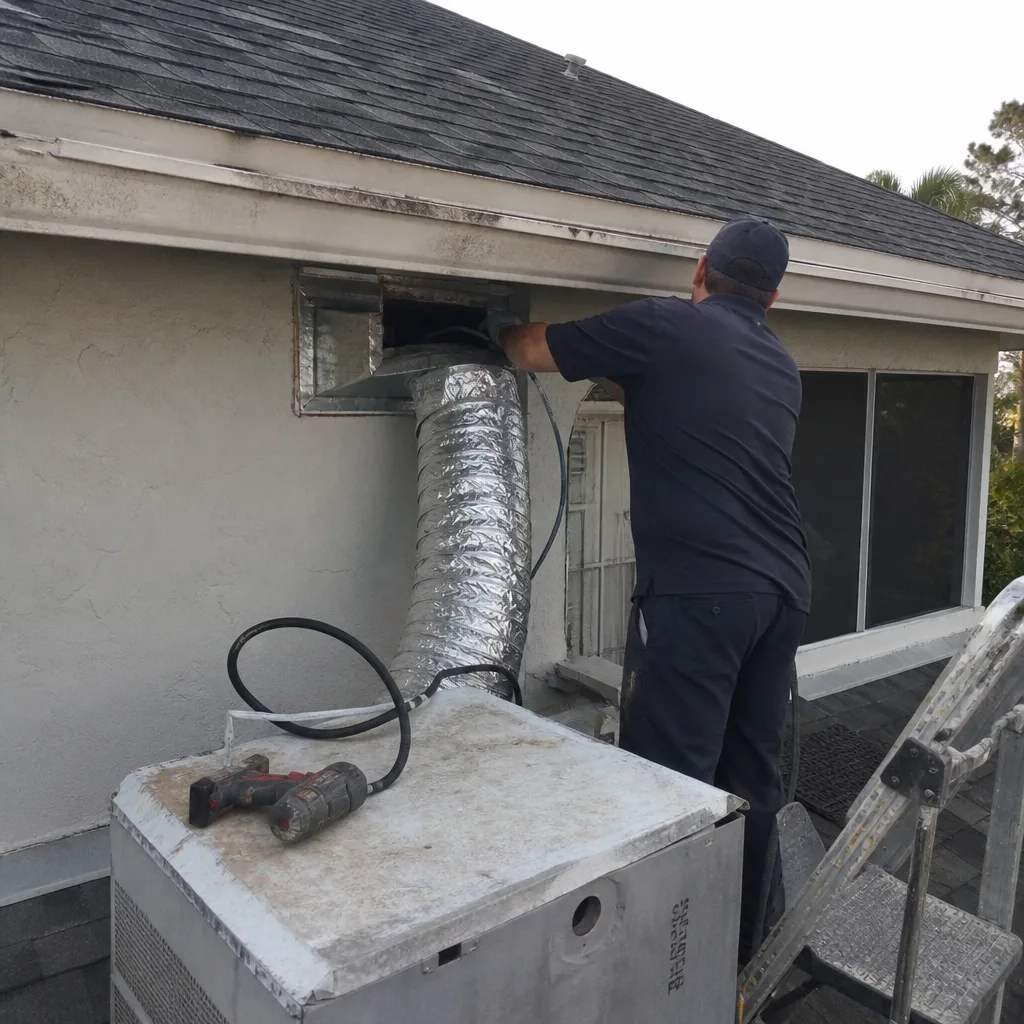 Before
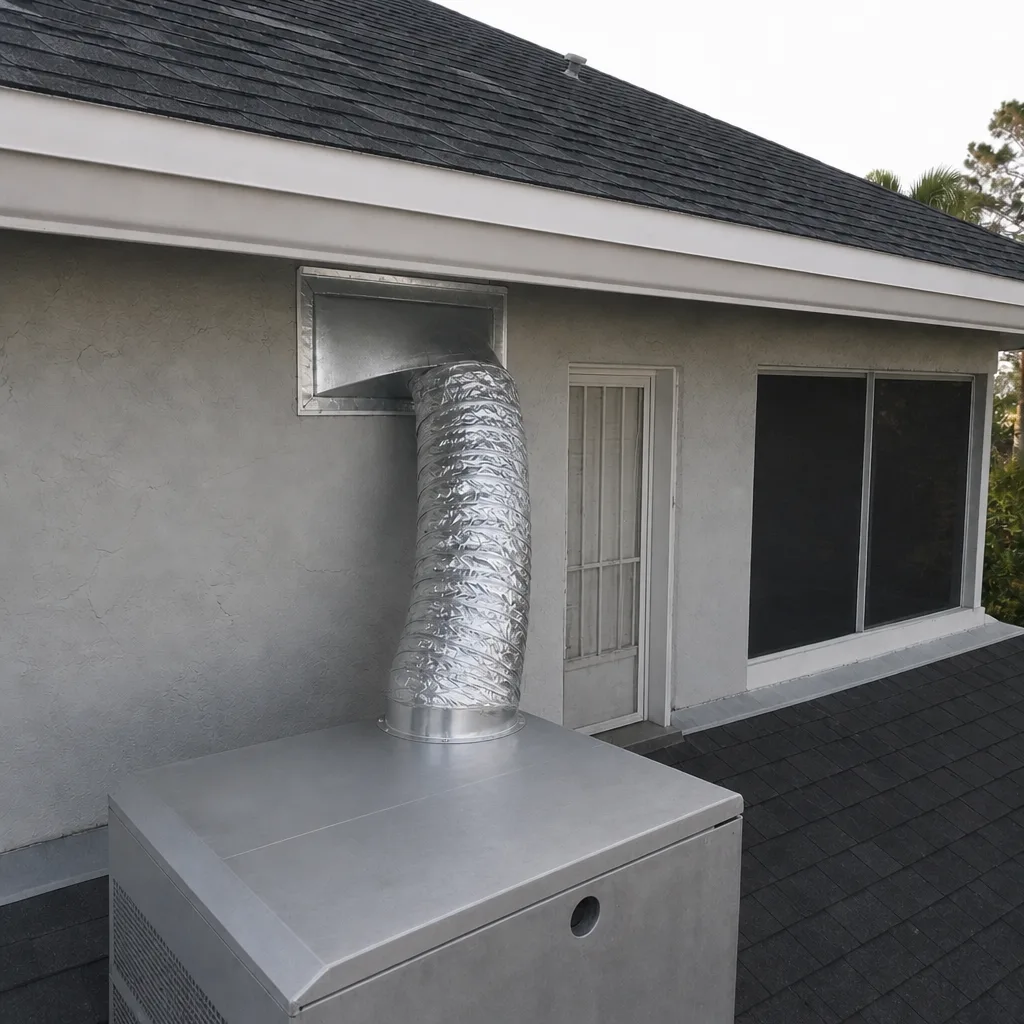 After
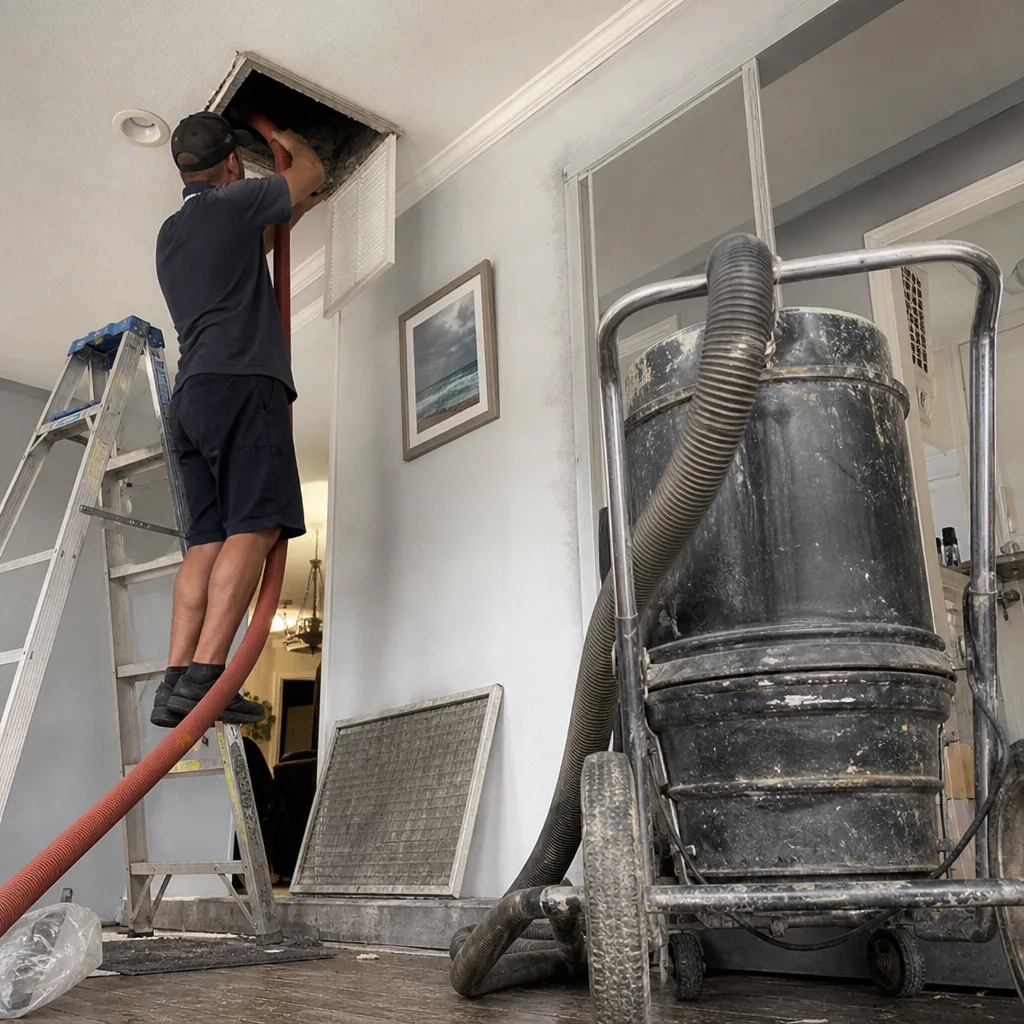 Before
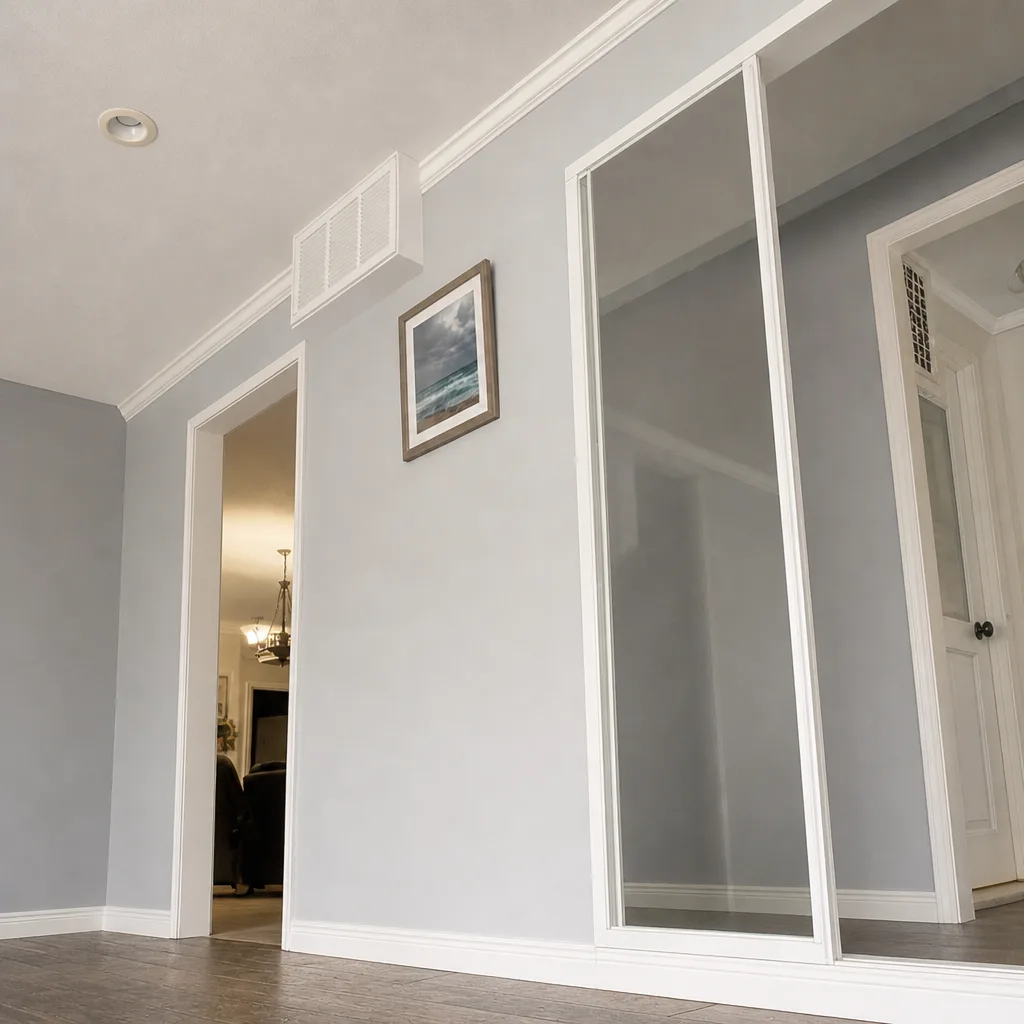 After
When to Call a Professional
Call a professional if any of these apply: the ductwork has never been cleaned and the home is more than 10 years old; someone in the household has allergies, asthma, or a respiratory condition; there are pets that shed; you’ve recently finished a renovation or moved into a home with unknown duct history; there’s a musty smell at the registers; or rooms aren’t getting even airflow. In Clearwater’s humid climate, flex duct and long rum runs make the professional case stronger than it would be in a drier, more compact home. If your return plenum is sealed and you can’t access it, that’s also a professional job. Duct Cleaning Clearwater offers free estimates in Clearwater; call (844) 238-0931 to schedule.
Frequently Asked Questions
Look for visible dust at the register grilles, a musty smell when the system starts, uneven airflow between rooms, or a duct system more than 10 years old that has never been cleaned. If any of those are present, get an inspection. If none of them apply and the system is newer, the DIY maintenance routine covers the basics.
You can clean the register grilles, return grille, filter slot, and short straight branch runs yourself. You cannot effectively clean the main trunk line, the return plenum, or the air handler interior with consumer equipment. Those sections need professional negative-pressure equipment and mechanical agitation to remove the contamination that matters most.
Quotes vary because the process varies. A quote that covers register vacuuming only is cheaper than one that uses a truck-mounted HEPA unit with a rotating brush system, works the full trunk and return plenum, and provides before-and-after photos. When you compare quotes, ask what equipment is used, what sections are covered, and whether the price is per system or per vent. A per-vent price leaves the largest sections out.
No, not beyond the register boot. Flex duct has a thin inner liner that tears easily under brush contact, and a torn liner becomes a permanent dust source. Even professional cleaning uses gentle agitation on flex duct, so a homeowner with a drill-mounted brush is more likely to damage the duct than clean it.
Most homes do well with professional cleaning every few years, sooner if there are pets, allergy sufferers, or a recent renovation. Clearwater’s humidity supports biofilm growth, which pushes the interval shorter than it would be in a drier climate. The DIY maintenance routine between cleanings extends the interval.
Duct cleaning addresses the air distribution system: the trunk, branches, return plenum, and registers. Dryer vent cleaning removes lint from the separate dryer exhaust duct that runs from the dryer cabinet to the outside wall. Lint buildup in the dryer vent is a documented fire risk, so it’s safety maintenance, not optional upkeep. Call (844) 238-0931 for an estimate on either service. We answer 24/7. Fast dispatch from 7am to 7pm, Sunday through Friday.
The Bottom Line
DIY air duct cleaning gets the visible layer. Professional cleaning gets the layer underneath, and in Clearwater’s humid, flex-duct-heavy, long-run housing stock, the layer underneath is where the real air quality problem lives. The shop vac is a useful maintenance tool, not a substitute for negative-pressure cleaning with mechanical agitation. Use the maintenance routine between professional cleanings, watch for the signs that say it’s time for a real service, and when you’re ready for an estimate, call us. Estimates are free, the price is set per system by the written estimate, and we bring before-and-after photos so you can see what changed.
Call (844) 238-0931 for a free estimate. We answer 24/7. Fast dispatch from 7am to 7pm, Sunday through Friday.
Written by the team at Duct Cleaning Clearwater.