
Last updated November 16, 2026
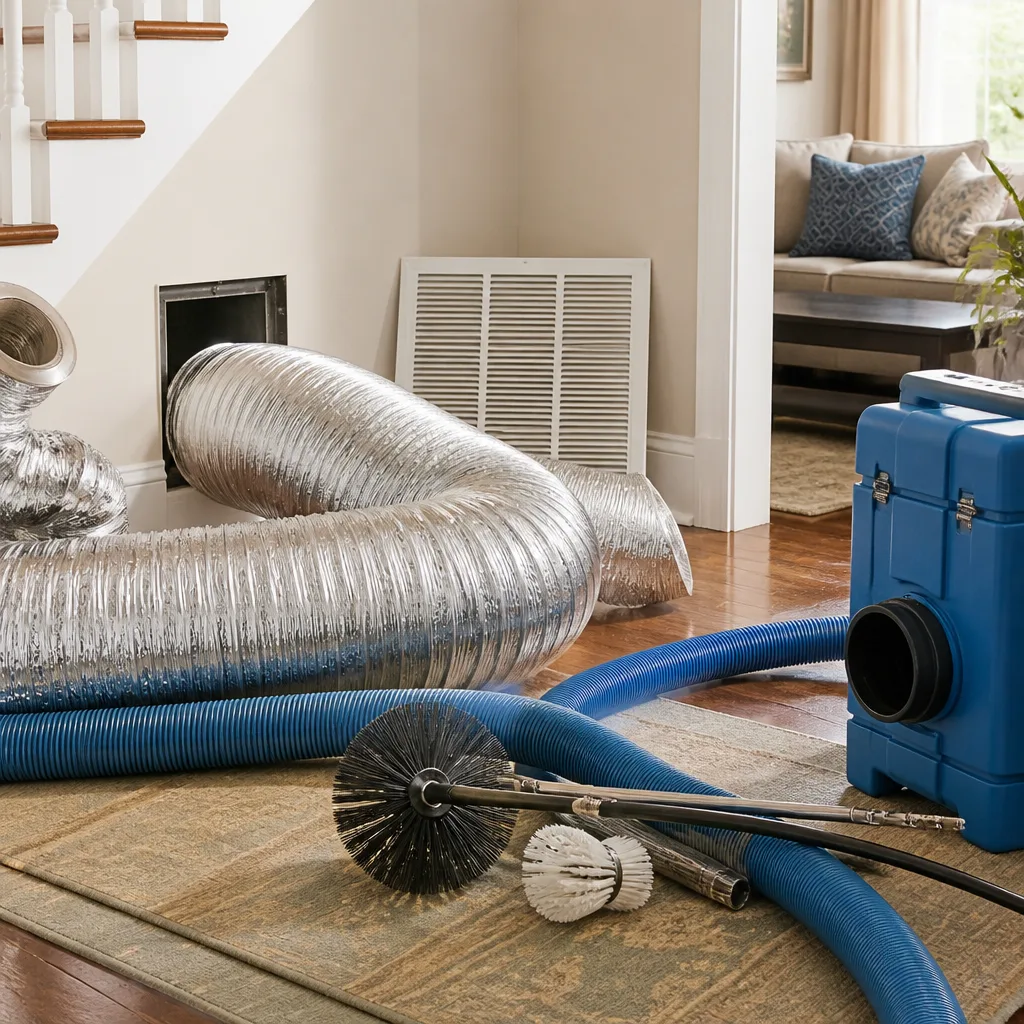 Whole-home duct cleaning
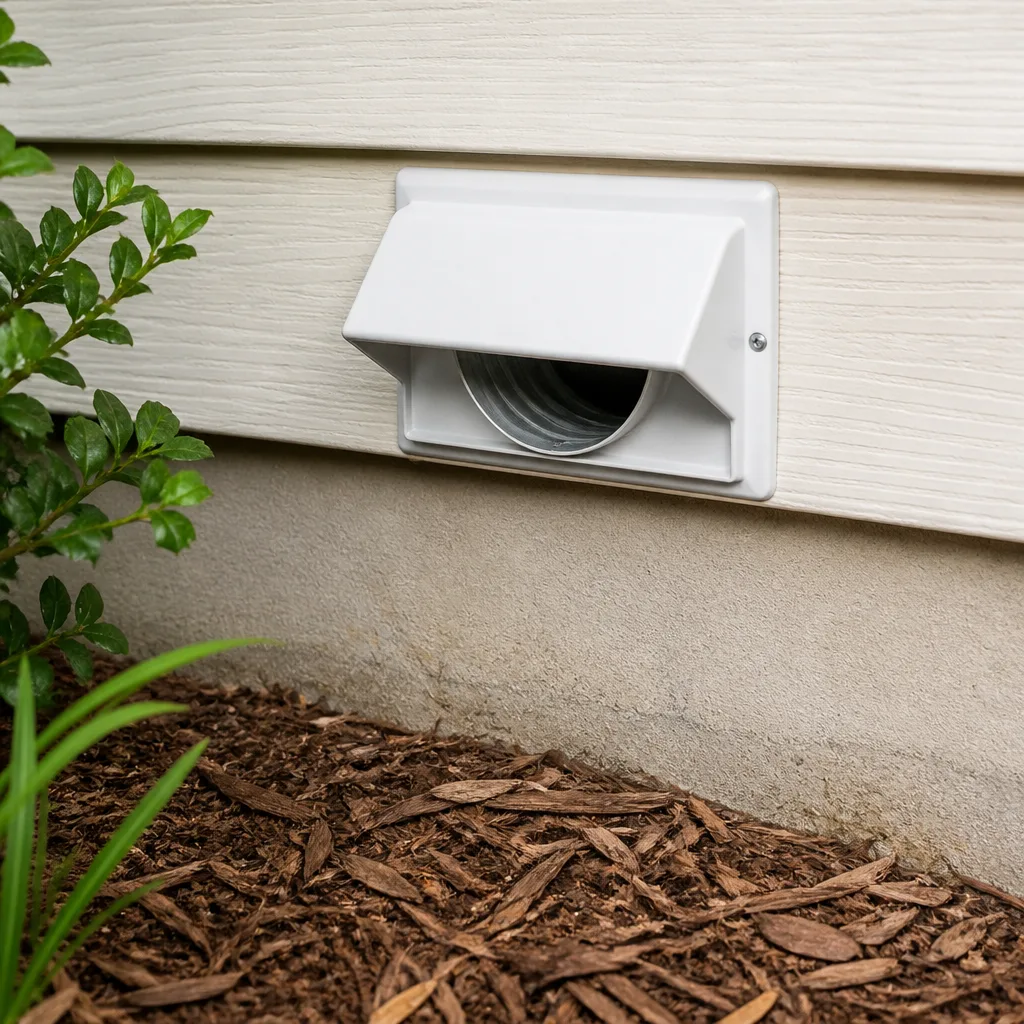 Dryer vent cleaning
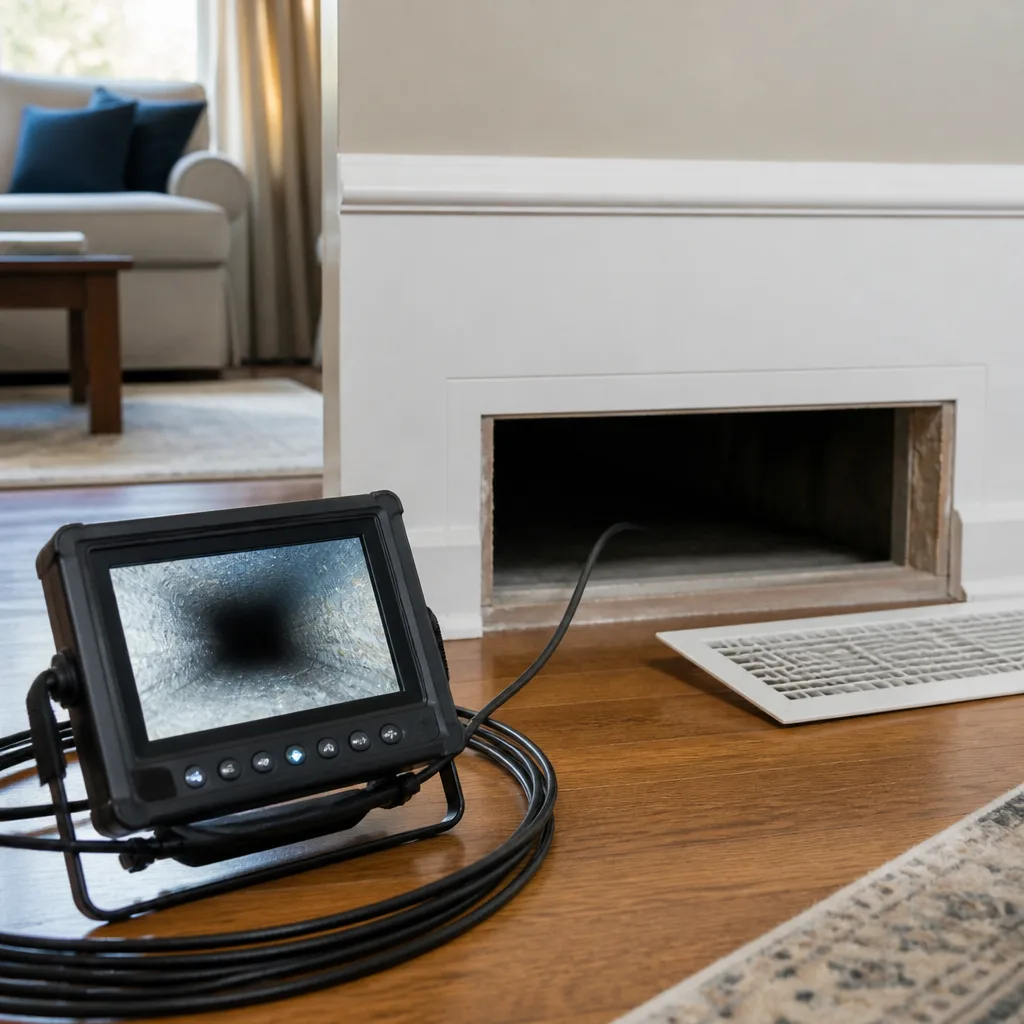 Camera inspection
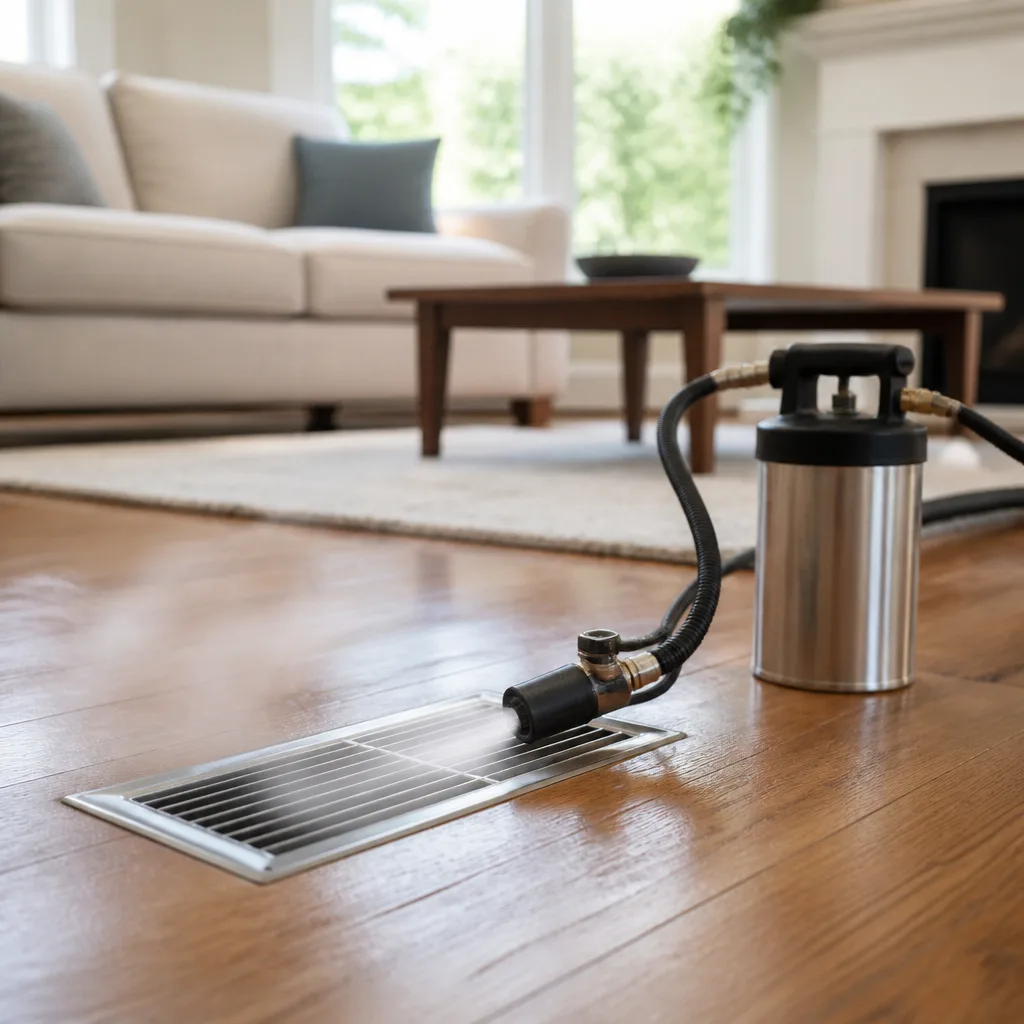 Sanitizing & deodorizing
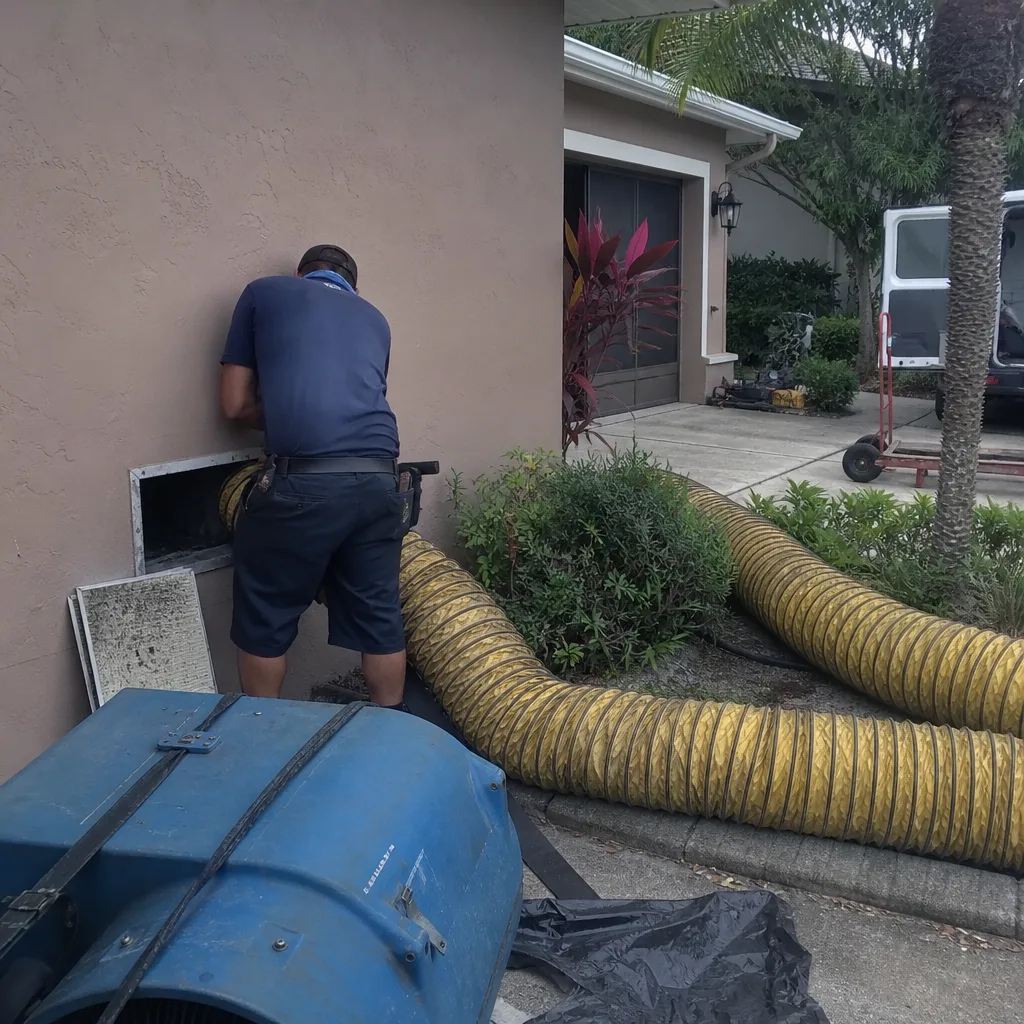
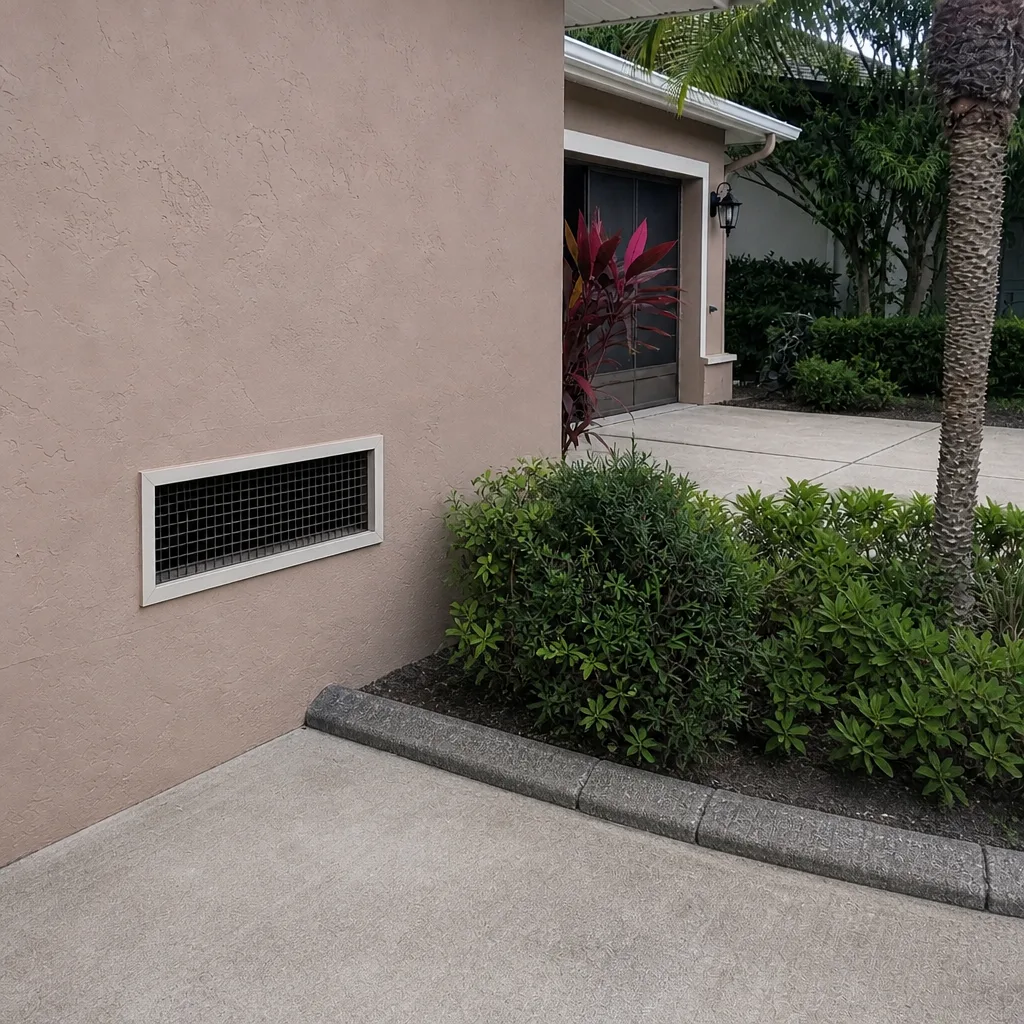
Whole-system duct and dryer vent check with before-and-after photos - you see exactly what came out of your vents
That "$99 whole-house special" is a bait ad - the real number appears once they are in your hallway, or the "clean" is a shop-vac at the register. We photograph the inside of your ducts before and after instead.
Air Duct Cleaning Maintenance Schedule: What to Do and When
Most homeowners treat duct cleaning as a five-year calendar item, something to tick off alongside the water heater flush. That interval was never built for Clearwater. A house here runs its air handler 10 to 11 months a year, pulling warm, humid air through the same metal for the better part of every season. Particulate settles faster, condensation forms more often, and the national “every 3 to 5 years” rule starts to look like a guess. The right schedule isn’t a number on a wall chart. It’s a set of intervals that respond to your filter grade, your occupancy, your pets, and anything that’s ever gone wrong near the air handler. This guide walks through how to build that schedule for a Clearwater home, plus a month-by-month routine for the stretch between professional visits.
Quick Answer
In Clearwater, most homes need professional duct cleaning every 2 to 4 years rather than the widely cited 3 to 5, because near-continuous air-conditioning runtime and year-round pollen load push contamination faster than northern climates. Homes with pets, allergy sufferers, recent renovation dust, or older duct systems may need it closer to every 18 to 24 months. Yearly visual checks at the registers, a filter upgrade to MERV 8, and prompt attention to water intrusion near the air handler are the three variables that most reliably extend the interval.
Styles & brands we work with
- Whole-home duct cleaning
- Dryer vent cleaning
- Camera inspection
- Sanitizing & deodorizing
Table of Contents
- Why Florida’s Climate Compresses the Standard Interval
- How Filter MERV Rating Buffers Contamination
- Event-Based Triggers That Reset the Schedule
- A Month-by-Month Clearwater Maintenance Calendar
- What to Do Between Professional Cleanings
- How Property Managers Should Track Multi-Unit Schedules
- Signs It’s Time to Move the Date Up
- Common Mistakes to Avoid
Why Florida’s Climate Compresses the Standard Interval
The “every 3 to 5 years” figure came out of a national body of guidance that has to fit Maine and Miami with the same sentence. It doesn’t. In a northern climate, a heating system might run four or five months out of the year, with windows open the rest of the time. In Clearwater, the air handler moves conditioned air almost every week of the calendar. That runtime is the single biggest driver of how fast the interior of a duct system loads up.
Three things happen simultaneously when the system runs year-round:
- Particulate settles instead of escaping. Every cubic foot of return air carries dust, skin cells, pet dander, and pollen into the filter and, if the filter is loaded, past it into the ducts. When a system runs for 10 or 11 months, that’s roughly double the “exposure hours” of a house that only conditions five or six months.
- Humidity keeps things slightly tacky. Clearwater’s warm, humid air means that fine particulate doesn’t always stay airborne the way it would in Arizona. It clings to duct walls where it can become a substrate for biological growth if there’s ever a slow leak or a sweating plenum.
- Pollen season is long and overlapping. Oak in late winter, grass in spring and summer, and year-round weed and mold spores keep the outdoor particulate load elevated far longer than the short spring burst most of the country deals with.
In our experience across Clearwater, the practical effect is that the standard interval feels late by the time we get the call. A house we open up at the four-year mark often looks closer to what a homeowner up north would see at seven or eight years. The schedule should be set from those conditions, not from a brochure.
What “running the system” actually means for particulate
A house that sets its thermostat to 78 and lets the system cycle normally still moves meaningful air volume every day. A house that runs a dehumidifier setting, hosts pets, and has a MERV 4 filter that goes two months past its useful life is a very different story. The gap between those two houses at the same four-year interval is enormous. This is why a condition-based schedule beats a calendar-based one every time.
How Filter MERV Rating Buffers Contamination
Your filter is the only line of defense between the air in your house and the interior walls of your ducts. Upgrading from a MERV 4 to a MERV 8 filter is the single cheapest step most Clearwater homeowners can take to buy themselves additional time between professional cleanings. It’s not a magic switch, and it comes with a trade-off worth understanding before you swap.
Here’s how the ratings actually break down for a typical residential system:
- MERV 4 to 6 (the basic “dust and lint” pleated filter): Captures larger particles but lets a lot of fine dust, pollen, and dander pass into the return plenum. If your filter has a visible cardboard frame and costs less than the coffee it goes with, this is likely what’s in there.
- MERV 8 (the practical upgrade): Captures the bulk of pollen, mold spores, and pet dander before they reach the ducts. It’s the sweet spot for most Clearwater homes. It also keeps the evaporator coil cleaner, which matters more than owners realize for airflow and humidity control.
- MERV 11 to 13: Meaningfully better filtration, but higher static pressure across the filter. In a system not designed for it, that can reduce airflow, strain the blower, and actually worsen the humidity problem in a Clearwater summer.
- MERV 16 and HEPA: Whole-house HEPA requires a system engineered for it. Dropping a MERV 16 filter into a system designed around a MERV 8 is a common mistake that causes more problems than it solves.
The practical calculation: moving from MERV 4 to MERV 8 can reasonably extend your duct-cleaning interval by a few months, and it definitely reduces the rate at which the coil and plenum pick up debris. If your system uses a media cabinet or a higher-capacity filter, the Honeywell and Aprilaire components we service are worth inspecting, because their condition tells you a lot about what’s happening downstream. When we’re already in the house for air duct cleaning, we inspect the filter housing and the coil face, not just the duct runs.
The filter change you’re probably missing
Most Clearwater homeowners change filters too rarely during peak cooling season. When the system runs nearly every day for months, a filter that’s rated for 90 days of “typical use” can hit its loading point in 45 to 60. Set a phone reminder for every 45 days from May through September and back off to 90 days in the milder stretch. That single habit is easier than remembering which month you last cleaned the ducts.
Event-Based Triggers That Reset the Schedule
Some events override whatever calendar you’ve got taped inside the air handler closet. When any of the following happen, treat the date as reset to zero regardless of when the last cleaning was:
- Renovation dust. A kitchen remodel, a bathroom gut, drywall work, or a flooring refinish pumps fine particulate into the return air within hours. A renovation without sealing the returns is the single fastest way to load a duct system to a level that would otherwise take four years to reach.
- Rodent activity in or near the ducts. Droppings, nesting material, or contamination in a duct run is not a wait-and-see situation. Schedule cleaning once the source is addressed and any damaged section is identified for repair.
- A water leak near the air handler. A slow drip from the condensate line or a wet plenum is where biological growth starts. If the wet area is inside the ductwork or the coil housing, get eyes on it quickly and be ready to schedule cleaning after the leak is stopped.
- Adding a pet. A shedding dog or a cat that sleeps on the return grille will change your cleaning interval noticeably. Plan the first cleaning about 18 months after the pet arrives, then adjust from what we find.
- Moving into a home with unknown history. Every home purchase should reset the clock. There’s no telling how long it’s been since the last cleaning, and a lot of homes we see in Clearwater have never had it done at all.
- Visible mold or a musty smell that doesn’t clear. Duct cleaning is not mold remediation, but identifying the source and cleaning the affected system is the first step. If you smell the same damp patch every time the system kicks on, don’t guess at the interval.
We’ve seen all six of these reset the schedule in the last six months. Treat them as automatic triggers, not as “maybe later” items. When we do the cleaning, if we find disconnected or damaged sections that were causing the loading in the first place, we can correct them on the same visit through our duct repair work rather than sending you looking for a second contractor.
A Month-by-Month Clearwater Maintenance Calendar
Between professional cleanings, the routine maintenance that matters most is small and predictable. The following calendar reflects the way a Clearwater cooling season actually lines up against the calendar year. Afternoon thunderstorms and afternoon air handler runtimes dominate the middle stretch.
- January. Replace the filter. Wipe the return grilles in the main living areas. Look under the air handler for any sign of moisture or standing water in the pan.
- February. Do a walk-around visual check of every supply register. Note any that look dirty or dusty, and any that feel weak on airflow.
- March. Peak oak pollen arrives. Change the filter about 30 days in. Close windows on windy days if you have allergy sufferers in the house.
- April. Remove and clean the return grille nearest the kitchen and any pet sleeping area. Wipe down the supply grilles in bedrooms.
- May. Cooling season kicks off. Change the filter, inspect the drain pan and pan line for debris, and confirm the pan drains freely.
- June. Peak cooling. Filter change again. Wipe grilles on a damp microfiber cloth. Any concern about moisture near the air handler warrants a visual check by a technician.
- July. Peak heat. Filter change. Look for condensation on the air handler cabinet, especially if you’ve had any storms bring humidity indoors.
- August. Filter change. Same visual checks. If the house is closed up with the AC on all day, this is the month the system runs hardest.
- September. Filter change. Wipe the return grilles again. Note any grille that seems to load faster than the rest; that tells you where return air is pulling in the most debris.
- October. Cooling load eases. Do a full register-and-grille wipe and inspect the air handler pan one more time before the wetter fall weather.
- November. Filter change. If you’ve had any renovation this year, this is the month to schedule cleaning rather than pushing it to next spring.
- December. Filter change. Wipe grilles, clean the return grille closest to the kitchen. Review your schedule and note the year’s reset triggers.
This calendar is a guide, not a contract. The stretch of the year that matters most in Clearwater is May through October. Two or three filter changes and a couple of grille wipes during that window do more for your duct system than a dozen wipes in the mild months.
Dryer vent belongs on the same calendar
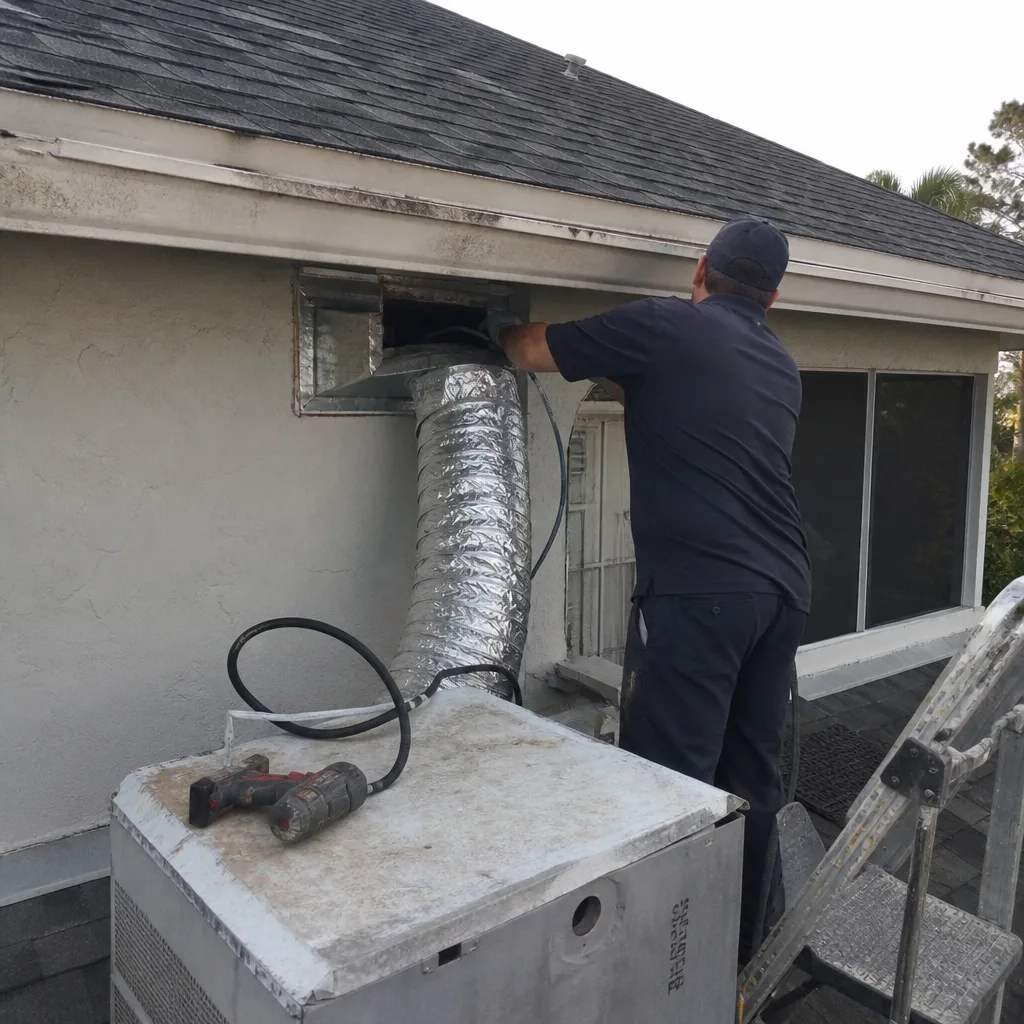
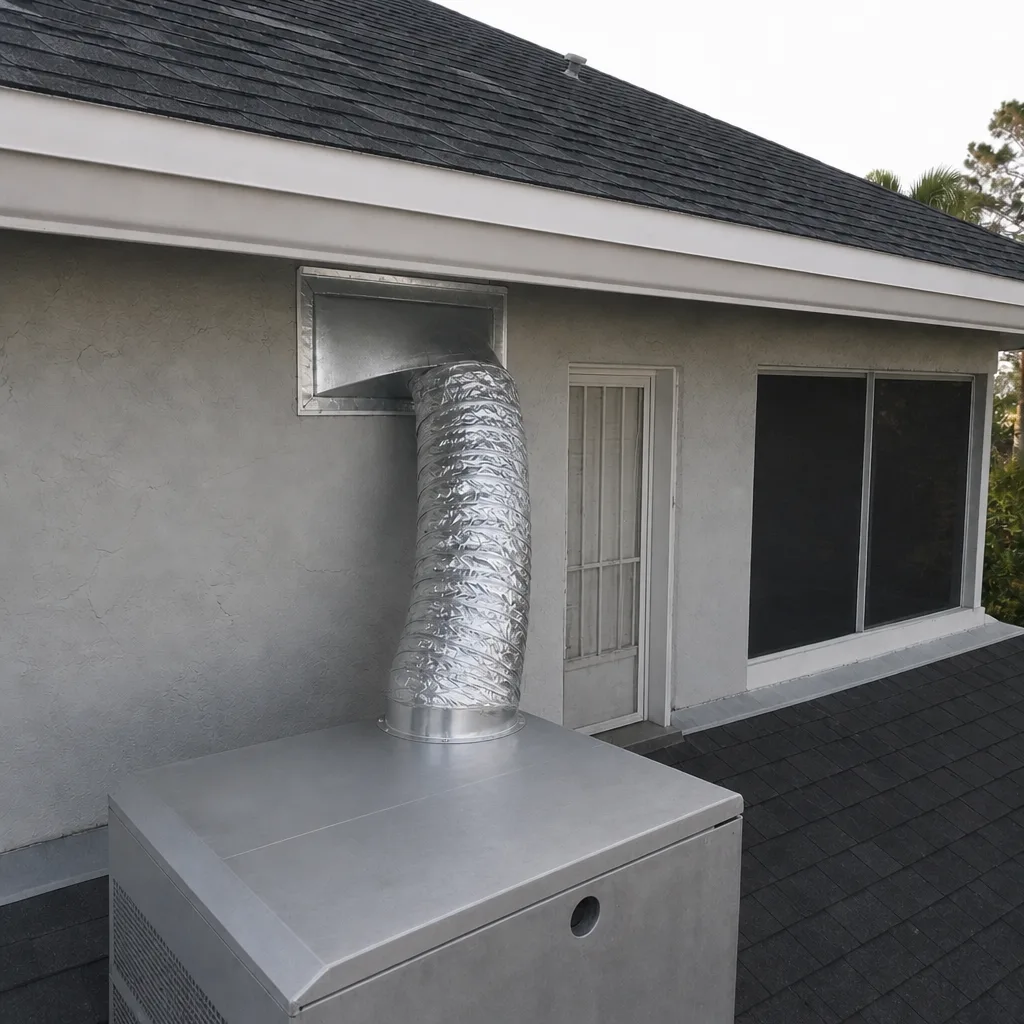
The dryer vent isn’t ductwork for your air conditioning, but it’s part of the ventilation system that keeps the house safe. Lint buildup in the vent line is a documented residential fire hazard, which makes dryer vent cleaning safety maintenance rather than an optional add-on. Add a vent cleaning to your yearly list. Many Clearwater households should also check the outside vent flap after storms to make sure it’s not stuck or blocked.
What to Do Between Professional Cleanings
The work between professional cleanings isn’t glamorous, but it’s the difference between a house that stays in its interval and one that always seems to be due. Focus on four things:
Wipe the supply grilles. A microfiber cloth, slightly damp, on every supply register in the house, once a month in the heavier part of the cooling season. The dust you catch on the grille is dust that isn’t reaching the ducts.
Check the drain pan. Every air handler has a pan under it to catch condensation from the coil. That pan should be dry with only the normal drip from the drain line. Any standing water, algae growth visible through the pan, or smell from the drain line means the pan or line needs attention.
Inspect the coil face visually. Look at the coil from the outside of the cabinet. If you can see through it and the fins look clean and bright, good. If there’s a mat of dust covering the face, or if the coil looks fuzzy or matted, that’s telling you the filter isn’t catching what it should. Schedule professional service sooner than you would otherwise.
Wipe the return grille near the kitchen. The cooking area produces more particulate than anywhere else in the house. The return grille nearest the kitchen loads faster than any other return in a typical Clearwater home.
We’re careful to say that all of these are visual checks, not procedures. The air handler cabinet contains components that should only be opened by someone trained to work on them. If a visual check suggests a problem, that’s the point to call us rather than to start poking around inside.
How Property Managers Should Track Multi-Unit Schedules
Tracking duct cleaning across a portfolio of Clearwater properties is a different job than keeping one house on a schedule. The single-family habit of “remember the year we last cleaned” doesn’t scale. Our experience with property managers points to a small set of practices that make the difference:
- Tag every unit with its own last-cleaned date. A spreadsheet column, an app, or even a dated sticker inside the air handler closet. The single most common failure is that a manager can’t tell which unit is which after a few tenant turnovers.
- Use condition, not calendar, for the first cycle. A newly acquired property should have one thorough inspection on record so you can set a real baseline interval rather than applying a portfolio-wide guess.
- Group the cleaning cycle by building, not by individual unit. Scheduling the whole building on the same week is far cheaper operationally than trickling units in as tenants move out, and it makes future scheduling much simpler.
- Tie the filter change to the turnover process. Every tenant turnover is a filter change. This one habit alone reduces the contamination rate across the portfolio and helps you hit the longer end of the cleaning interval.
- Track renovation separately. Any unit that’s had a renovation resets to zero regardless of the building schedule. Keep a separate line for those units.
Light-commercial is its own cycle
A small office, a medical suite, or a light-commercial retail space in Clearwater has the same humidity and pollen load as a house, but the runtime is often higher because the thermostat is set for comfort in a larger space with more occupants. Expect the interval to run shorter, and expect occupancy to change the load seasonally. A property manager we work with describes the practical rule as “when the filters are going in faster than they should, the ducts are overdue.” That’s a reasonable diagnostic.
Signs It’s Time to Move the Date Up
Any of these signs should pull the schedule forward regardless of the calendar:
- Visible dust puffs out of a supply register when the system kicks on.
- A musty or dusty smell that gets stronger when the AC runs.
- Persistent allergy symptoms indoors that ease when you’re away from the house.
- Visible dust streaks around the edges of supply grilles or the air handler cabinet.
- Any renovation, water intrusion, or pest activity in the last 18 months.
- A house you’ve owned for more than three years with no documentation of prior cleaning.
None of these are emergencies, but each of them narrows the window. If you’re seeing more than one, the honest answer is that you’re already past the schedule.
The equipment actually matters
When we clean a Clearwater home, we use a Rotobrush and Nikro platform, meaning mechanical agitation and HEPA-level vacuum capture rather than a blower that just pushes dust around. We use Abatement Technologies equipment for containment when a job calls for it. This matters at the schedule level because a thorough cleaning genuinely resets the clock. A half-hearted one doesn’t. If you’re going to pay for a cleaning, the entire point is to reset the interval with confidence.
Common Mistakes to Avoid
- Using a calendar from a different climate. A 5-year interval borrowed from a northern state is too long for a Clearwater house that runs its system nearly year-round. Set your schedule from your conditions, not from a search result.
- Leaving a MERV 4 filter in past its loading point. During peak cooling, that filter can be spent in 45 days. A loaded filter lets particulate pass straight through and undoes everything else you’ve done.
- Ignoring a wet plenum or drain pan. A small amount of water near the air handler is the start of a bigger problem. Address it before scheduling a cleaning, and treat the wet area as a reason to move the schedule up.
- Doing renovation without sealing the returns. Drywall dust and sawdust pull straight into the system. Tent the returns during the work, and reset the cleaning clock when the job is done.
- Skipping the dryer vent. Lint accumulation is a fire hazard, not a comfort issue. Treat it as an annual item on the maintenance list regardless of how the AC is performing.
- Not photographing what’s actually in the ducts. Any honest cleaning comes with before-and-after photos. If a provider can’t show you what was there, you have no way of knowing the work was done.
- Assuming a cheap quote is the same job. The whole-system flat price we quote depends on what’s actually in the system and what the scope is. A coupon price is usually a teaser that grows once the technician is on site. Ask for a written scope before you commit.
See the difference
 Before
 After
 Before
 After
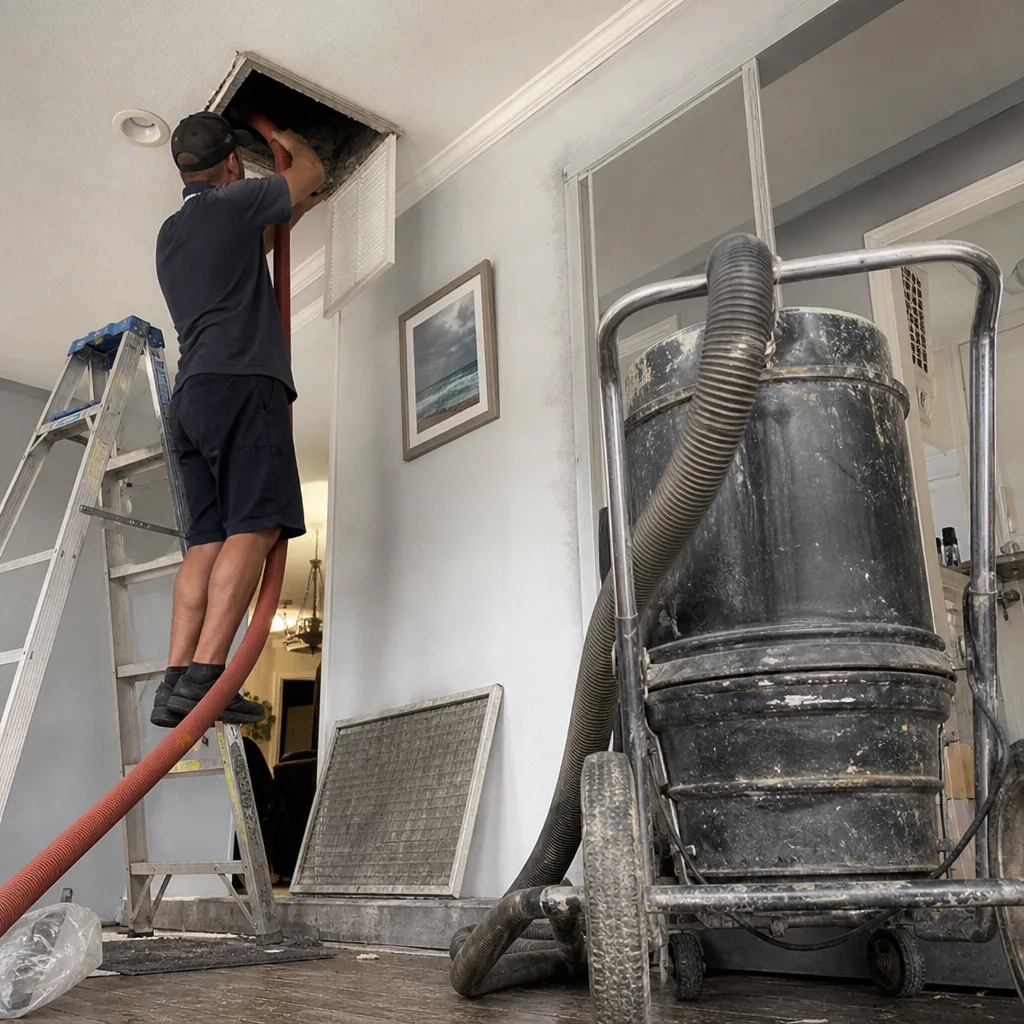 Before
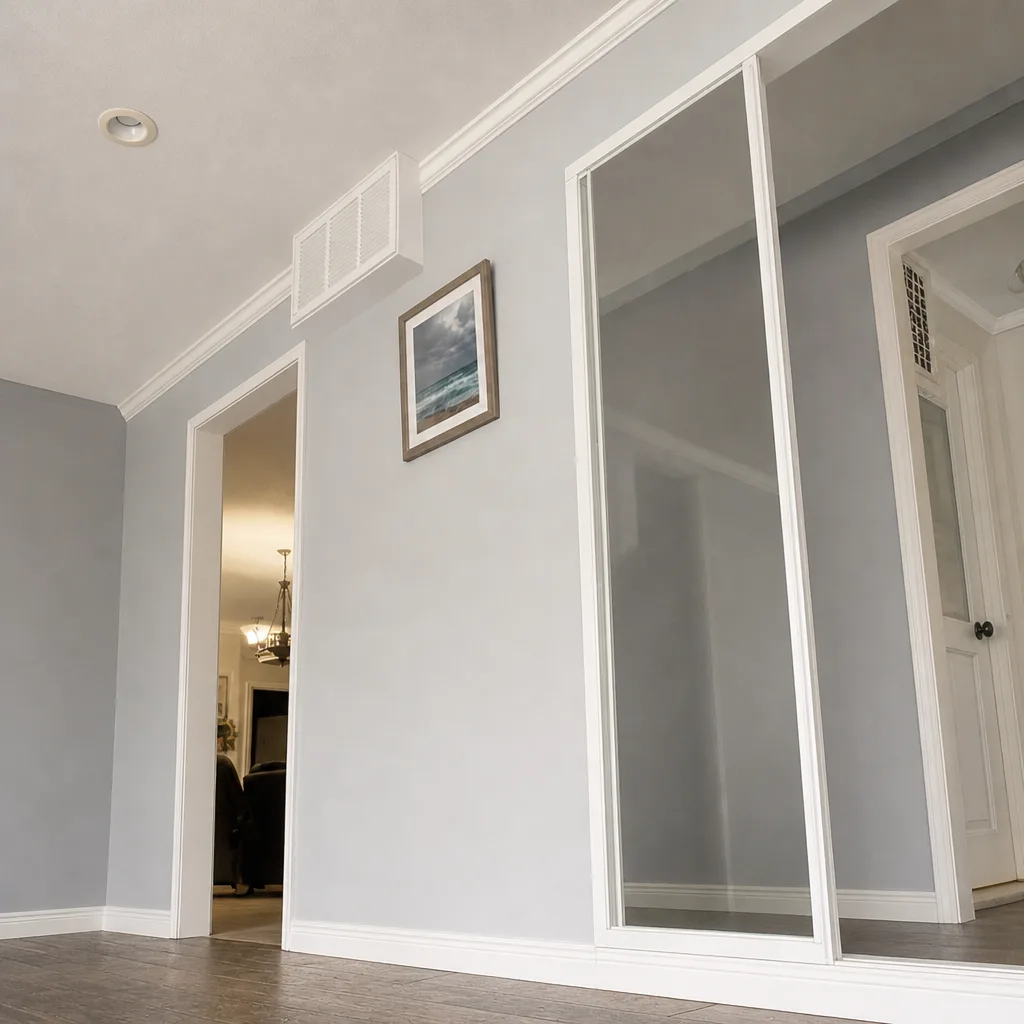 After
When to Call a Professional
Call for professional service when your calendar says it’s due, when any of the event-based triggers above resets the schedule, or when a visual check shows what looks like a problem inside the system. Call sooner if you smell a musty odor from the registers, see dust puffing out of a supply, or have had water near the air handler. Call immediately if you’ve spotted rodent activity in a duct run. Duct Cleaning Clearwater offers free estimates in Clearwater and can be reached at (844) 238-0931. Call (844) 238-0931. We answer 24/7. Fast dispatch from 7am to 7pm, Sunday through Friday. The estimate is free and the price is set per job by the written estimate.
Frequently Asked Questions
In Florida, most homes need professional duct cleaning every 2 to 4 years, shorter than the widely cited 3 to 5 years. The reason is near-continuous air handler runtime, extended pollen seasons, and year-round humidity. Homes with pets, allergy sufferers, or older ductwork may need it closer to every 18 to 24 months. Call (844) 238-0931 for an exact quote on your Clearwater home – estimates are free.
Yes, moderately. Moving from MERV 4 to MERV 8 captures more pollen, dander, and fine dust before it reaches the ducts, which slows loading and can add months to your interval. It also keeps the coil cleaner. Going higher than MERV 11 isn’t universally better and can strain a system not designed for it. If you’re uncertain about your system’s filter rating, call us and we’ll look at the filter housing and coil face with you.
Pricing depends on the size of the system, the number of runs, the contamination level, and whether repair work is needed. We quote one flat price per system agreed before work starts, not a per-vent price. That’s the honest structure, and it’s why we don’t hand out a teaser coupon at the top of the call. Call (844) 238-0931 for an exact quote.
Cheap quotes usually come from consumer-grade vacuum equipment, no mechanical agitation, no containment, and no before-and-after photos. The work isn’t the same, and you can’t tell from the number. We use Rotobrush and Nikro equipment with HEPA-level capture, and we document what we find. If a competing quote is dramatically lower, ask what equipment they’ll bring and whether you’ll get photos.
You should get before-and-after photos of your own ducts, not stock images, plus a written scope of what was cleaned. On any cleaning we do, you’ll have photos and, where needed, notes on any disconnected or damaged sections we found. If a provider can’t produce that, don’t hire them. Call us and we’ll walk through what a proper call looks like.
Yes. Both fall within our three-service scope, and combining them is often the practical choice for a Clearwater homeowner who hasn’t had either done in a few years. Dryer vent cleaning is a fire-safety service, so treat it as its own annual item rather than a throwaway add-on. Call (844) 238-0931 for an exact quote on either or both – estimates are free.
We correct it as part of the same visit through our duct repair service. That means one call, one schedule, and no need to bring in a separate contractor. If the damage is severe enough to require a different scope, we’ll explain that clearly before any work proceeds. Call (844) 238-0931 and we can walk through what your system likely needs.
Yes. Households with pets, especially shedding dogs or cats, typically need their ducts cleaned closer to every 18 to 24 months rather than every 2 to 4 years. The filter change frequency also goes up. The reason is simple: dander loads faster, and the return grille nearest a pet’s favorite spot will show it. Call (844) 238-0931 to talk through a schedule that fits your house.
The Bottom Line
The duct-cleaning schedule that works for a Clearwater house isn’t the one printed on a brochure. It’s the one built from filter grade, occupancy, event triggers, and the long stretch of cooling season that runs from May through October. For most Clearwater homes, that puts the practical interval between 2 and 4 years, with homes in heavier conditions (pets, older systems, recent renovation) closer to every 18 to 24 months. The three habits that do the most work between professional visits are: change your filter on schedule, wipe grilles once a month during cooling season, and check the air handler pan and coil face visually. Treat dryer vent cleaning as an annual safety item, and treat any water intrusion near the air handler as a reset to your cleaning clock. Spread those habits across the year and you’ll spend less time thinking about duct cleaning, not more.
If you’re reading this because it’s time to move the date up, we’re happy to talk it through. Call (844) 238-0931 for a free estimate. We answer 24/7 with fast dispatch from 7am to 7pm, Sunday through Friday. You’ll get one flat price per system agreed before work starts, before-and-after photos of your own ducts, and our satisfaction guarantee on the work.
Written by the team at Duct Cleaning Clearwater.