
Last updated November 16, 2026
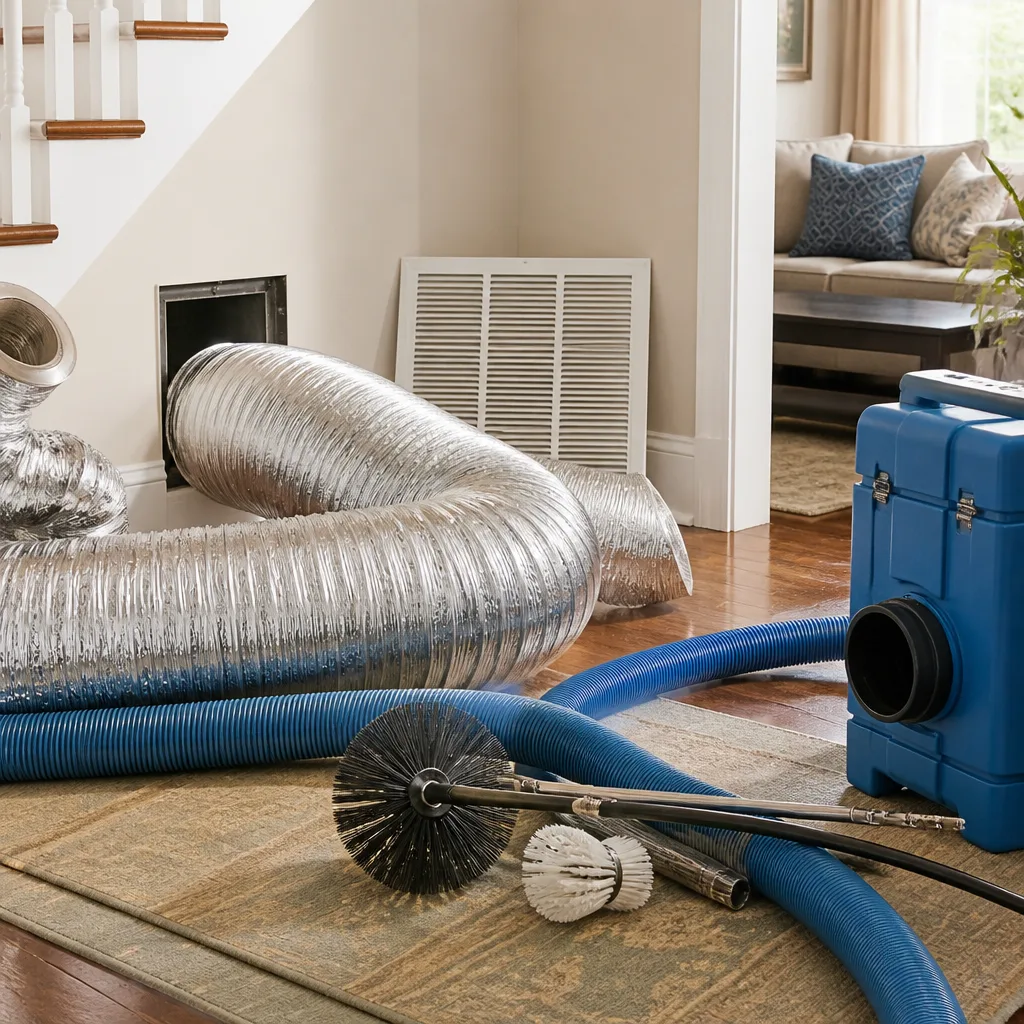 Whole-home duct cleaning
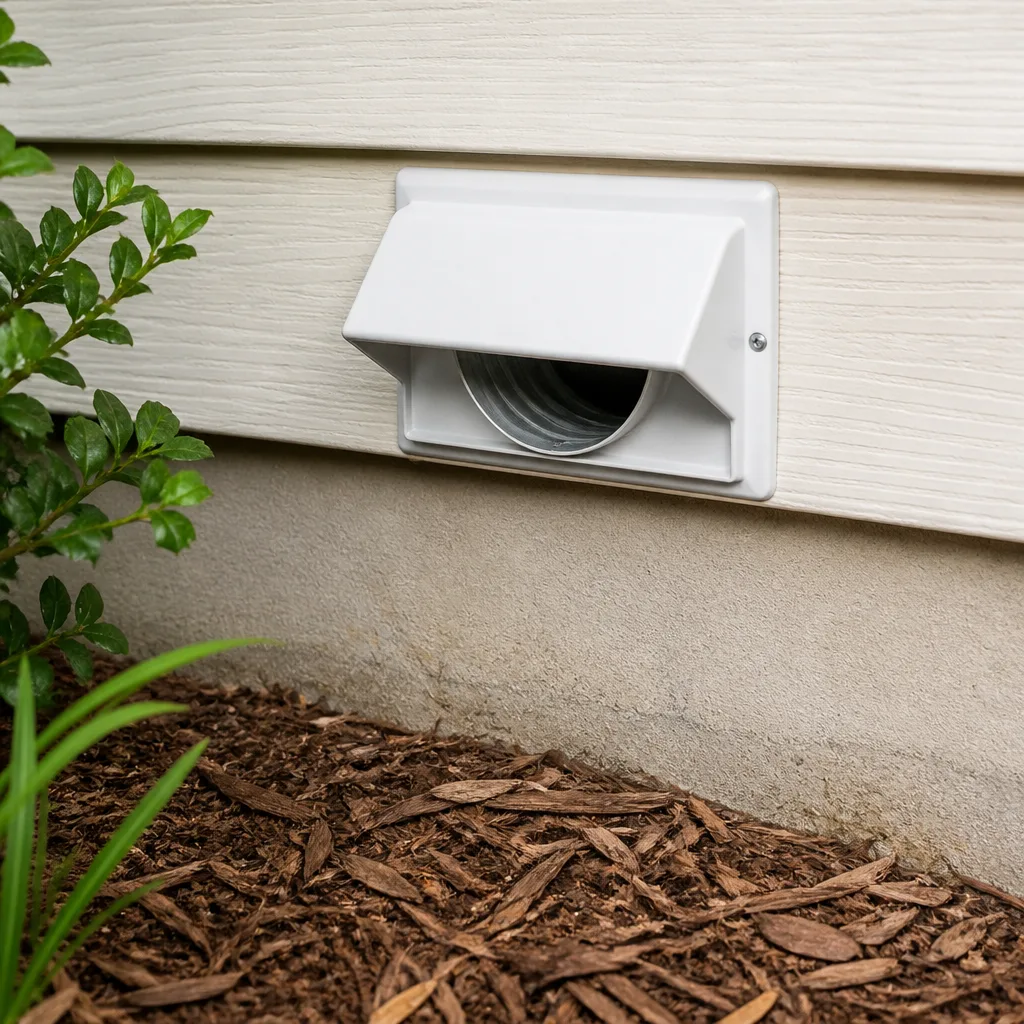 Dryer vent cleaning
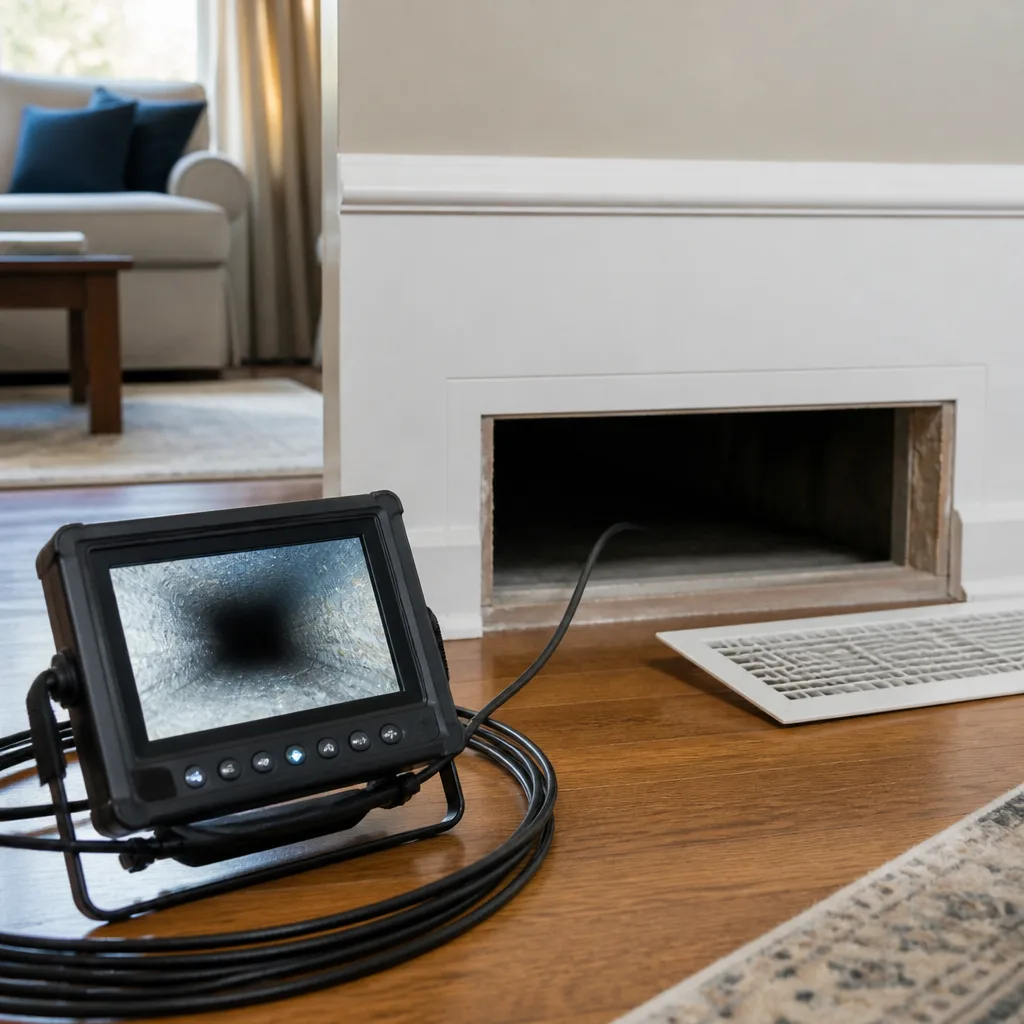 Camera inspection
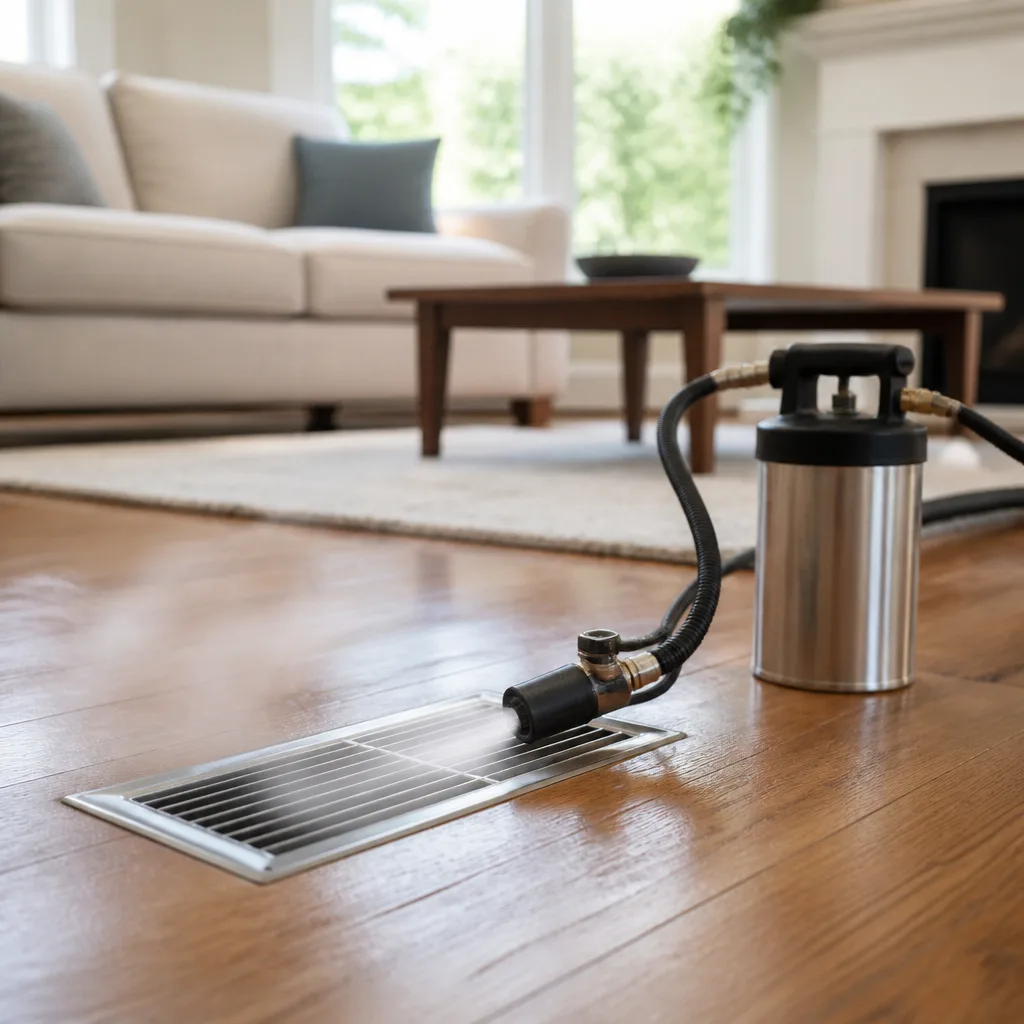 Sanitizing & deodorizing
Whole-system duct and dryer vent check with before-and-after photos - you see exactly what came out of your vents
That "$99 whole-house special" is a bait ad - the real number appears once they are in your hallway, or the "clean" is a shop-vac at the register. We photograph the inside of your ducts before and after instead.
The Complete Guide to Air Duct Cleaning in Clearwater
Most air duct cleaning guides were written for climates where the system runs four months a year. In Clearwater, your AC runs closer to ten, and that changes everything about how fast ducts load with debris, moisture, and biofilm. The advice built for a Michigan or Colorado house gets shipped south and applied to a system that never gets a seasonal break. The result is a cleaning that looks fine on the invoice and does little for the air you actually breathe. This guide maps the local variables that matter in Clearwater to the actual cleaning process, so you know exactly what a thorough job looks like before anyone shows up at your door.
Quick Answer
Air duct cleaning in Clearwater means removing built-up dust, debris, and microbial growth from the supply, return, and main trunk lines of a central system. Because Clearwater’s system runs nearly year-round in a humid climate, ducts load faster than the national average and need attention on a schedule tied to runtime and condition rather than a fixed calendar. A thorough cleaning uses professional mechanical agitation and HEPA-level vacuum capture, not a shop-vac blowout, and finishes with a visual inspection you can verify yourself.
Styles & brands we work with
- Whole-home duct cleaning
- Dryer vent cleaning
- Camera inspection
- Sanitizing & deodorizing
Table of Contents
- Why Clearwater Ducts Are Different
- Slab Foundations and Low-Clearance Duct Runs
- The Equipment Tiers and What Each Actually Does
- What NADCA ACR Standards Require vs. a “Duct Cleaning Special”
- The Cleaning Process, Step by Step
- How to Verify the Work Was Done Properly
- How Often Ducts Need Cleaning in Clearwater
- When Cleaning Turns Into Air Duct Repair
Why Clearwater Ducts Are Different
A central air system in a mild, humid climate doesn’t get the winter off. In Clearwater, the air handler moves conditioned air through the same ductwork for most of the year, and every hour of runtime pulls more particulate through the return side. The filter catches some of it. The rest settles on the interior walls of the ducts, on the register boots, and around the evaporator coil area where the air is coldest and moisture tends to condense.
That moisture is the local variable most national guides skip. When warm, humid air meets a cold coil and duct surface, condensation forms. Standing moisture plus settled dust is the recipe for the dark, sticky film we call biofilm, and once that film establishes on duct walls, ordinary airflow won’t move it. A vacuum alone won’t either. Biofilm has to be mechanically broken loose before it can be captured, which is why the type of equipment matters more in Clearwater than it does in a dry climate.
- Continuous runtime: The system cycles most of the year, so debris accumulates faster than in seasonal-use homes.
- Humidity-driven condensation: Cold duct surfaces in a humid climate collect moisture that supports microbial growth.
- Filter discipline: A clogged filter in a system that runs year-round forces debris past it and into the duct interior.
- Older housing stock: Plenty of Clearwater homes have duct systems installed decades ago, with materials and joints that need a careful approach.
The practical takeaway: duct contamination in Clearwater is a function of runtime, humidity, and system age, not just how many years it’s been since the last cleaning. We’ve seen ducts in Clearwater homes that looked clean at the registers but held heavy buildup where the trunk transitions to the branch runs. That’s why the inspection should go beyond what you can see from the floor.
Slab Foundations and Low-Clearance Duct Runs
Clearwater’s residential construction leans heavily on slab foundations, and that shapes the duct layout in ways that matter to a cleaning. When there’s no basement or crawlspace to route through, ducts run through the attic, inside wall chases, or under the slab itself. Each layout changes what a technician can reach, how the vacuum gets connected, and how thorough the job can realistically be.
Attic and chase runs
Attic ducts are the easiest to access and the most common in Clearwater homes. The technician can cut access points, connect the negative air machine, and work the branch runs from above. Ceiling registers feed into short boots, and those boots routinely collect the heaviest dust because they sit at the bottom of the run.
Under-slab and low-clearance runs
Under-slab ducts are the hard case. Access points are limited, the runs may be embedded in concrete, and the cleaning method has to be selected around the fact that you can’t physically reach the duct interior. A rotary brush system designed for hard duct can be dangerous on older flexible or friable duct material, so the technician has to know what the duct is made of before choosing a tool. In our experience, under-slab runs in Clearwater often require a negative-pressure approach with carefully placed access holes and a camera inspection before and after, rather than aggressive mechanical agitation.
Why this matters before the quote
- Ask whether the technician has inspected the duct material and layout before quoting.
- Confirm the plan for under-slab or low-clearance runs, since a generic cleaning may skip them.
- Expect access holes to be cut and sealed; a proper job accounts for that in the written estimate.
- Ask for before-and-after photos of your own ducts, not stock images.
If you’re in a Clearwater home with a slab foundation and limited access, the estimate should reflect the actual layout. You can read more about how we approach air duct cleaning on the system-specific page.
The Equipment Tiers and What Each Actually Does
Not all duct cleaning equipment is created equal, and the difference is not cosmetic. There are three main tiers used in residential work, and each has a specific job inside the duct. Understanding what each one does, and what it misses, is the fastest way to tell a real cleaning from a blowout.
1. Negative air machines (HEPA vacuum units)
A negative air machine creates a pressure differential that pulls air out of the duct system while a filter captures the particulate. HEPA filtration captures particles down to a very fine level, which is why equipment like Abatement Technologies negative air units matter. What it misses: a vacuum alone doesn’t loosen debris that’s bonded to the duct wall. It pulls free particulate, but it can’t break up the sticky film without help.
2. Contact vacuums and rotary brush systems
Rotary brush systems are the mechanical agitation side of the equation. A brush spins against the duct wall and breaks loose the bonded dust and biofilm, while a contact vacuum captures it. Rotobrush and Nikro platforms are the industry-standard rotary tools, and they’re the same equipment remediation crews use because mechanical agitation is the only way to address biofilm that a vacuum can’t lift. What it misses: rotary brushes need the right brush for the duct material, and they can’t reach every corner of a low-clearance run without access points.
3. Containment and negative-pressure enclosures
True containment equipment keeps debris from migrating into the living space during the job. This is standard on mold and restoration jobs, and applying it to a routine residential cleaning is what separates a careful job from a dusty one. It’s also how HEPA-level capture is actually delivered in practice, since the capture only works if the debris is contained.
At Duct Cleaning Clearwater, we use Rotobrush and Nikro platforms for agitation and capture, plus Abatement Technologies equipment for HEPA-level containment. We also service Honeywell and Aprilaire air-quality components, which means the filter and hardware side of the system gets attention alongside the ducts themselves. For a full breakdown of the service, see our Duct Cleaning Clearwater overview.
What NADCA ACR Standards Require vs. a “Duct Cleaning Special”
The National Air Duct Cleaners Association publishes the ACR standard, which sets the baseline for what a legitimate cleaning includes. A “duct cleaning special” advertised on a postcard often delivers a fraction of it. Here’s the line-by-line comparison.
- Full system scope: NADCA ACR expects the supply, return, and main trunk lines plus the air handler and coil area to be addressed. A cheap special often cleans only the accessible branch runs and skips the trunk and air handler.
- Source removal: The standard calls for removing the contamination at its source, not just knocking loose dust. A blowout with a shop-vac style tool moves debris around instead of capturing it.
- Mechanical agitation: Contact with the duct interior is required to break up bonded debris. A vacuum-only service can’t meet this.
- HEPA-level capture: The standard expects equipment that captures fine particulate. Consumer-grade vacuums exhaust it back into the room.
- Before-and-after documentation: A proper job documents what was found and what was removed. A special that hands you an invoice and nothing else is a red flag.
- Access and sealing: Access holes are cut, used, and properly sealed. A cheap job may leave gaps that leak air into the attic or wall cavity.
The honest framing: a whole-system price from a company using professional equipment will look higher than a per-vent coupon. It also reflects more work. Per-vent pricing is a trap because it rewards speed over coverage, and it often hides the trunk and air handler entirely.
What a per-vent special tends to skip
- The main trunk line, which is often where the heaviest buildup sits.
- The air handler cabinet and evaporator coil area.
- Return-side ductwork, which carries the dirtiest air back to the system.
- Mechanical agitation of bonded biofilm.
- Post-job inspection and photo documentation.
When you’re comparing quotes, ask what’s included by name, not just the headline number. Our air duct cleaning page lays out the scope we work to so you can compare like for like.
The Cleaning Process, Step by Step
A professional duct cleaning follows a repeatable sequence. The order matters because capture has to be set up before agitation begins, or debris escapes into the home. Here’s how a thorough job typically goes.
- Inspection and system map. The technician inspects the duct material, layout, and access points, and confirms the foundation type (attic, chase, or slab) before choosing tools.
- Protect the living space. Floors and furnishings near the work area are covered, and negative air containment is set up to keep debris out of the rooms.
- Connect the negative air machine. A HEPA vacuum unit is connected to the system to create negative pressure and begin pulling air out while the work proceeds.
- Cut and prepare access points. Where ductwork isn’t already accessible, access holes are cut at strategic points and will be sealed when the job is done.
- Mechanical agitation. A rotary brush system is run through the supply, return, and trunk lines to break loose bonded dust and biofilm, working from the farthest registers back toward the air handler.
- Capture and containment. Loose debris is captured by the negative air machine and contained by the HEPA enclosure so it doesn’t re-enter the home.
- Address the air handler and filtration hardware. The cabinet and coil area are cleaned, and Honeywell or Aprilaire components are checked and serviced as needed.
- Seal access points and inspect. Holes are sealed, and the technician documents before-and-after photos of your own ducts for you to review.
Because Clearwater’s humidity drives condensation on cold surfaces, a careful technician also checks for moisture issues in low-clearance runs and around the coil. If the duct interior shows signs of heavy microbial growth or standing moisture, that’s a conversation about remediation scope, not just a standard cleaning. We don’t do mold remediation as a separate service, but the cleaning method we use with Abatement Technologies containment is built to handle a job where microbial growth is part of what’s being removed.
If the job involves a damaged or disconnected duct run, we handle air duct repair as part of the same visit rather than sending you to a second contractor.
How to Verify the Work Was Done Properly
You don’t need special tools to check a duct cleaning. You need to know where to look and what to compare. Here’s the short version, followed by the specifics.
- Photos: Ask for before-and-after photos of your own ducts, inside the runs, not just the registers. Real work produces real photos.
- Registers and boots: Shine a light into a register after the job. If the boots still hold a visible dust mat, the branch run wasn’t fully addressed.
- Access point seals: Check that any access holes are sealed flush and the seal is intact. A gap here means air leaks out of the system.
- Air handler area: The cabinet and coil area should show visible improvement. If it’s untouched, the crew skipped a required step.
- Filter and hardware: Confirm the filter and any Honeywell or Aprilaire components were checked and addressed, not just left in place.
- Smell test: A musty odor that persists after the job suggests biofilm was left in place or moisture is still present.
Our Duct Cleaning Clearwater service includes before-and-after photos of your own ducts for exactly this reason. It’s the simplest way to answer the question every homeowner asks: how do I know the work was actually done?
A quick spot-check sequence
- Look at a register in a room furthest from the air handler. If the job was thorough, that end of the system should be as clean as the near end.
- Check the access points for sealed, finished work.
- Ask for the photo set and compare before and after on the same run.
- Note whether the air handler cabinet shows fresh attention.
How Often Ducts Need Cleaning in Clearwater
The honest answer is that there’s no universal calendar. In Clearwater, the schedule is driven by runtime, household conditions, and what the ducts actually look like. A home with allergy sufferers, pets, or an older system may need attention more often than a newer home with light occupancy. A national “every three to five years” rule doesn’t account for the near-year-round operation here.
- High runtime: A system running most of the year loads faster than one used seasonally.
- Pets: Pet dander adds to the particulate load and settles in the return side.
- Allergy or asthma in the household: Air quality improvement matters more, and the cleaning interval tends to be shorter.
- Older duct systems: Materials and joints degrade, and older systems benefit from inspection and cleaning together.
- After renovation or a move-in: Construction dust and prior occupants’ debris are a strong reason to clean.
Signs it’s time, regardless of calendar
- Visible dust blowing from registers when the system kicks on.
- A musty or stale smell when the AC runs.
- Increasing allergy symptoms indoors that ease when you leave.
- Heavy dust on the return grille and around the air handler.
- Unexplained airflow drops at some registers.
If any of those show up, it’s worth an inspection, and that inspection is free. Call (844) 238-0931 to book one. We answer 24/7, and fast dispatch runs 7am to 7pm, Sunday through Friday.
When Cleaning Turns Into Air Duct Repair
Cleaning often reveals problems that a clean-only competitor can’t fix. Disconnected runs, crushed flexible duct in a tight chase, failed seals at the boots, and collapsed sections in low-clearance runs all show up once the technician is inside the system. We offer air duct repair as a standalone service so those problems get corrected on the same visit rather than becoming a second contractor’s job.
This matters in Clearwater because the same humidity that drives biofilm also stresses duct joints and seals over time. A disconnected return run doesn’t just leak air; it pulls attic or wall-cavity air into the living space. Repairing it is about air quality as much as efficiency. If you’ve noticed a room that never cools well or a persistent musty smell near a register, a damaged run may be the cause.
Because repair is part of our scope, we don’t have to hand you a list of problems and a recommendation to call someone else. We clean what’s there, repair what’s broken, and document both. That’s the difference between a focused indoor-air specialist and a generalist adding duct cleaning to a menu.
Dryer Vent Cleaning: The Other Half of the System
Lint buildup is a fire risk. Dryer vent cleaning is safety maintenance, not optional upkeep, and it belongs on the same schedule as duct work. In a Clearwater home with year-round laundry, lint accumulates in the vent run behind the dryer, and the longer the run, the more it collects. A clogged vent reduces dryer performance and creates a real hazard.
We treat dryer vent cleaning as its own service rather than a throwaway add-on to a duct job. The vent run is cleaned end to end, the exterior termination is checked, and you get a clear picture of what came out. If your dryer takes longer than it used to, or the exterior vent flap doesn’t open freely when the dryer runs, that’s a sign to have it checked.
Common Mistakes to Avoid
- Booking a per-vent coupon. Per-vent pricing rewards speed over coverage and routinely skips the trunk line and air handler. Ask for a whole-system scope in the written estimate instead.
- Accepting a blowout as a cleaning. A shop-vac style blowout stirs debris into the air without HEPA-level capture. In a humid Clearwater home that just redistributes the problem.
- Skipping the foundation question. If the company doesn’t ask about your slab foundation and duct layout before quoting, they may not have a plan for low-clearance runs.
- Ignoring the air handler and coil. Cleaning branch runs while leaving the coil area untouched misses a major source of buildup, especially in year-round operation.
- Not asking for photos. A job without before-and-after photos of your own ducts gives you no way to verify the work. Ask before you book.
- Treating the dryer vent as optional. Lint in the vent run is a documented fire hazard. It’s not a cosmetic add-on.
- Cleaning without inspecting for damage. A clean-only company may leave a disconnected run in place. Repair capability on the same visit matters in Clearwater’s older housing.
See the difference
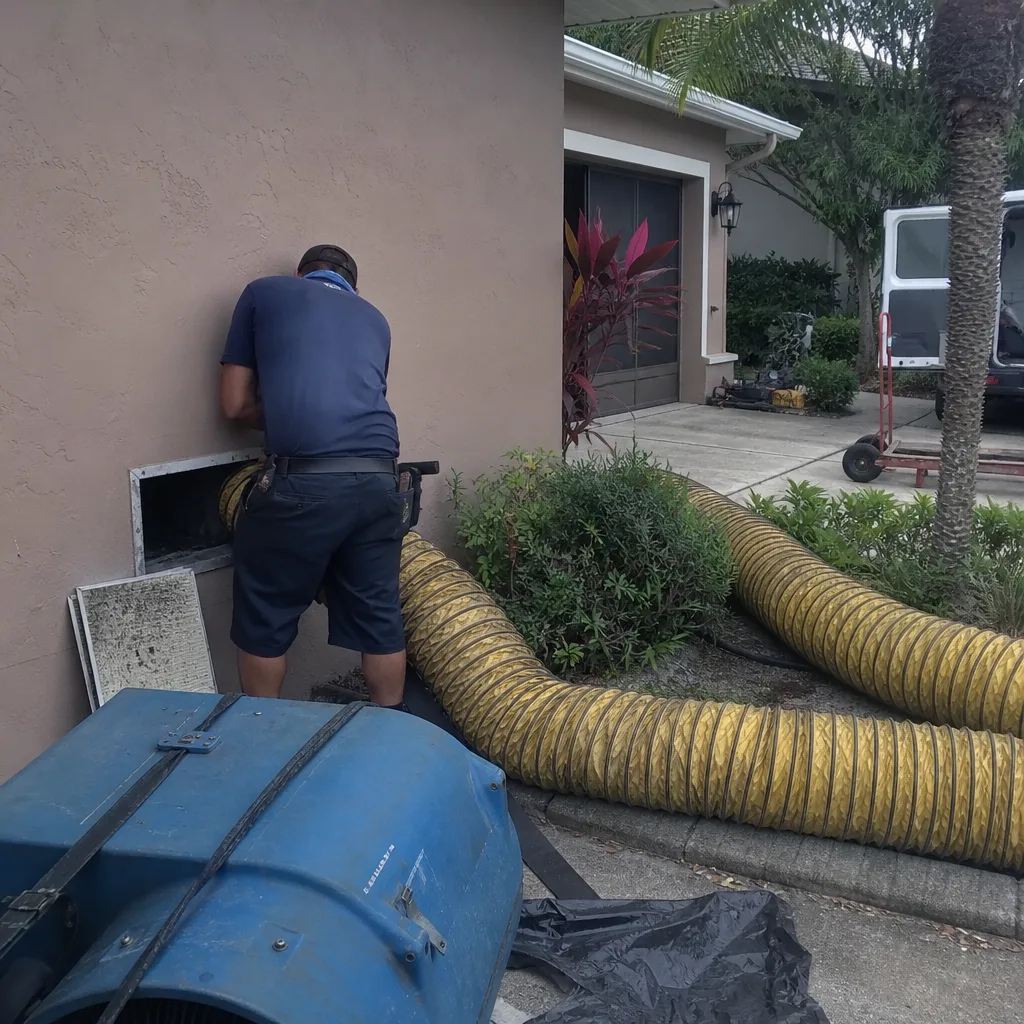 Before
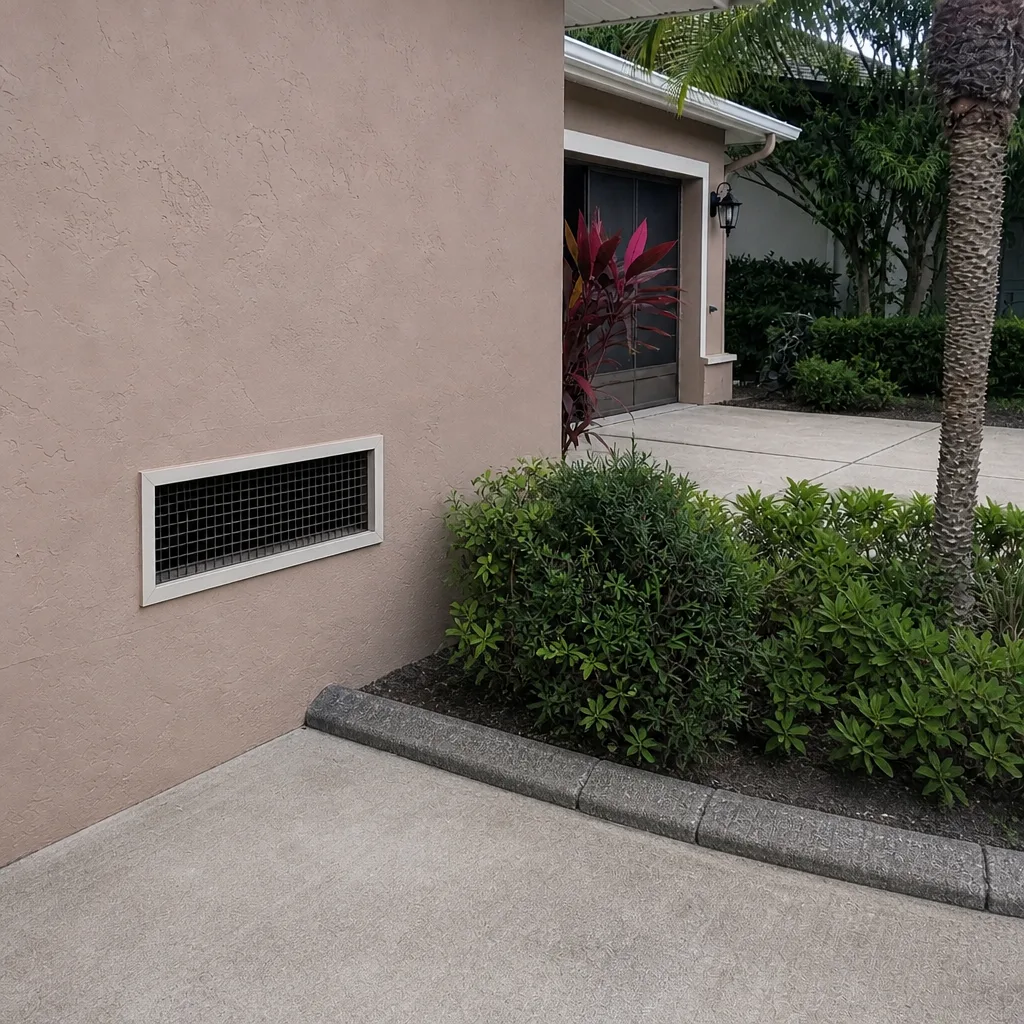 After
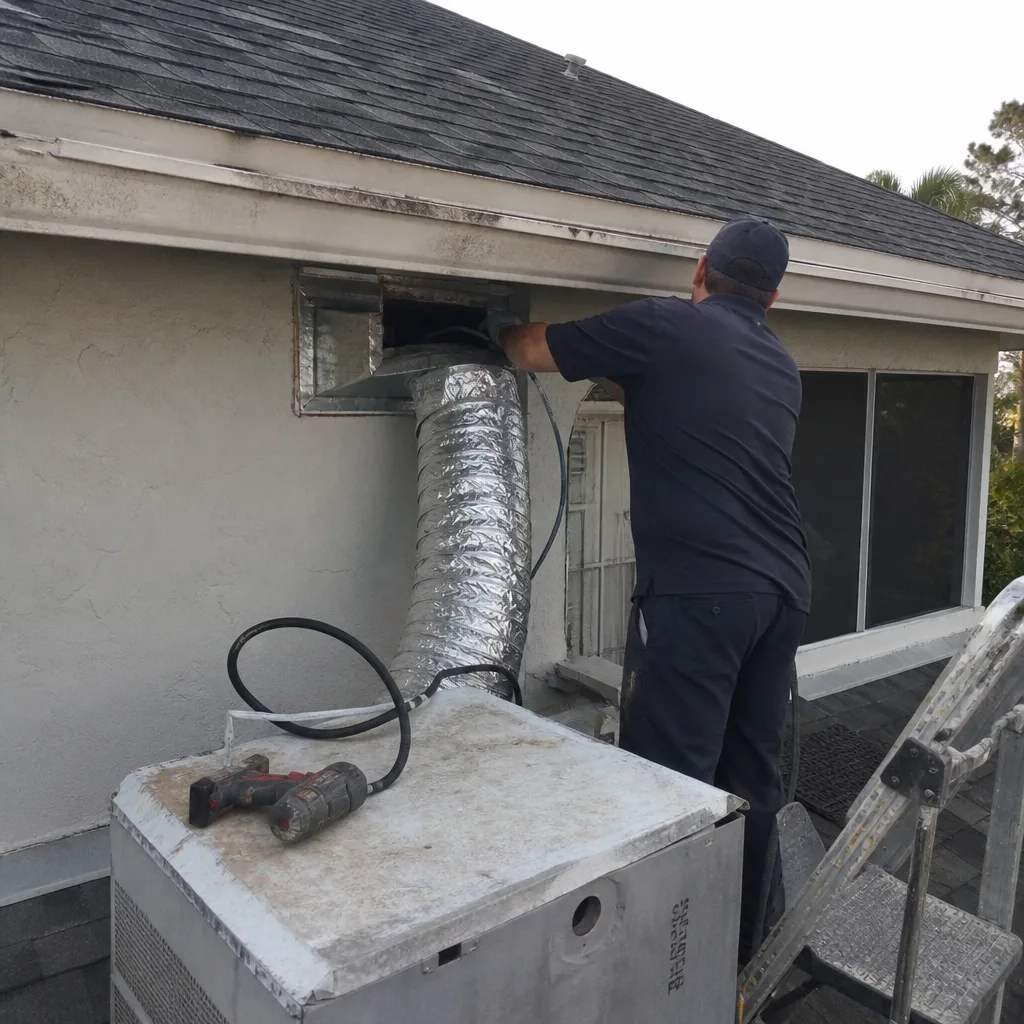 Before
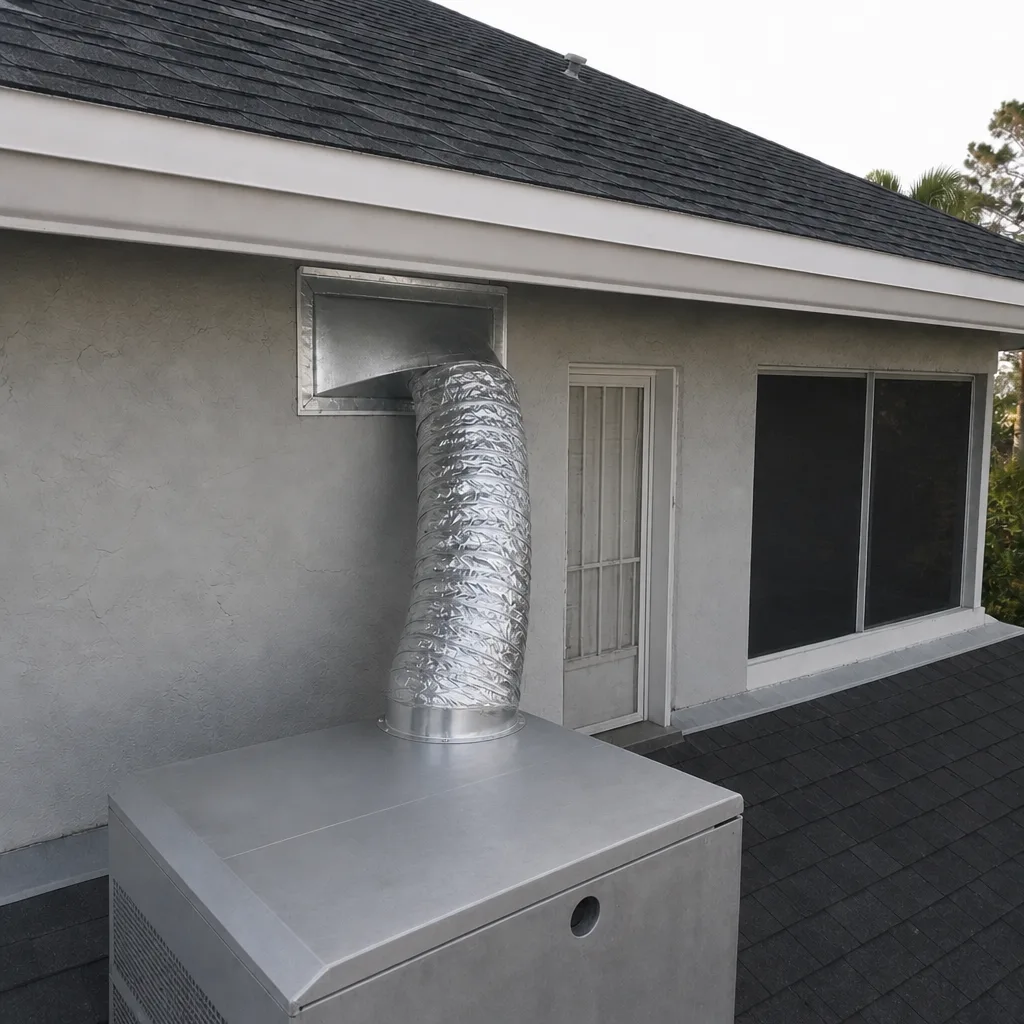 After
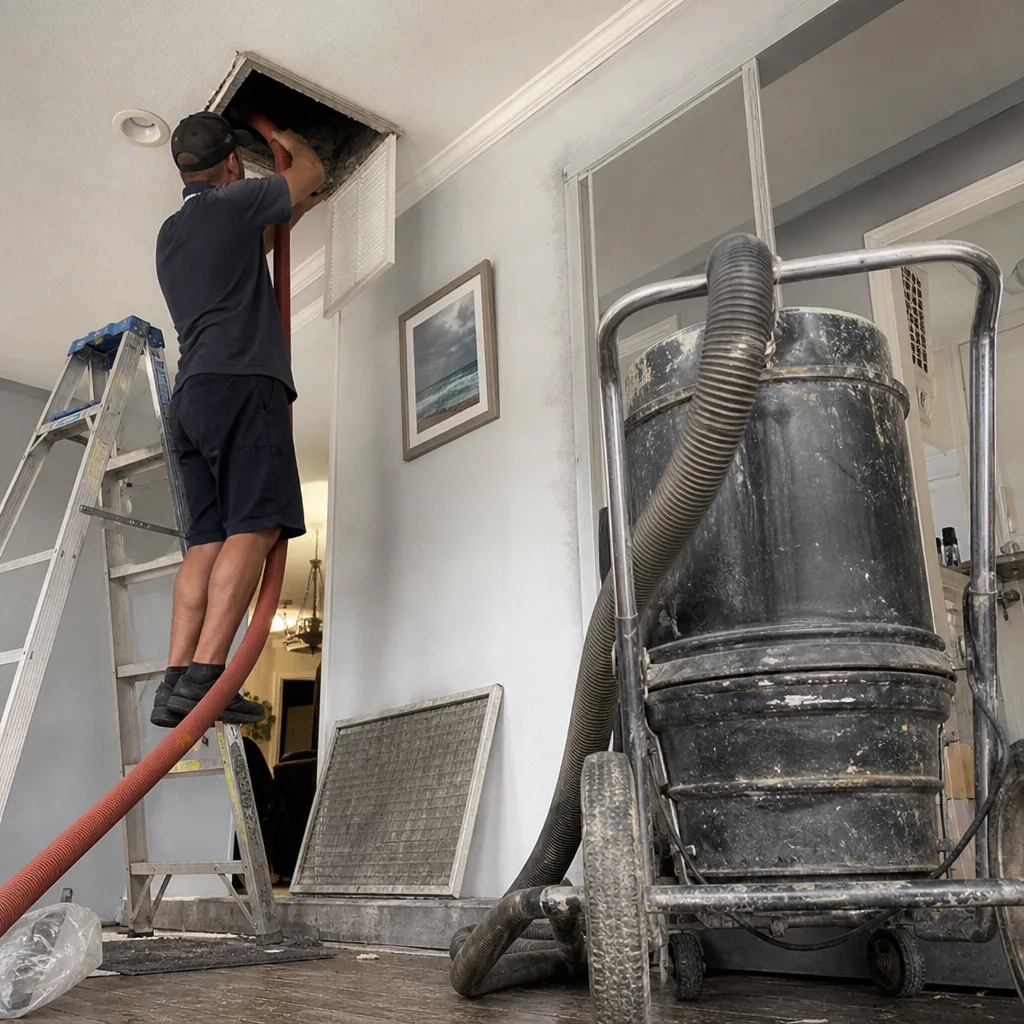 Before
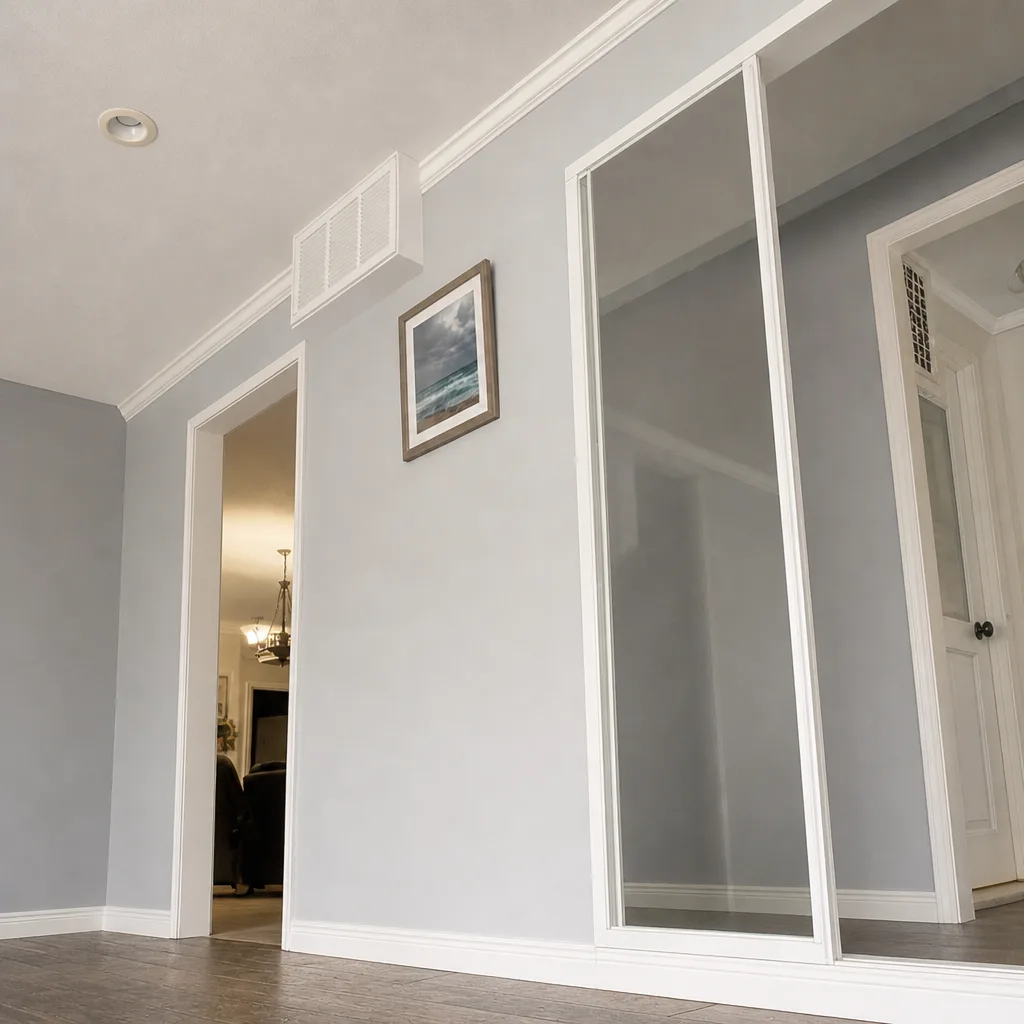 After
When to Call a Professional
Some situations call for a professional rather than a wait-and-see approach. Visible debris blowing from registers, a musty smell when the AC runs, allergy symptoms that ease when you leave the house, heavy dust around the return grille, or a dryer that takes longer than it should all point to a system that needs attention. Damage found during a cleaning, such as a disconnected or crushed run, should be addressed promptly because leaking ducts pull unconditioned air into the living space. Duct Cleaning Clearwater offers free estimates in Clearwater, and our technicians have up to 13 years of experience with the equipment the job requires. Call (844) 238-0931. We answer 24/7. Fast dispatch from 7am to 7pm, Sunday through Friday.
Frequently Asked Questions
The price is set per job by a written estimate after the technician inspects the system, because cost depends on the number of runs, the foundation type, and whether repair is needed. There’s no per-vent pricing and no teaser coupon; you get one flat price per system agreed before work starts. Call (844) 238-0931 for a free estimate, and we’ll give you a written scope you can compare.
Cheap quotes usually skip the main trunk line, the air handler, and mechanical agitation, and they often rely on consumer-grade vacuums that exhaust fine dust back into the room. A per-vent special prices per opening, which rewards speed over coverage. Ask what’s included by name, then compare. Call (844) 238-0931 for a quote that lists the actual scope.
You check the registers and boots, confirm the access points are sealed, look at the air handler area, and review before-and-after photos of your own ducts. We provide those photos as part of every job because a cleaning you can’t verify is hard to trust. Call (844) 238-0931 to book and see the documentation plan up front.
There’s no fixed calendar in Clearwater’s climate. The system runs most of the year, so loading depends on runtime, pets, allergies, and duct age rather than a set interval. Visible register dust, a musty smell, or rising allergy symptoms are better triggers than a countdown. Call (844) 238-0931 for a free inspection to see where your system stands.
A Rotobrush or Nikro rotary system mechanically agitates the duct wall to break loose bonded dust and biofilm, while a HEPA vacuum captures it. A shop-vac lacks both the agitation and the fine-particle capture, so it stirs debris instead of removing it. That gap matters more in a humid climate where biofilm binds to duct surfaces. Call (844) 238-0931 to ask what equipment will be used on your job.
Yes. Clearwater’s slab foundations often mean low-clearance or under-slab runs, and we plan access and tool selection around the actual layout before quoting. The estimate reflects the access work and sealing required. Call (844) 238-0931 and tell us your foundation type so the quote matches the job.
The Bottom Line
Clearwater’s climate and construction make duct contamination a different problem than the national guides describe. Year-round runtime accelerates loading, humidity drives biofilm, and slab foundations complicate access. A real cleaning means mechanical agitation with Rotobrush or Nikro, HEPA-level capture with Abatement Technologies containment, attention to Honeywell and Aprilaire hardware, and before-and-after photos you can check yourself. Skip the per-vent coupons and the blowouts. If you want a free estimate and a written scope you can hold us to, call Duct Cleaning Clearwater at (844) 238-0931. We answer 24/7. Fast dispatch from 7am to 7pm, Sunday through Friday. You can also learn more about our Clearwater service area and what we cover.
Written by the team at Duct Cleaning Clearwater.