
Last updated November 16, 2026
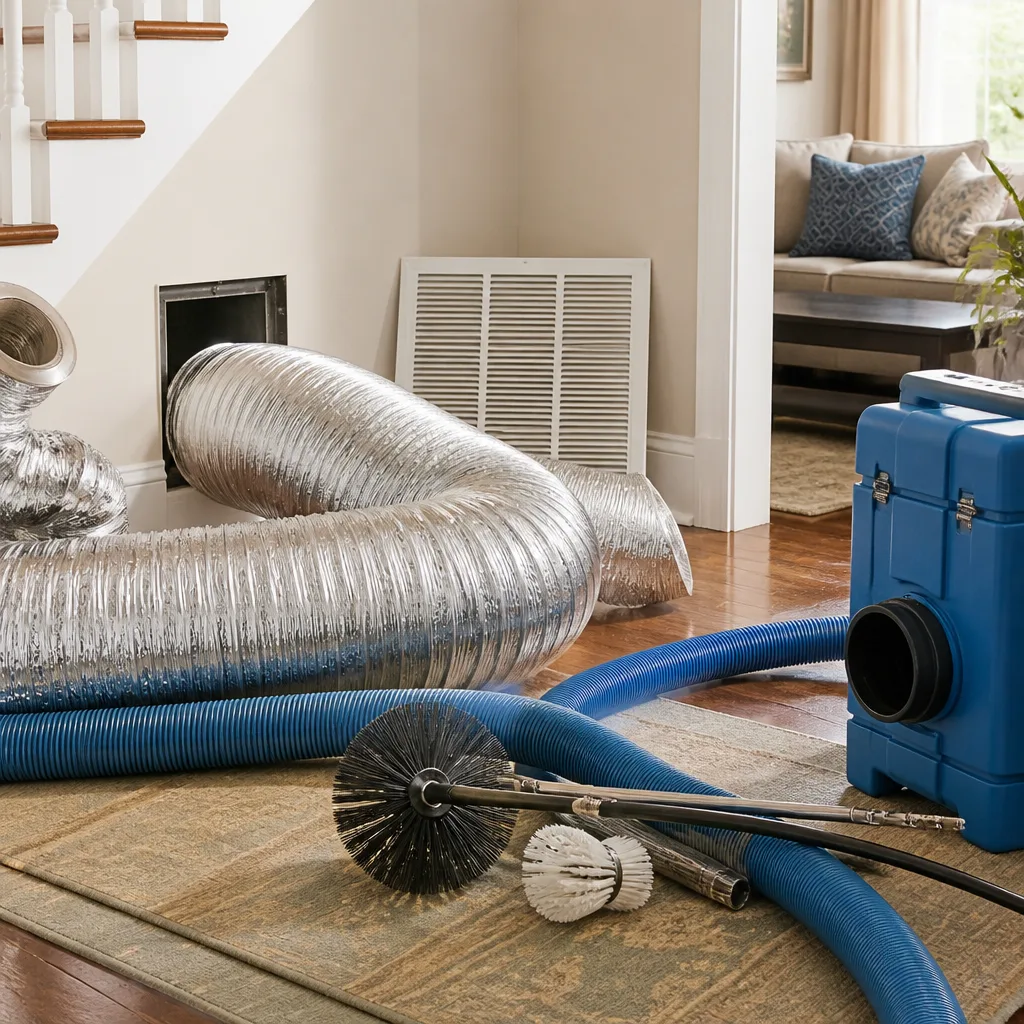 Whole-home duct cleaning
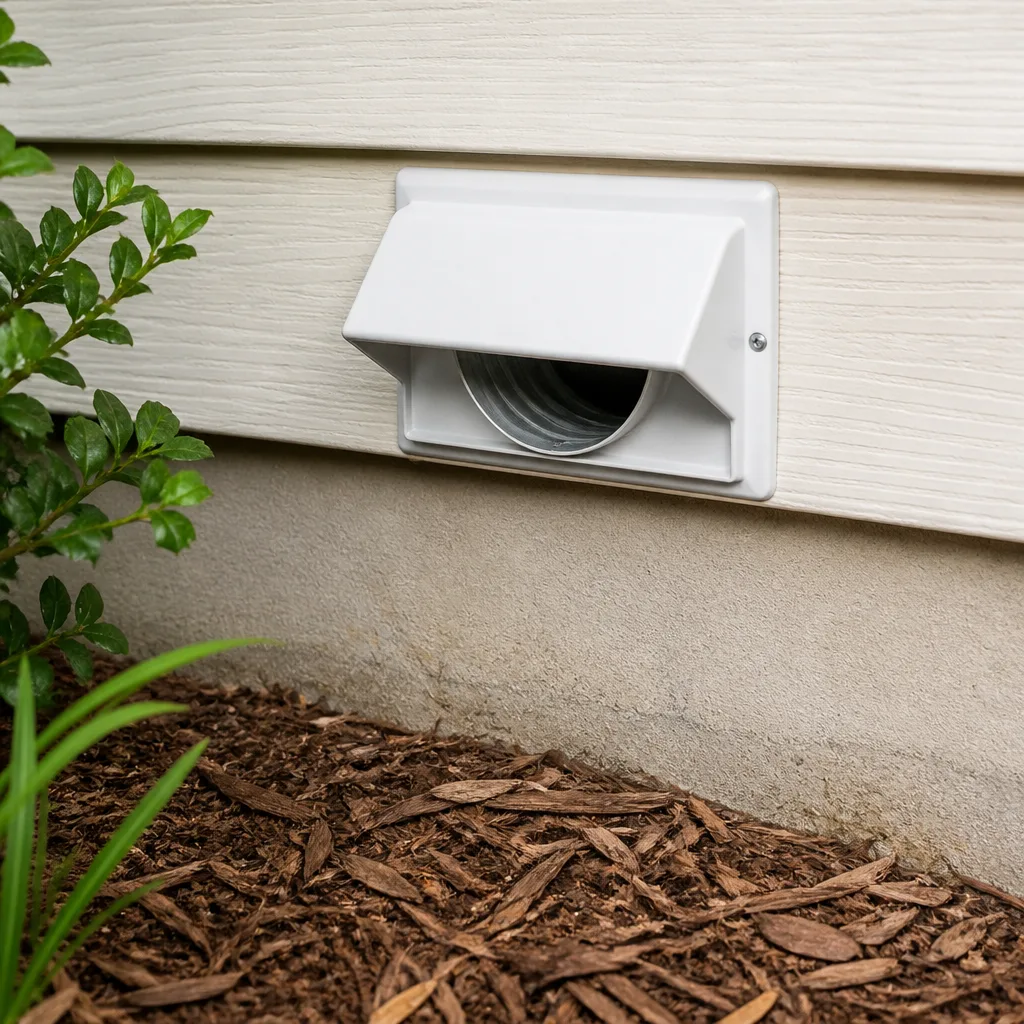 Dryer vent cleaning
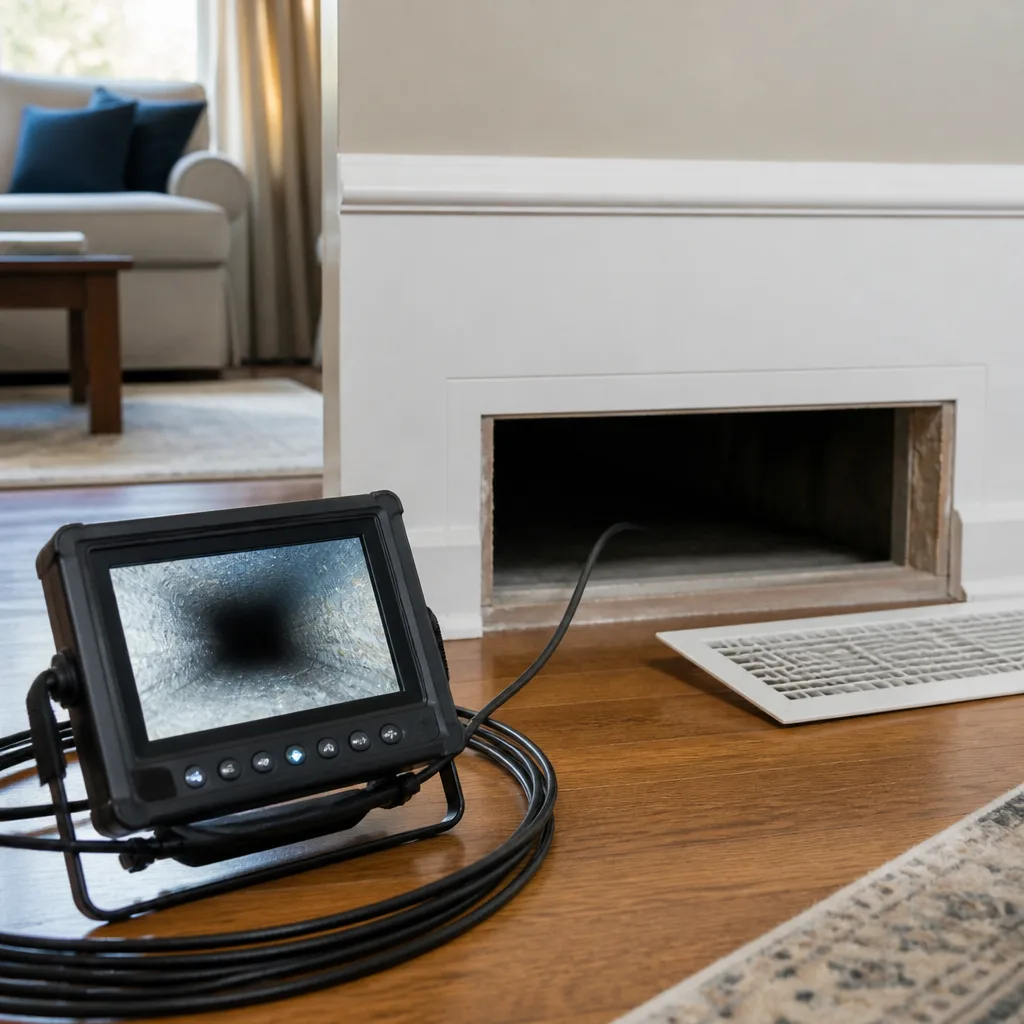 Camera inspection
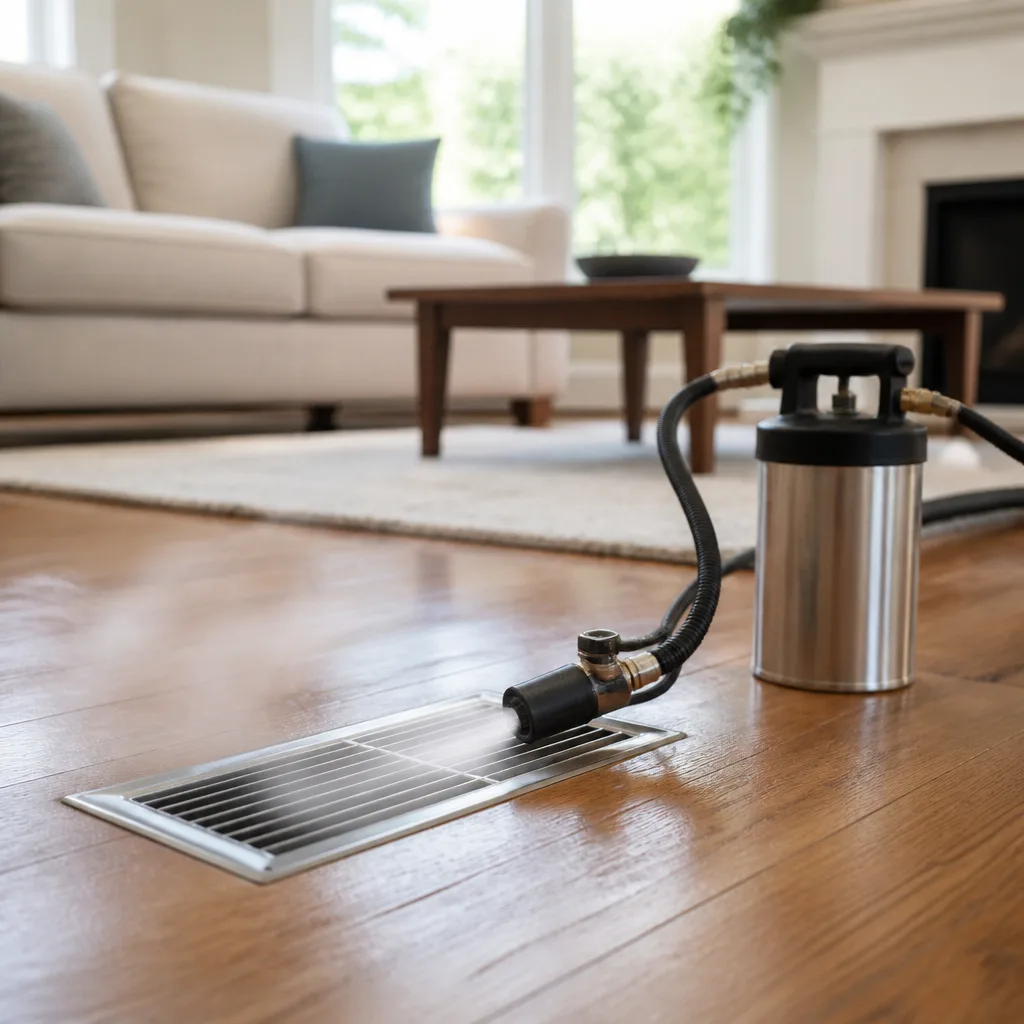 Sanitizing & deodorizing
Whole-system duct and dryer vent check with before-and-after photos - you see exactly what came out of your vents
That "$99 whole-house special" is a bait ad - the real number appears once they are in your hallway, or the "clean" is a shop-vac at the register. We photograph the inside of your ducts before and after instead.
Air Duct Cleaning Cost Breakdown: The Clearwater Homeowner’s Reference for 2026
Two duct cleaning quotes for the same Clearwater home, one for $149 and one for $650, are almost certainly not for the same job. The question isn’t which one is overpriced. It’s understanding what that $501 difference actually buys. Most pricing confusion in this trade comes from comparing quotes as if they describe identical work. They don’t. A low figure and a high figure usually sit on different equipment, different labor hours, and completely different ideas of what “clean” means. This guide breaks down what drives real duct cleaning cost in Clearwater in 2026: equipment, labor, home size, system layout, and which add-ons are worth paying for. You’ll finish with a written scope you can hold any contractor to.
Quick Answer
Air duct cleaning in Clearwater typically runs $350 to $900 for a full residential system in 2026, depending on home size, number of access points, and system complexity. Legitimate whole-system work almost never lands under $300, because the labor and professional-grade equipment alone don’t allow it. Advertised specials around $89 to $149 are usually per-vent teasers or partial cleanings that grow into a larger invoice once the technician is on site.
Styles & brands we work with
- Whole-home duct cleaning
- Dryer vent cleaning
- Camera inspection
- Sanitizing & deodorizing
Table of Contents
- What actually drives air duct cleaning cost in Clearwater?
- What does “per vent” pricing really mean?
- Clearwater price ranges by home size for 2026
- Which add-ons are legitimate and which are upsells?
- Why equipment changes the price, not just the margin
- How to use a written scope of work to hold a price
- When duct repair enters the conversation
What actually drives air duct cleaning cost in Clearwater?
Air duct cleaning cost in Clearwater is driven by five things: equipment mobilization, labor hours tied to access points, square footage scaling, system configuration complexity, and the condition of the ductwork itself. Profit margin is a small part of the spread. Two quotes that look wildly different usually reflect genuinely different scopes.
Here’s how each cost driver works in practice.
- Equipment mobilization. Professional duct cleaning means truck-mounted or portable HEPA vacuum units, mechanical agitation tools, and containment equipment. Bringing that gear to a Clearwater home and setting it up is a real cost. A shop-vac-and-a-brush operation skips it entirely and prices accordingly.
- Labor hours per access point. Every return and supply register that needs to be opened, cleaned, and resealed takes time. Older Clearwater homes with fewer, larger returns run faster than newer builds with many small registers. A technician working ten access points versus four is doing more than twice the work when you factor in setup at each one.
- Square footage scaling. A 1,200-square-foot condo and a 3,000-square-foot house don’t share a price. Duct runs scale with floor plan, and so does cleaning time.
- System configuration. Single-story ranch layouts, two-story homes with long trunk lines, flex duct versus rigid sheet metal, and finished versus unfinished attic access all change the labor picture. A system with hard-to-reach trunk runs in a Clearwater attic costs more to clean thoroughly than an accessible one.
- Condition of the ductwork. Heavy debris buildup, disconnected joints, or crushed flex sections add time. Some of that work overlaps with air duct cleaning scope and some is repair. Knowing which is which keeps quotes honest.
In our experience, the single biggest swing factor in a Clearwater quote is the access point count and whether the contractor plans to mechanically agitate the full system or only vacuum at the registers. That one decision separates a $300 job from a $700 one.
What does “per vent” pricing really mean?
Per vent pricing means you’re charged a flat fee for each register the technician cleans, often $25 to $75 per vent. It sounds transparent. In practice, it rewards speed over thoroughness: a technician paid per vent has an incentive to hit many registers quickly rather than clean the trunk lines and plenum where most debris actually accumulates.
Here’s why that matters. The visible registers are the easiest part of the system. The trunk lines, the return plenum, and the main supply runs are where dust, pet hair, and construction debris collect. A per-vent job that never touches the trunk is a surface cleaning.
The hidden total is easy to calculate once you know the math. A typical Clearwater home with 15 to 20 registers at $50 each lands between $750 and $1,000, which is above what a legitimate whole-system flat price runs. And at a promotional $29-per-vent rate, the technician either skips the trunk entirely or the invoice grows once the system is inspected.
Our preference is a whole-system flat price agreed before the work starts. That aligns the contractor’s incentive with thoroughness, because the scope is fixed. We use professional-grade platforms from Rotobrush and Nikro, the same mechanical agitation and HEPA-vacuum equipment remediation crews rely on, precisely because that equipment lets a technician clean the whole system rather than just the accessible registers.
Clearwater price ranges by home size for 2026
Below are typical whole-system ranges for Clearwater in 2026, broken out by home size with the scope assumptions made explicit. Ranges assume standard residential ductwork, moderate debris buildup, and full-system cleaning including plenum and trunk lines.
- Condos and small homes (under 1,200 sq ft): $350 to $500. Scope assumes 6 to 10 access points, one air handler, and single-story layout.
- Mid-size single-family homes (1,200 to 2,000 sq ft): $450 to $650. Scope assumes 10 to 15 access points and typical flex or sheet metal trunk runs.
- Larger homes (2,000 to 2,800 sq ft): $600 to $800. Scope assumes 15 to 20 access points and often a second air handler or zoned system.
- Homes over 2,800 sq ft or multi-zone systems: $750 to $950. Scope assumes 20-plus access points, multiple zones, and often longer attic runs.
Those figures are estimates. The written estimate sets the final price, and it should be issued before any work begins.
What pushes a Clearwater job to the top of its band? Heavy pet hair, a system that hasn’t been cleaned in a decade, flex duct that’s been crushed or disconnected, and attics with restricted access. Clearwater’s humid climate means ductwork runs in attics and crawlspaces that see significant moisture cycling, and homes with older duct systems often have more debris than the square footage alone would suggest.
What pulls a job toward the bottom? Newer construction, clean systems on a short maintenance loop, and simple single-story layouts with well-labeled access points. If a quote is dramatically below these ranges for a full system, ask what’s included and what isn’t, in writing.
Which add-ons are legitimate and which are upsells?
Some add-ons to a duct cleaning quote are genuine safety work. Others rarely deliver value. Knowing which is which protects your wallet and your household.
Legitimate add-ons worth the cost
- Dryer vent cleaning. This is a distinct safety service, not a throwaway. Lint buildup in the dryer vent is a documented residential fire risk, and cleaning it is genuinely preventive maintenance. We treat dryer vent cleaning as a standalone safety service, not a bundled extra, because that’s how it should be priced and performed.
- Filtration component assessment. If the system has Honeywell or Aprilaire filtration hardware, it’s worth checking and servicing in the same visit rather than a separate trip. The brand familiarity matters: cleaning the ducts without looking at the filtration hardware leaves a chunk of the air-quality equation unaddressed.
- Duct repair found during cleaning. Disconnected joints, crushed flex, and torn sections are real issues, not upsells. If your quote doesn’t mention that a technician will flag and fix these, ask about it up front.
Add-ons to question
- Duct sanitizing spray. Fogging the system with a chemical spray is rarely necessary on a residential duct system that’s been mechanically cleaned. If the underlying ducts are clean and dry, there’s little the spray adds. Ask what the spray is for and whether mechanical cleaning alone solves the problem.
- “Sealing” services that aren’t part of a documented repair. Real duct sealing addresses leaks and disconnected joints. A vague sealing line item that isn’t tied to a specific problem is worth questioning.
- UV lights or air-purifier add-ons bundled at the end. These can be legitimate products, but they shouldn’t be the finale of a cleaning visit. If a technician recommends hardware, ask for the specific reason and a written quote for that hardware separately.
Why equipment changes the price, not just the margin
A duct cleaning quote reflects the equipment that will be used, and equipment is where scope diverges fastest. A consumer-grade blower and a shop vac can hit registers. It can’t pull debris from the trunk lines, agitate the whole system, or contain particulate matter during the work. That’s the difference between a $149 job and a $650 one.
Professional duct cleaning equipment falls into a few categories.
- HEPA vacuum units. These pull particulate into a sealed filtration system rather than blowing it back into the home. Abatement Technologies equipment, which we run, is the same class used in restoration and remediation work, where particulate containment is critical. Applied to standard residential cleaning, it means thorough capture rather than redistribution.
- Mechanical agitation tools. Rotobrush and Nikro platforms drive whips, brushes, and air tools through the duct runs to dislodge debris that a vacuum alone can’t move. This is the core of a real whole-system clean.
- Containment and negative-air equipment. Standard residential cleaning doesn’t usually require negative-air containment. But having that capability in the toolkit means a heavier-debris job or a system with visible mold growth can be handled without particulate spreading through the home.
- Filtration hardware service. Honeywell and Aprilaire products require specific service knowledge. A contractor who stocks and services them can clean the ducts and address the filter housing, media, or control in one visit.
The equipment list on a quote is a quick credibility check. Ask specifically: what vacuum platform, what agitation tools, and whether the technician will agitate the trunk lines or only the registers. A quote that can’t answer those questions in specifics is a quote you should question. Guardsman registers and vent covers are also worth flagging: if the registers themselves are damaged or the covers need replacing, that’s a repairable item to raise before the work starts.
Our technicians have up to 13 years of experience working with these platforms. In our experience, a homeowner who asks one equipment question on the initial call filters out most of the low-end quotes on their own.
How to use a written scope of work to hold a price
A written scope of work is the single most effective tool against a bill that grows on-site. It moves the conversation from “we’ll clean your ducts for $X” to a specific document you can hold a contractor to. Before you sign anything, insist on these line items in writing.
- The flat price for the whole-system clean. Not a per-vent rate. A number that covers the full system scope and doesn’t scale with discovered issues.
- The access point count. How many registers and returns will be opened, cleaned, and resealed. The number matters because it’s what labor hours get tied to.
- What parts of the system will be cleaned. Supply runs, return runs, trunk lines, and plenum should all be named explicitly. If any of these aren’t listed, ask why.
- The equipment to be used. Brand names and equipment type. Rotobrush, Nikro, Abatement Technologies, or their functional equivalents. If a contractor can’t name the equipment, the scope is vague.
- What happens if the technician finds a repair need. The scope should state whether the flat price covers minor repair, or whether the technician will stop and issue a separate written quote before proceeding. We prefer stopping and quoting: the price stays where it was agreed, and you decide on any repair before the work continues.
- Before-and-after photos. Ask for photos of your own ducts, not stock images. This is the simplest way to confirm the work was actually done, and it’s a reasonable request on any quote.
- What isn’t included. Sanitizing, air-purifier hardware, or major repair should be listed as separate line items if they come up.
If a contractor resists putting these in writing, that’s useful information. The written estimate is the price, and it should match what the invoice says at the end.
When duct repair enters the conversation
Duct repair becomes part of the scope when a technician finds damage during cleaning. That doesn’t mean every job turns into a repair. It means the question is how the contractor handles it when a problem shows up. Disconnected joints, crushed flex runs, torn insulation, and damaged register boots are common on older systems, and they undermine the cleaning if left in place.
The cleanest way to handle it is to stop, document the problem with photos, and quote the repair in writing before proceeding. That keeps the original scope intact and adds the repair as a separate, agreed line item. If the contractor is a clean-only operation, that step usually means a second visit from a different company. We offer duct cleaning and duct repair under one roof, which means the work stops for a quote and resumes on the same visit rather than a scheduling gap.
Not every discovered item needs to be fixed during the cleaning visit. Some repairs are worth scheduling for later. What matters is that the homeowner decides with a written scope in hand, not during a verbal pitch with the vacuum still running in the background.
Common Mistakes to Avoid
- Comparing quotes on price alone. Two quotes for a Clearwater home can differ by hundreds of dollars because they describe completely different scopes. Ask for the scope breakdown before comparing dollars.
- Accepting a per-vent price without asking about the trunk lines. Per-vent pricing often means the most important part of the system, the trunk and plenum, might be skipped. Ask explicitly what will be cleaned.
- Trusting a very low advertised price. A $89 special is almost always a teaser. The invoice usually grows on-site. Ask for the whole-system flat price up front.
- Skipping the written scope. Verbal agreements leave no record of what was promised. The written estimate is what holds the price, and it’s what you’ll want if the invoice doesn’t match.
- Adding sanitizing spray by default. On a system that’s been mechanically cleaned, spray rarely adds value. Ask what problem it solves before agreeing.
- Overlooking the dryer vent. In a Clearwater home with heavy dryer use, lint buildup is a genuine fire hazard. It’s worth treating dryer vent cleaning as its own line item.
- Not asking for before-and-after photos. Photos of your own ducts are the simplest confirmation the work happened. Skipping this leaves you with a clean invoice and a dirty system you can’t see.
See the difference
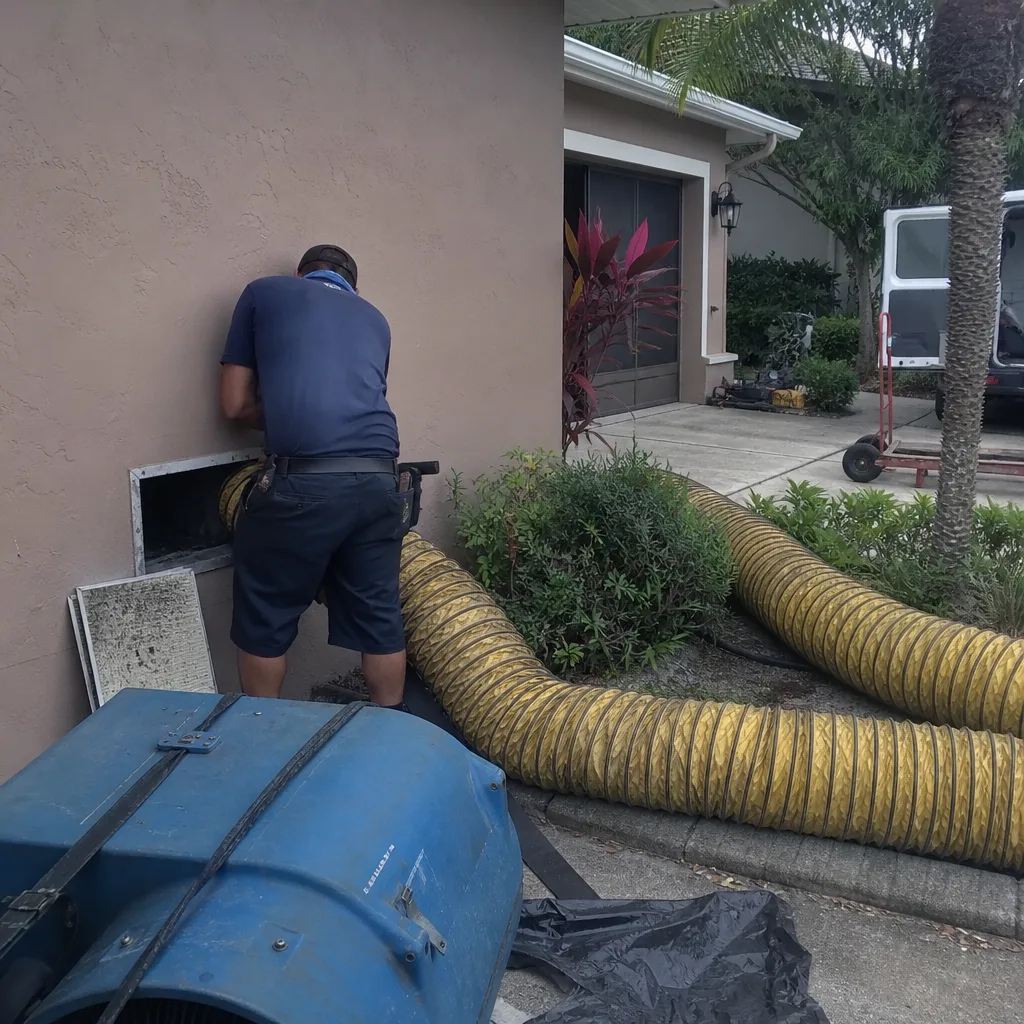 Before
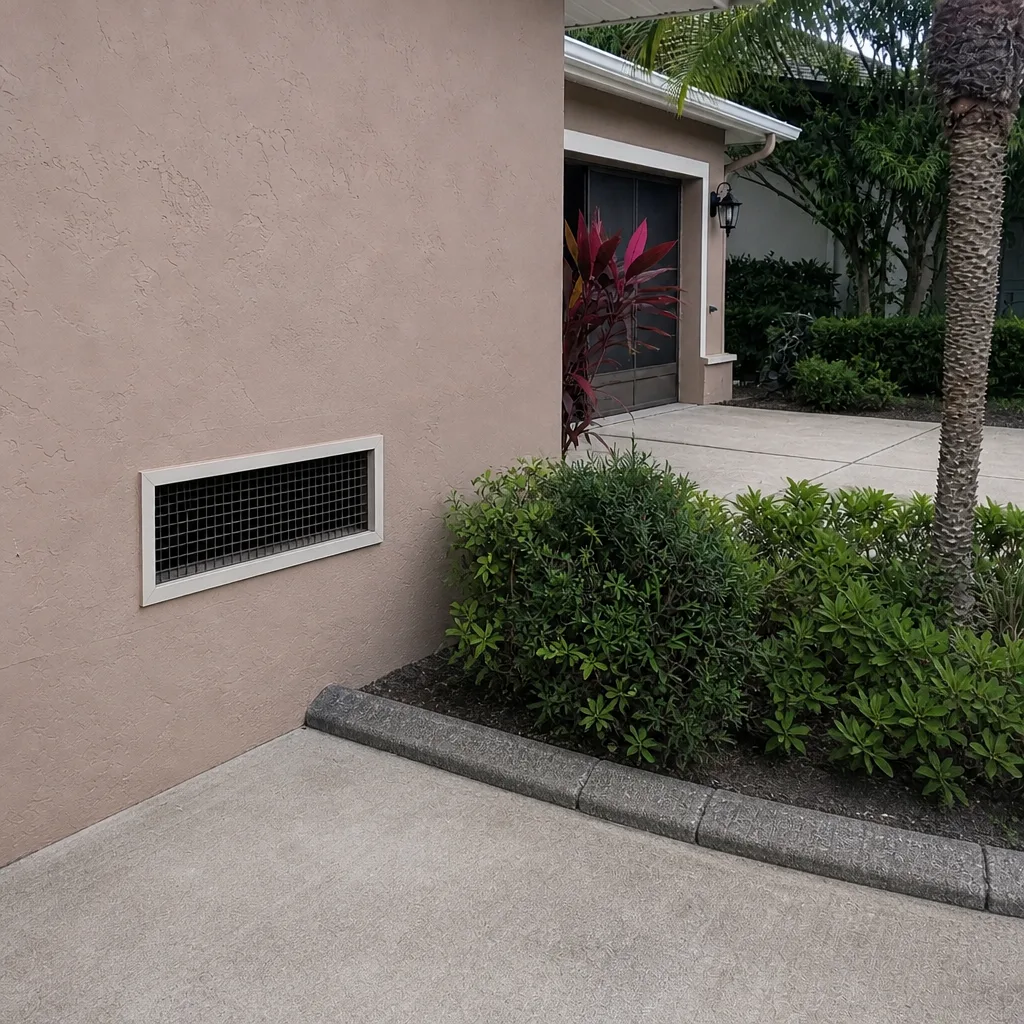 After
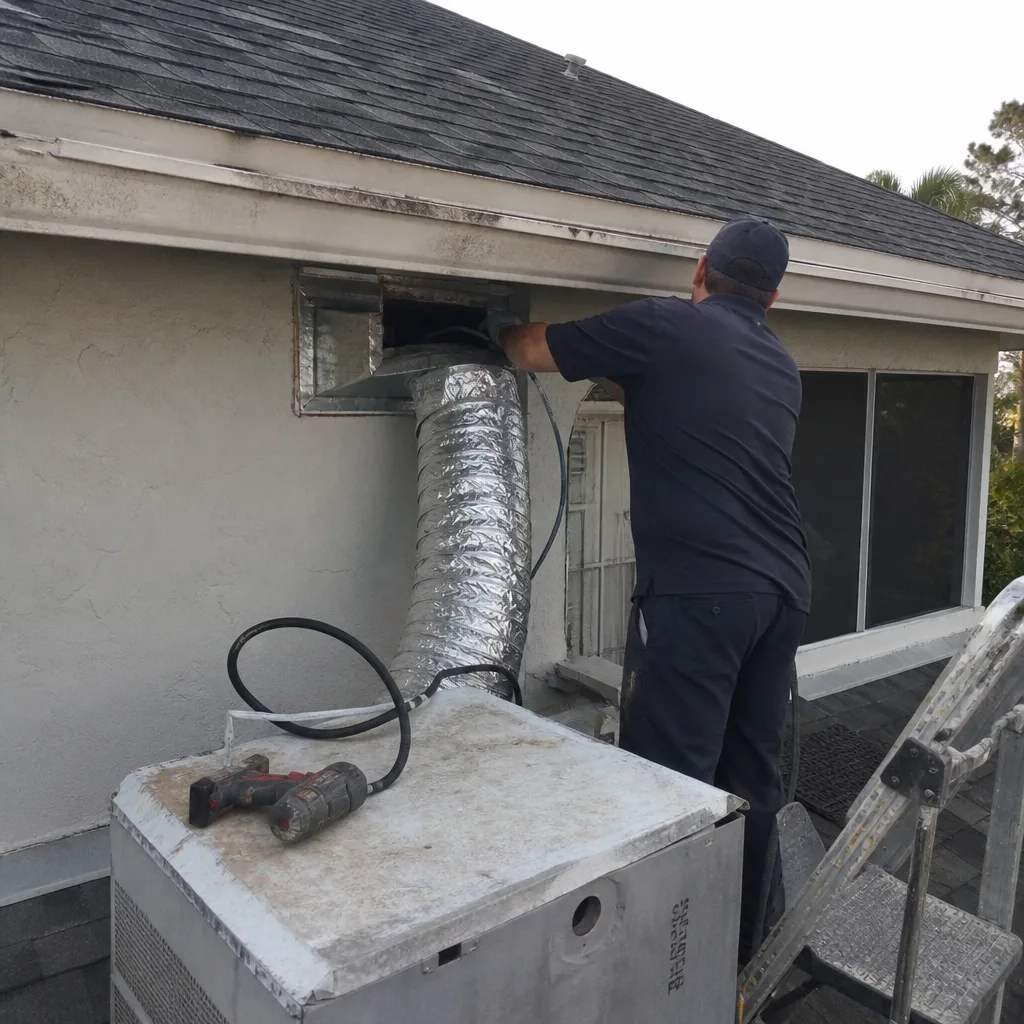 Before
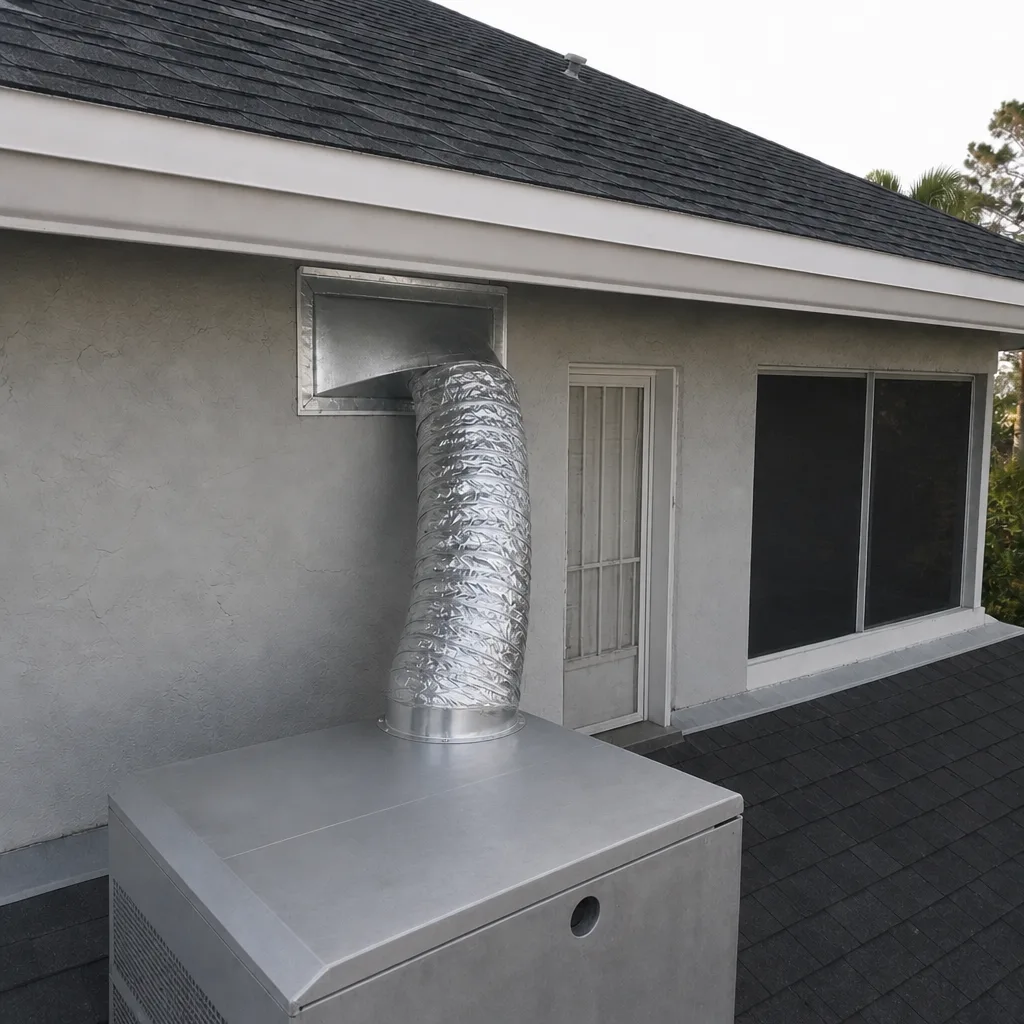 After
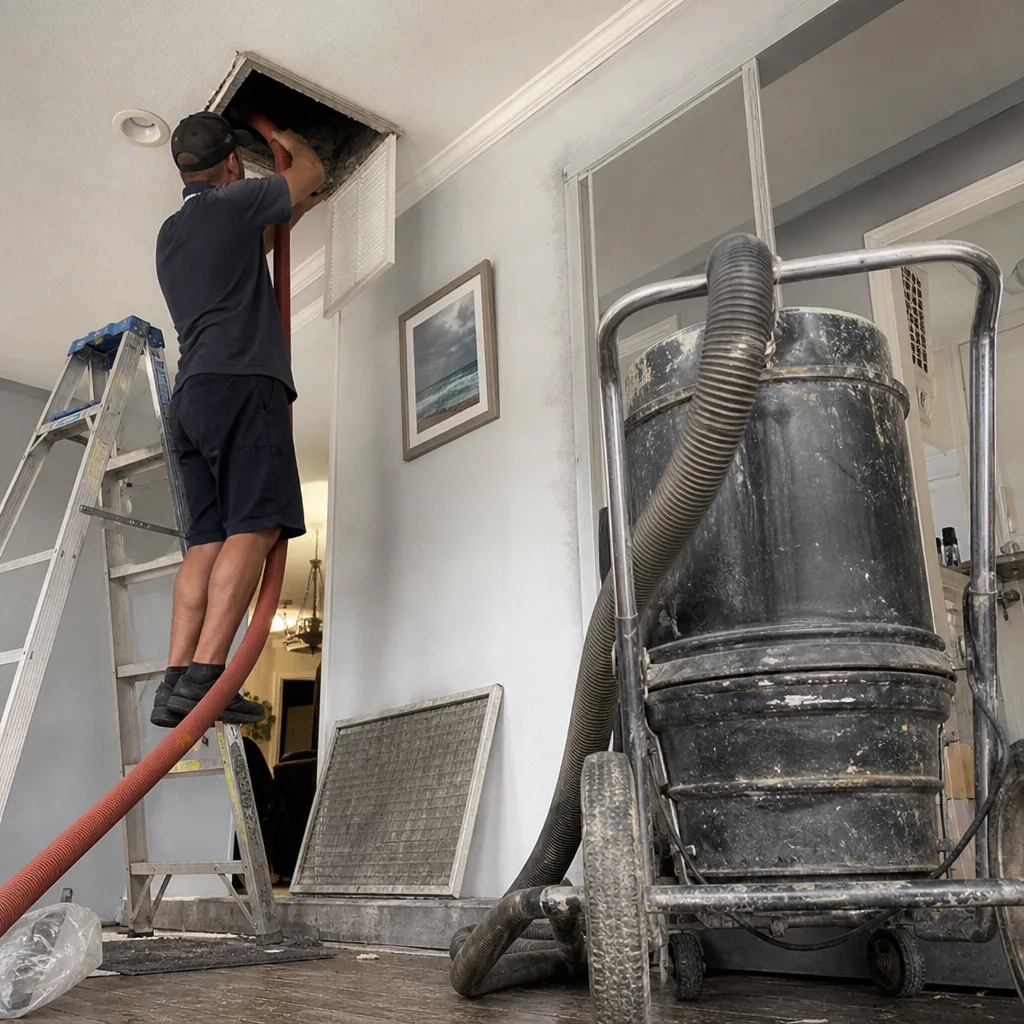 Before
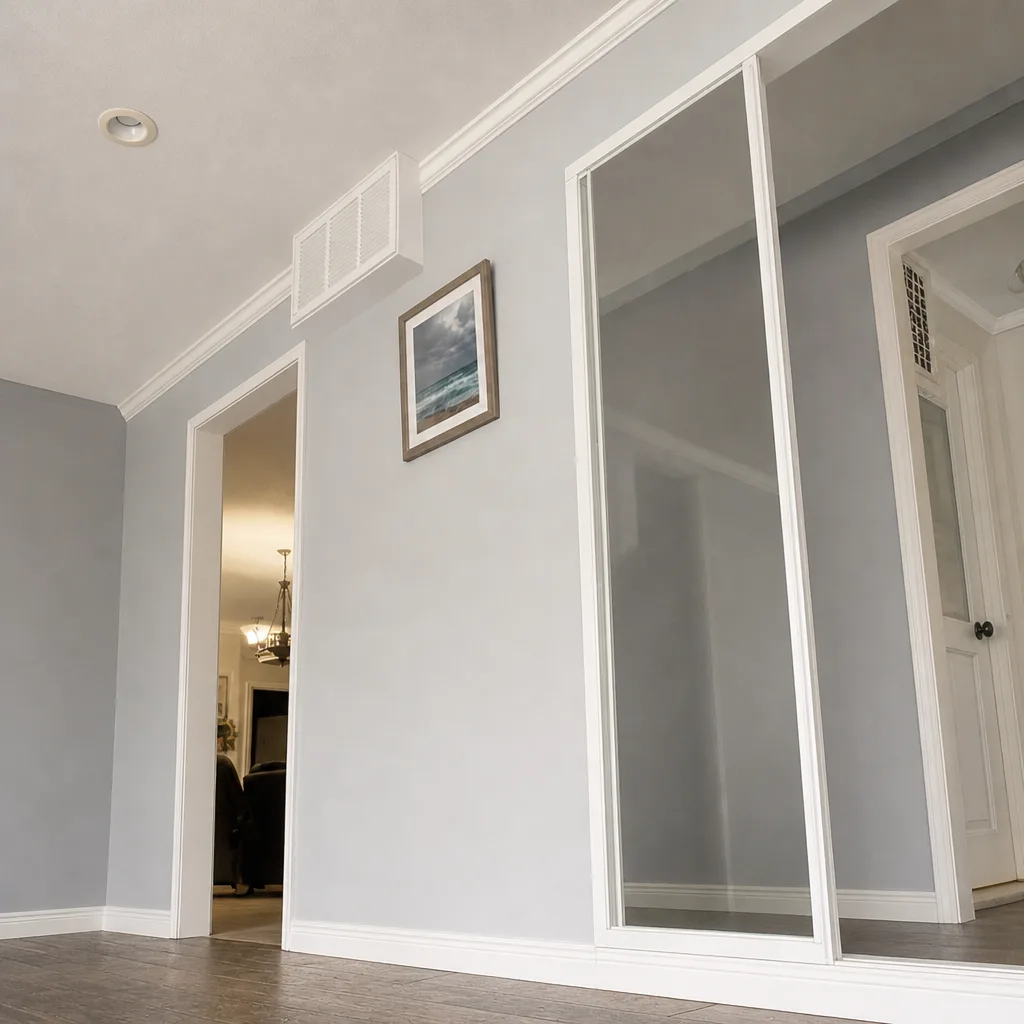 After
When to Call a Professional
Not every duct situation needs a professional. If the system was cleaned recently, registers are clean, and airflow is fine, there’s no urgent call. But several situations genuinely warrant a trained technician: visible debris on the registers, heavy pet hair accumulation, a household member with allergies or asthma, a recent major renovation that generated construction dust, an older Clearwater home whose ducts haven’t been cleaned in many years, or a dryer that takes unusually long to dry a load. Damaged ducts, disconnected joints, or airflow problems that persist after filter changes are also worth a call. So is any question about filtration hardware: if the home has Honeywell or Aprilaire components, having those serviced alongside cleaning keeps the air-quality picture together. Duct Cleaning Clearwater offers free estimates in Clearwater. Call (844) 238-0931. We answer 24/7. Fast dispatch from 7am to 7pm, Sunday through Friday.
Frequently Asked Questions
Air duct cleaning in Clearwater typically costs $350 to $900 for a full residential system in 2026, depending on home size, access point count, and system complexity. Condos and small homes tend to run $350 to $500, mid-size homes $450 to $650, and homes over 2,800 square feet with multiple zones can reach $750 to $950. These are estimated ranges; the written estimate sets the final price. Call (844) 238-0931 for an exact quote. Estimates are free.
Price gaps usually reflect different equipment and different scope, not different margins. A $149 quote may use consumer-grade equipment and clean only the accessible registers, while a $650 quote uses professional HEPA vacuum units and mechanical agitation tools from brands like Rotobrush or Nikro and cleans the trunk lines and plenum as well. Ask each contractor what equipment will be used and which parts of the system will be cleaned before comparing prices. Call (844) 238-0931 for a free scope-specific estimate.
Ask for before-and-after photos of your own ducts, not stock images. That’s the clearest, most straightforward evidence that the cleaning happened. We take photos on every job and show the homeowner what was found and what was cleaned. A contractor who won’t provide photos is a contractor worth questioning. Call (844) 238-0931 to book an estimate and ask what documentation comes with it.
Most homes don’t need annual cleaning. A reasonable interval is every three to five years for a typical household, shorter for homes with pets, allergy sufferers, or recent renovations. Clearwater homes with heavy year-round HVAC use and humid air cycling through the system tend to accumulate debris faster than dry climates. If it’s been more than five years since the ducts were cleaned, it’s worth getting an estimate. Call (844) 238-0931. Estimates are free.
No, and it shouldn’t be. Dryer vent cleaning is a separate service with its own safety purpose: it addresses lint buildup that’s a genuine fire risk. Bundling it into a duct cleaning quote usually means it gets short shrift. We quote it as its own line item. If a Clearwater contractor offers to “throw in” the dryer vent, ask how much time they plan to spend on it. Call (844) 238-0931 for a separate estimate.
Yes, in most cases, because we offer duct repair alongside cleaning. If a technician finds disconnected joints, crushed flex, or damaged register boots during the cleaning, we stop, document the problem with photos, and quote the repair in writing before continuing. You decide on the repair before the work resumes. That keeps the original agreed price intact and the repair transparent. Call (844) 238-0931 to book an estimate.
The Bottom Line
The difference between a $149 duct cleaning quote and a $650 one in Clearwater is the scope of work: different equipment, different labor hours, and a different definition of “clean.” The cheapest quotes usually clean registers only; the legitimate whole-system jobs use HEPA vacuum platforms, mechanical agitation tools from brands like Rotobrush and Nikro, and clean the trunk and plenum rather than just the visible registers. For a Clearwater home in 2026, a fair whole-system range is $350 to $900 depending on home size and system complexity. Get a written scope, ask about equipment by name, and confirm what’s included before the work starts. Then compare quotes against work, not against each other.
If you’re ready for a straight answer on your Clearwater home’s duct system, call us at (844) 238-0931. We answer 24/7. Fast dispatch from 7am to 7pm, Sunday through Friday. We’ll give you a free written estimate with a whole-system flat price, before-and-after photos of your own ducts, and a scope you can hold us to.
Written by the team at Duct Cleaning Clearwater.