
Last updated November 16, 2026
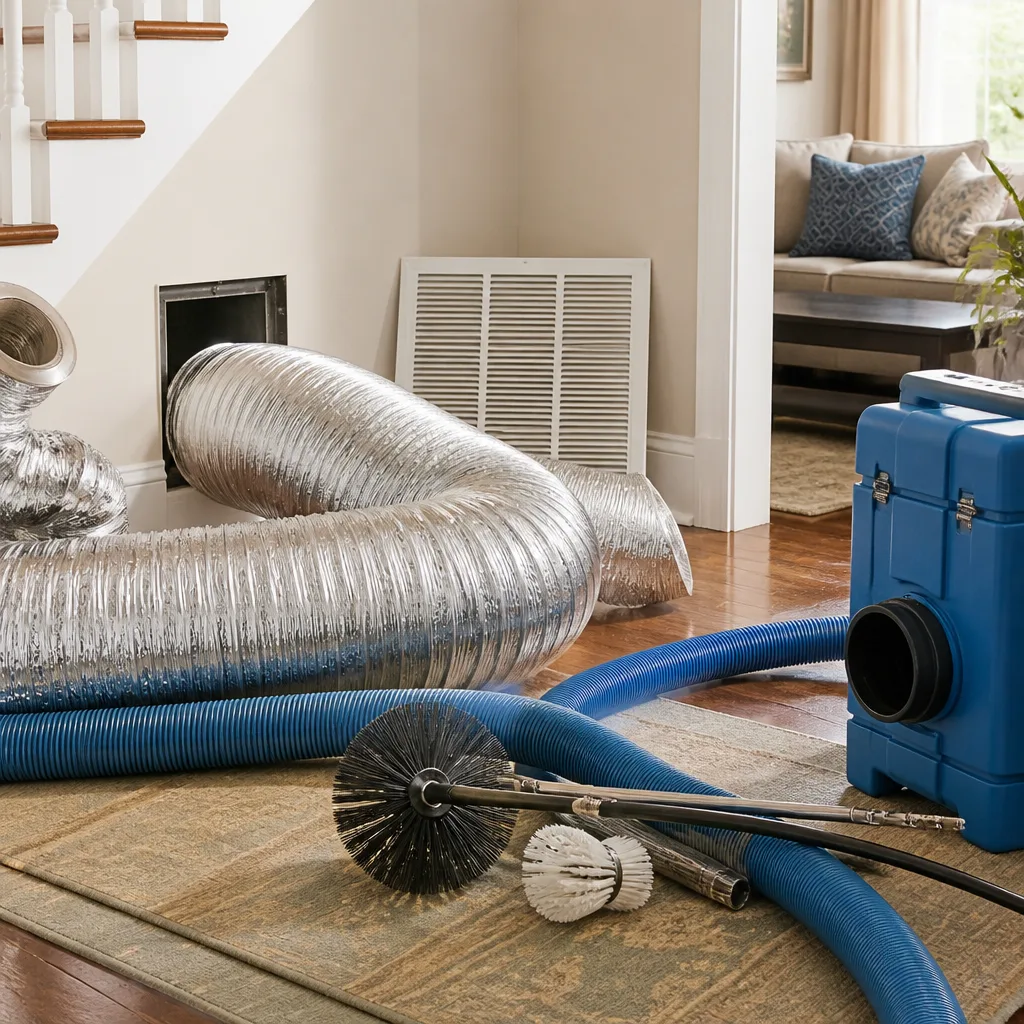 Whole-home duct cleaning
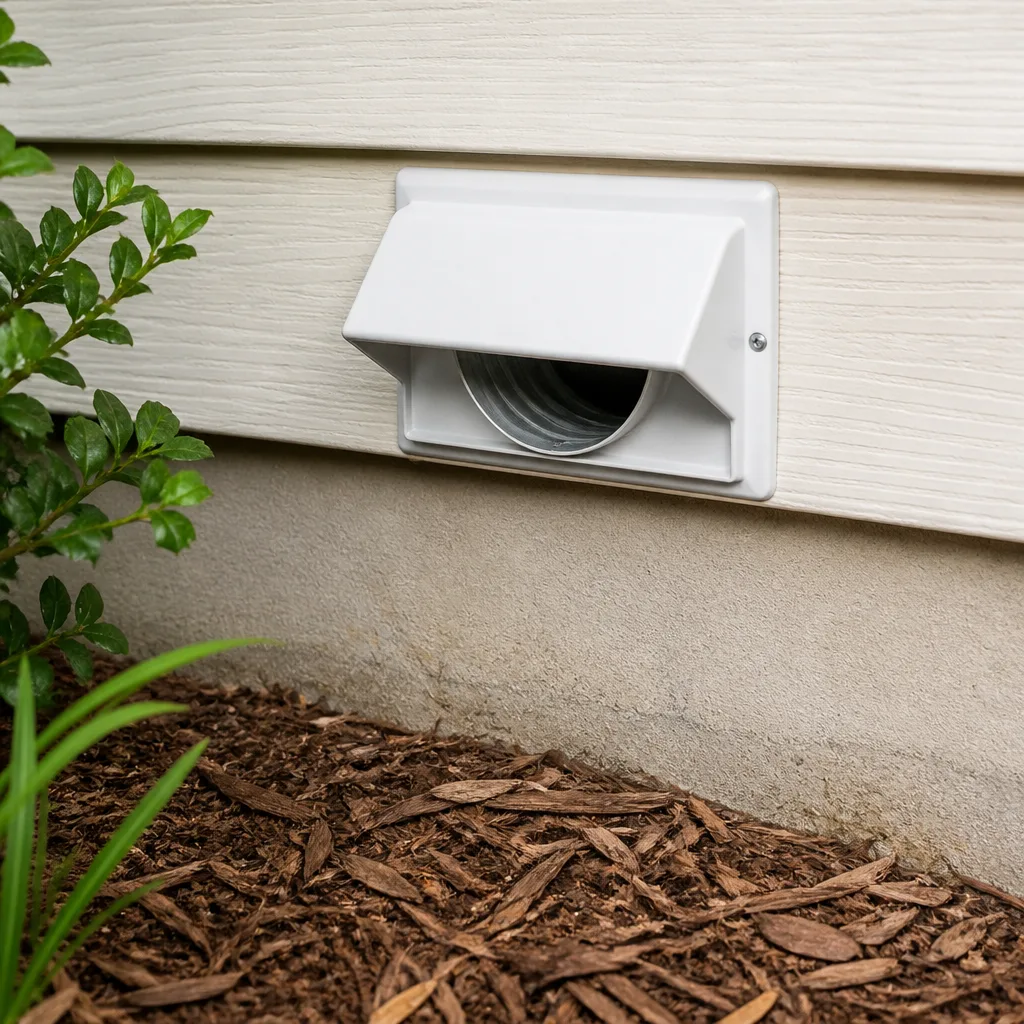 Dryer vent cleaning
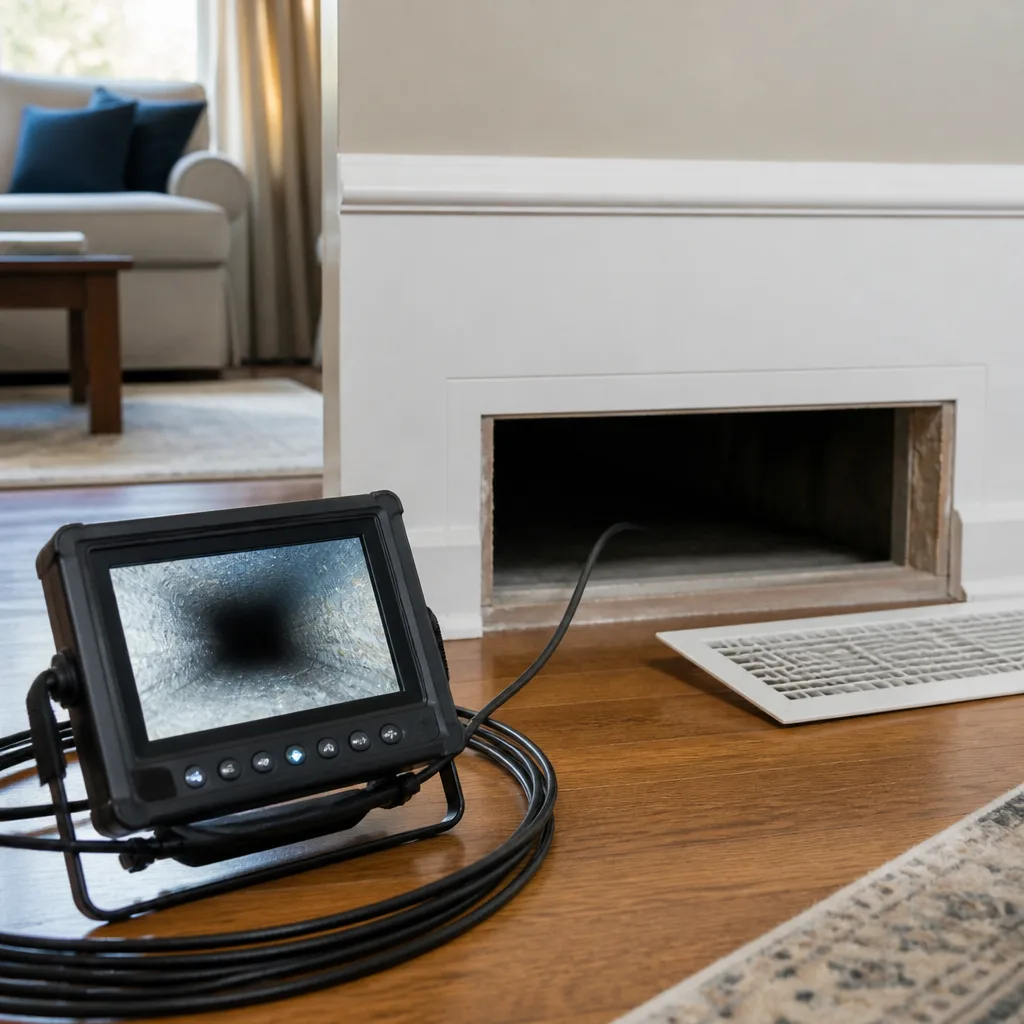 Camera inspection
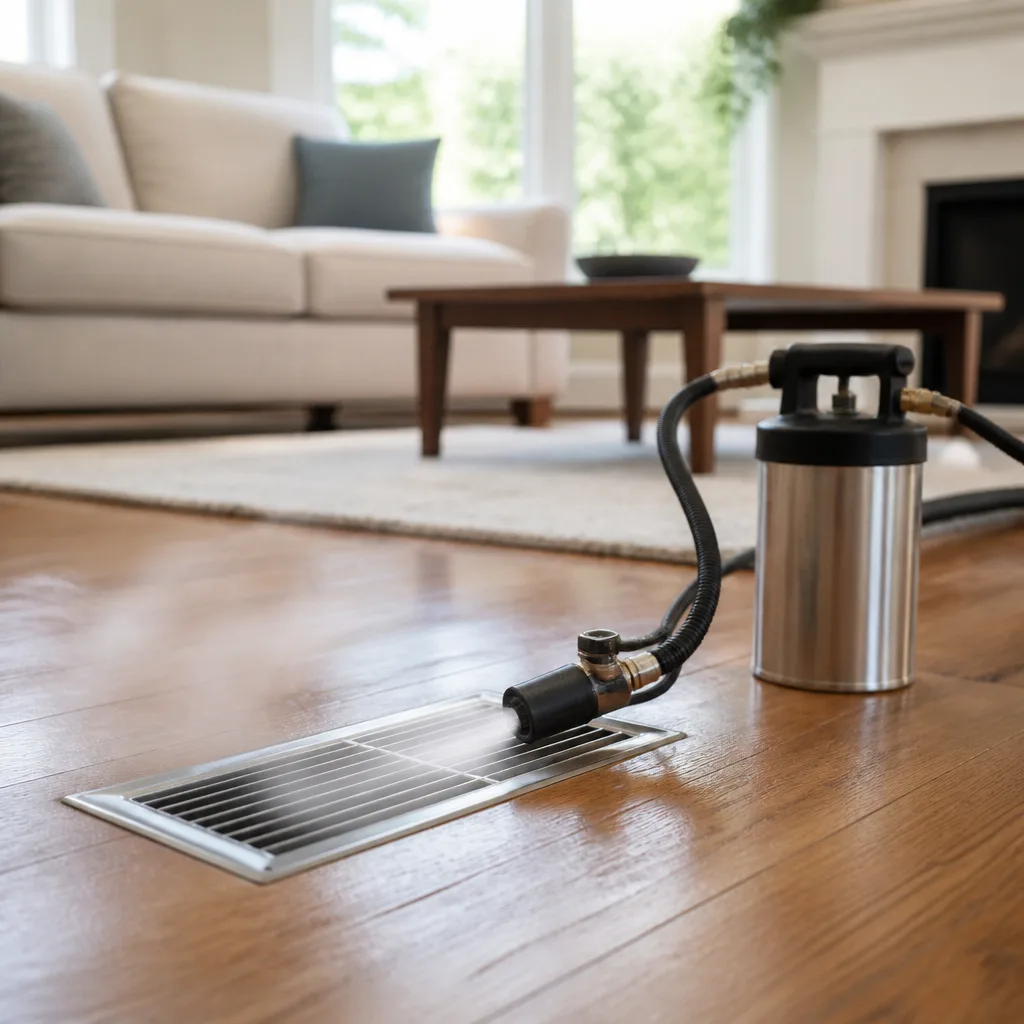 Sanitizing & deodorizing
Whole-system duct and dryer vent check with before-and-after photos - you see exactly what came out of your vents
That "$99 whole-house special" is a bait ad - the real number appears once they are in your hallway, or the "clean" is a shop-vac at the register. We photograph the inside of your ducts before and after instead.
Choosing the Right Air Duct Cleaning Brand: A Buyer’s Guide for Clearwater
Asking a duct cleaning contractor what equipment they run is not a brand-loyalty question. It’s a proxy for a much more useful one: did this company invest in purpose-built professional systems, or did they relabel consumer equipment and call it commercial? In Clearwater, the answers to those two questions lead to very different results inside your walls. The brand names printed on the machine tell you what kind of operation showed up and how seriously they take particulate capture. This guide breaks down what the major equipment brands actually indicate about a contractor’s capability, how to read their specifications, and how to verify the claims before you book.
Quick Answer
The right air duct cleaning brand in Clearwater is one that can name its equipment manufacturer, explain the drive system and filter specifications, and show negative-air and HEPA capture capacity. Brands like Rotobrush, Nikro, and Abatement Technologies appear on professional rigs because they meet a performance standard contractors depend on. If a company can’t tell you what it uses, treat that as a real signal about the rest of the job.
Styles & brands we work with
- Whole-home duct cleaning
- Dryer vent cleaning
- Camera inspection
- Sanitizing & deodorizing
Table of Contents
- Why Equipment Brands Are a Credibility Signal
- Negative Air Machine Brands and What Their Presence Means
- Rotary Brush Systems: Pneumatic vs. Electric Drive
- Truck-Mount Versus Portable Negative Air
- HEPA Filtration and Filter Specs to Ask About
- How to Verify Equipment Claims
- What Clearwater Homes Actually Need
- Clean Ducts and the Hardware Behind Them
Why Equipment Brands Are a Credibility Signal
Walk into a professional restoration job after a water loss and you’ll see a specific kind of machine parked in the hallway: negative air units with HEPA filters, driven by contractors who document every cubic foot per minute. That equipment exists because restoration work demands verifiable air quality. The presence of the same brands on a residential duct cleaning rig tells you the operator has chosen to meet that standard, not the lower bar set by a shop vacuum and a hose.
Brand names function here as a threshold indicator. A Rotobrush or Nikro system represents real capital investment and, more importantly, a design philosophy built around mechanical agitation and controlled capture rather than a blowout. Consumer-grade tools push debris into the air and hope it settles somewhere else. Professional systems pull it into a containment path and filter it.
In our experience working Clearwater homes, the difference shows up in the collection filter at the end of the job. If that filter is loaded with what came out of the ducts, the equipment did its job. When the technician’s tool is a vacuum attached to a register and the ducts still smell faintly of dust a week later, the system wasn’t designed for the depth of cleaning you paid for. Clearwater properties range from older block homes with decades of accumulated dust to newer builds in neighborhoods like Countryside and East Lake, and the equipment needs to handle both. For a fuller look at what a proper clean involves, see our air duct cleaning service page.
Negative Air Machine Brands and What Their Presence Means
Negative air machines come from a world where contractors take airborne contamination seriously. Abatement Technologies, Dri-Eaz, and HEPA-AIRE manufacture units used in mold remediation and restoration, where a seal-off and a pressure differential are non-negotiable. When one of those brands appears on a standard residential duct cleaning job, it signals the operator understands that cleaning ducts creates airborne particulate and that the air needs to be captured, not just displaced.
The mechanics are straightforward. A negative air machine sits in the containment area and pulls air through a HEPA filter, creating a slight pressure differential that keeps contamination from spreading into the living space. In well-planned rigs, the machine works in tandem with the duct cleaning system: the rotary brush dislodges material and the negative air unit captures it before it can settle on drywall or furniture.
What this means for you as a Clearwater homeowner:
- Higher capture efficiency during the cleaning process itself, which matters more for allergy sufferers and households with pets.
- A technician working inside a controlled environment rather than free-blowing debris into the room.
- A documented filter and pressure workflow rather than an open hose and an assumption.
Duct Cleaning Clearwater operates Abatement Technologies equipment for exactly this reason. The capability isn’t overkill on a residential job. It’s the difference between a cleaning that captures what comes loose and one that redistributes it. For a broader view of how we apply this in Clearwater homes, visit our Clearwater service page.
Rotary Brush Systems: Pneumatic vs. Electric Drive
Rotary brush systems are the workhorse of residential duct cleaning, and the drive type matters more than most homeowners realize. Pneumatic systems use compressed air to spin the brush head. Electric systems use a direct motor drive. Both can clean well. The difference is in control, torque, and how the brush behaves against the inside of the duct.
Electric drive systems, as deployed on the Rotobrush and Nikro platforms we run, offer consistent brush speed without relying on a compressor and offer better torque control when the brush meets resistance. That control is important for one specific reason: duct liner. Flexible duct with a soft interior lining can be damaged by a brush run at the wrong speed or with the wrong pressure. A well-designed electric drive lets the technician dial in the right combination for metal duct versus flex duct versus board.
A practical safety note: we inspect duct liner condition before running any rotary tool. Worn or degraded liner means the cleaning approach changes. If you’re unsure what condition your ducts are in, a technician can assess during a walkthrough.
What to ask a contractor about their rotary system:
- Is the drive electric or pneumatic, and why did they choose it?
- What brush head types do they carry for different duct materials?
- How do they handle flexible duct versus rigid metal?
- What happens if the brush contacts degraded liner or a disconnected joint?
Truck-Mount Versus Portable Negative Air
This is one of the most consequential distinctions in the industry and one of the least discussed on a consumer’s radar. A truck-mount vacuum system delivers sustained high CFM (cubic feet per minute) because the power source is a truck engine rather than an electric motor plugged into a wall outlet. A portable unit has to work with available power and delivers lower sustained flow.
Why sustained CFM matters: a duct system is a lot of surface area. If the vacuum can’t hold volume as the run gets longer, cleaning quality drops in the far reaches of the system, exactly where dust accumulates. Truck-mount systems can maintain flow across a whole-house job. Portable units vary widely in capability.
Neither type is wrong by default, but the difference should be part of the conversation. A truck-mount gets you reliable flow from the register furthest from the plenum. A portable might be the best option for certain multi-unit or light-commercial setups where a truck route doesn’t work. What matters is that the contractor knows which they’re running and why.
Duct Cleaning Clearwater’s stance is to match the system to the job. Clearwater homes with long duct runs to a back bedroom benefit from sustained flow. Light-commercial spaces need the right access and containment arrangement. When the equipment isn’t matched to the property, the clean is uneven and you’ll feel it the first hot week of the year.
HEPA Filtration and Filter Specs to Ask About
HEPA filtration in a duct cleaning collection system serves two functions: protecting the technician from inhaling dislodged particulate and keeping contamination out of the home during the job. Every unit on a professional rig should have a HEPA-level final filter. The specs underneath that claim vary, and this is where a homeowner can ask a simple question that reveals a lot.
Ask about the filter rating on the collection unit. A true HEPA filter captures particles at 0.3 microns with a stated efficiency. Cheaper units might use high-efficiency pleated filters and market them loosely. The word “HEPA-style” is a flag. So is any answer that skips the micron figure.
Additional specs worth asking about:
- Filter change interval. A technician running dirty HEPA filters is not capturing particulate the way the specs say.
- Pre-filter presence. A proper rig uses a pre-filter to extend the life of the HEPA stage and keep CFM stable.
- Seal integrity. Gaskets and door seals on the collection unit fail over time. Ask how often they’re inspected.
- Pressure gauge. A differential pressure gauge tells the technician when it’s time to swap a filter. A rig without one is guesswork.
The brands using HEPA filters in duct cleaning overlap with restoration equipment because the standard came from that world. Nikro builds collection and containment gear on that premise. The presence of a real HEPA stage tells you the company has chosen to meet a filter standard you can verify, not just a claim you have to accept.
How to Verify Equipment Claims
Most duct cleaning complaints trace back to a contractor who couldn’t actually deliver what was promised. Verifying equipment claims takes three or four minutes and gives you a much clearer picture of what will show up at your Clearwater address.
Use this sequence when you’re evaluating a brand:
- Ask what equipment they run, specifically. A contractor who can’t name a manufacturer or describe the drive system is telling you something. The answer should come easily and include brand names, not defensiveness.
- Ask about the collection filter. If they can’t state a filter class or micron rating, the containment claim is unverified.
- Ask what happens when they find damaged ductwork. A clean-only operator requires a second contractor visit. Duct Cleaning Clearwater repairs what we find during cleaning so you don’t have to schedule two companies.
- Ask for before-and-after photos of the system they cleaned. Photos of the actual job, not stock imagery. If they don’t have them, the cleaning wasn’t documented.
- Ask what their written scope covers. A professional clean should include registers, main trunk, branch lines, and the air handler housing unless there’s a reason to exclude any of those.
This last point is the one most homeowners skip, and it’s the one that catches the bait-and-switch pattern the industry earned its reputation for. One flat price per system, agreed before work starts, is a commitment. Per-vent pricing that climbs with each additional register isn’t. Before you book, read Duct Cleaning Clearwater to see how we handle scope and pricing on a Clearwater job.
What Clearwater Homes Actually Need
Clearwater’s mild winters mean the HVAC system runs hard through the long warm season. Running hard means more air movement, more filter loading, and more dust pulled through the system over the course of a year. The ducts in a Clearwater home accumulate material at a rate that reflects the climate: high-hours system operation rather than the seasonal bursts that colder parts of the country see.
That has a couple of practical implications for choosing an equipment-focused contractor.
First, sustained CFM matters more here because the system is running so many hours. A good clean restores airflow through the whole system, which affects comfort and equipment efficiency across the hot months. Weak-flow equipment can leave the far branches half-done, and you’ll feel it in a back bedroom or an upstairs landing.
Second, older Clearwater homes with duct systems that have been through several decades of service often show liner wear, disconnected joints, or flex duct that’s been rerouted more than once. That’s where the difference between a clean-only company and one that offers repair shows up. Duct Cleaning Clearwater repairs damaged or disconnected ductwork found during the job, so the clean actually sticks rather than blowing conditioned air into the attic within a week.
Neighborhoods with older housing stock, including parts of Dunedin-adjacent Clearwater and the older pockets near downtown, benefit most from a technician who can inspect the duct system as it goes, not just run a brush through and pack up. If your ducts are a couple of decades older than the HVAC unit, ask during the estimate how the contractor handles findings.
Clean Ducts and the Hardware Behind Them
Third differentiator worth weighing: whether the brand cleans the ducts and also addresses the filtration hardware behind them. Every home has a filter system, and its condition affects the clean almost as much as the ducts themselves.
Honeywell and Aprilaire air quality components handle filtration, humidification, and ventilation control in a large share of Clearwater homes. Duct Cleaning Clearwater stocks and services these components, which means the filter housing, cabinet, and media can be assessed and corrected during the same visit as the cleaning. That matters because a poorly seated filter cabinet or a clogged media rack pushes dust around the bypass and back into the airstream.
For a clean to actually do what you paid for, three things have to line up:
- The ducts get cleaned with professional-grade negative-air and rotary equipment.
- The filtration hardware on the air handler side is assessed and, if needed, corrected.
- The returned air actually flows through the clean system, unsealed and unfiltered bypasses found and closed.
Dryer vent cleaning is the natural third piece of this scope. Lint accumulation in a dryer vent is a documented fire hazard, and it’s not optional upkeep. It’s safety maintenance. Our dryer vent cleaning service treats it that way, as a distinct job with its own equipment and its own documentation. For a Clearwater homeowner with an aging duct system, a loaded filter, and a dryer vent that hasn’t been touched in a couple of years, the whole ventilation package is worth evaluating at once.
Common Mistakes to Avoid
- Accepting a per-vent price. Per-vent pricing climbs as the job unfolds and creates an incentive to add registers. A flat price per system agreed up front is the standard professional operators use.
- Booking on price alone in Clearwater’s market. The lowest bid in a Clearwater contractor search often reflects repurposed equipment and a shallow scope. When quotes differ by a wide margin, the equipment is usually the reason.
- Skipping the equipment questions. Most homeowners don’t ask about the drive system or filter spec. A brand that can’t answer these questions is telling you something you should hear before the job, not after.
- Assuming a clean-only contractor will flag duct problems. A clean-only operator sometimes keeps a job moving rather than stopping to deal with a disconnected joint. Ask upfront what happens when damage is found.
- Not asking about before-and-after photos. Photos of the actual system you own are the only objective evidence the work was done. Stock images and verbal assurances aren’t evidence.
- Treating the dryer vent as an add-on. A dryer vent is not the same equipment as the air ducts and needs its own cleaning method. If a company punches it into a duct cleaning quote without separate attention, ask about the specific method.
- Ignoring the filtration cabinet. A clogged media filter or a warped filter housing defeated the clean before the technician left. Ask whether the filtration hardware will be inspected during the service.
See the difference
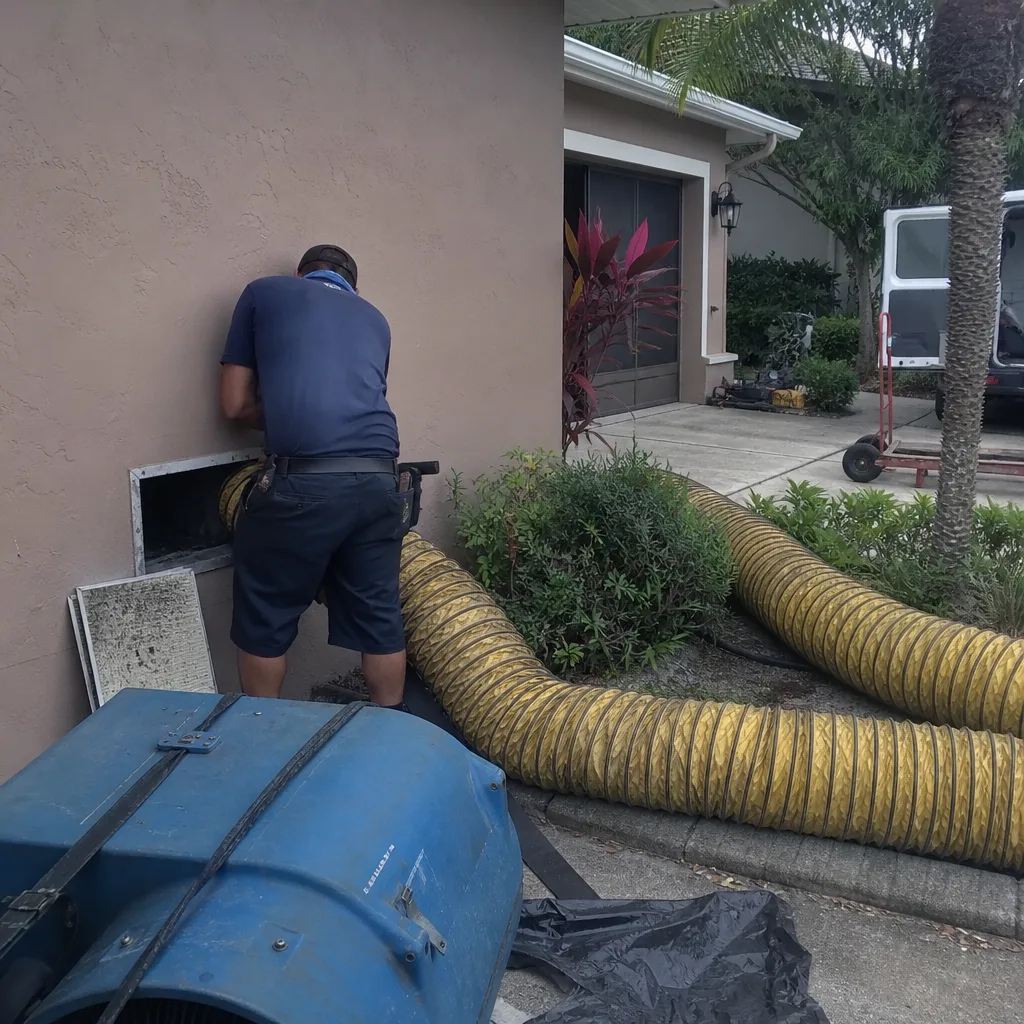 Before
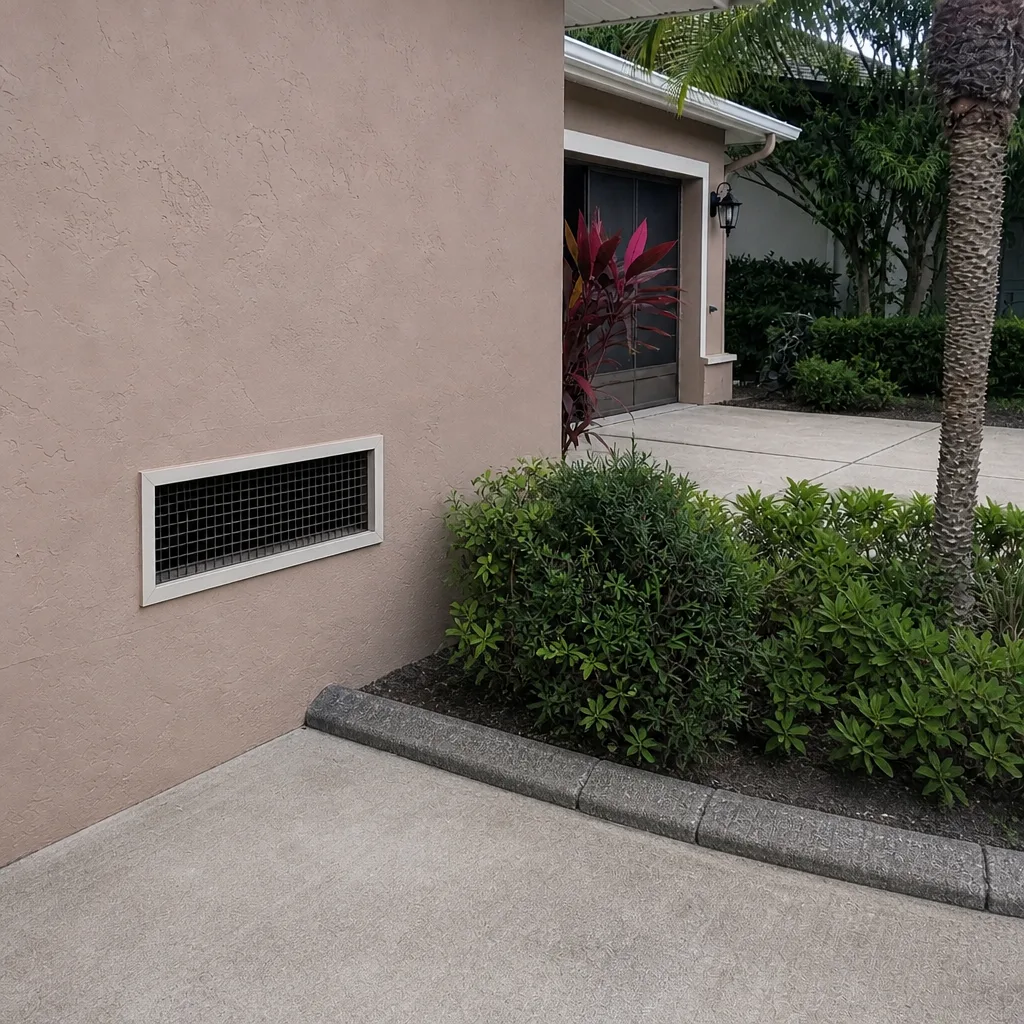 After
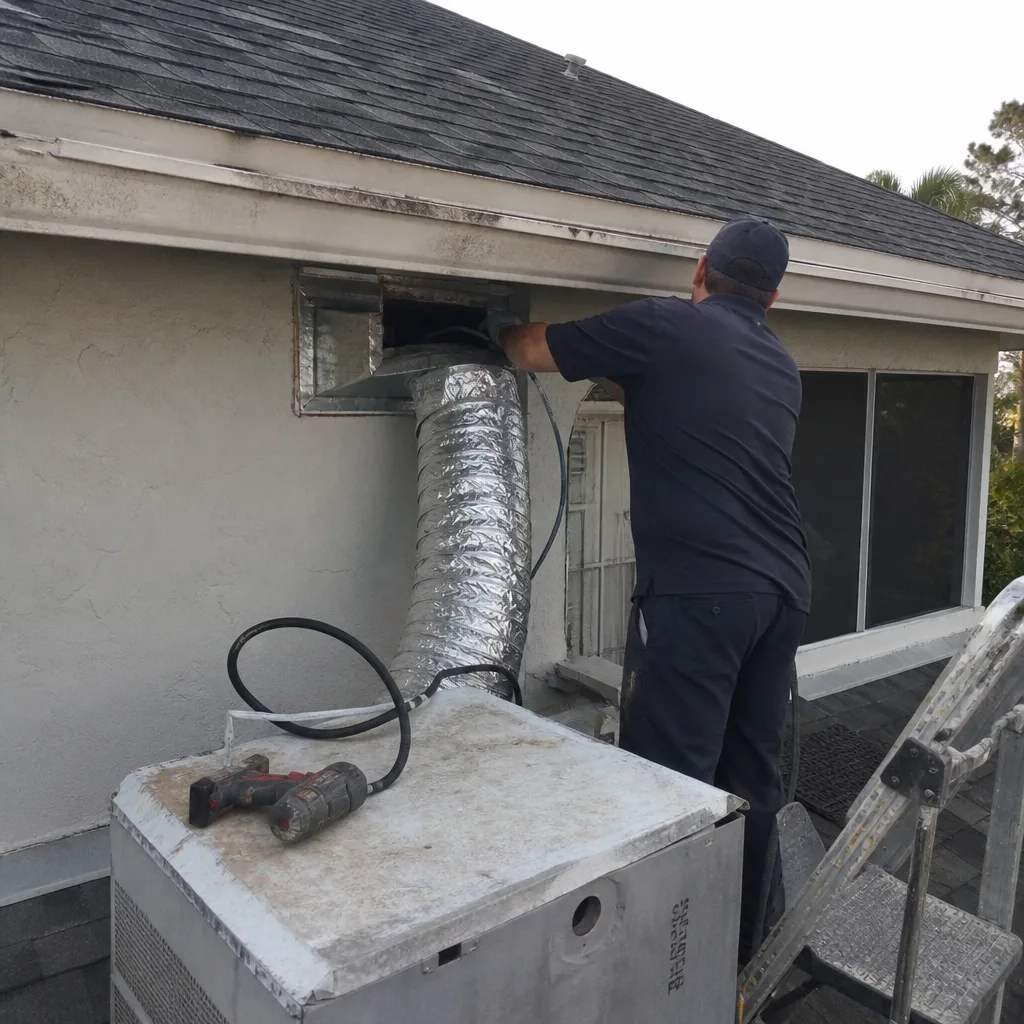 Before
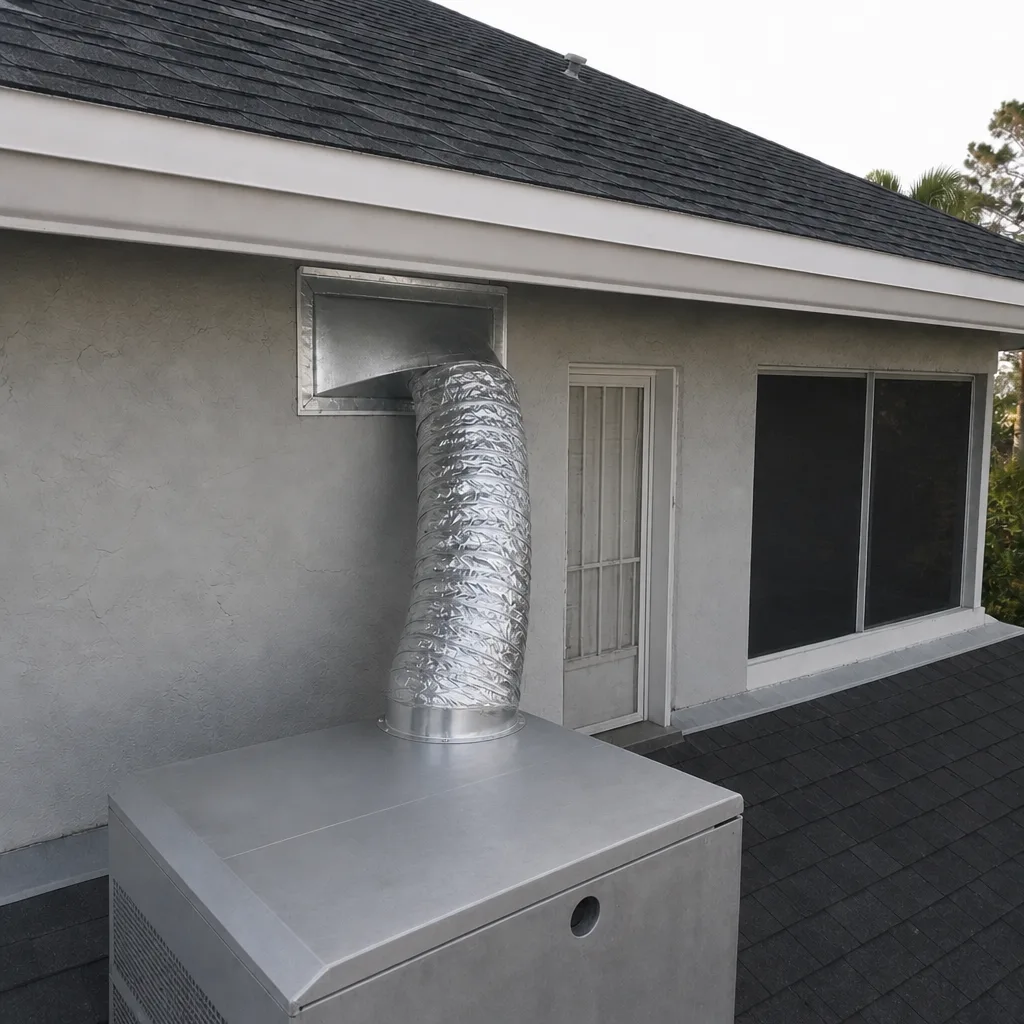 After
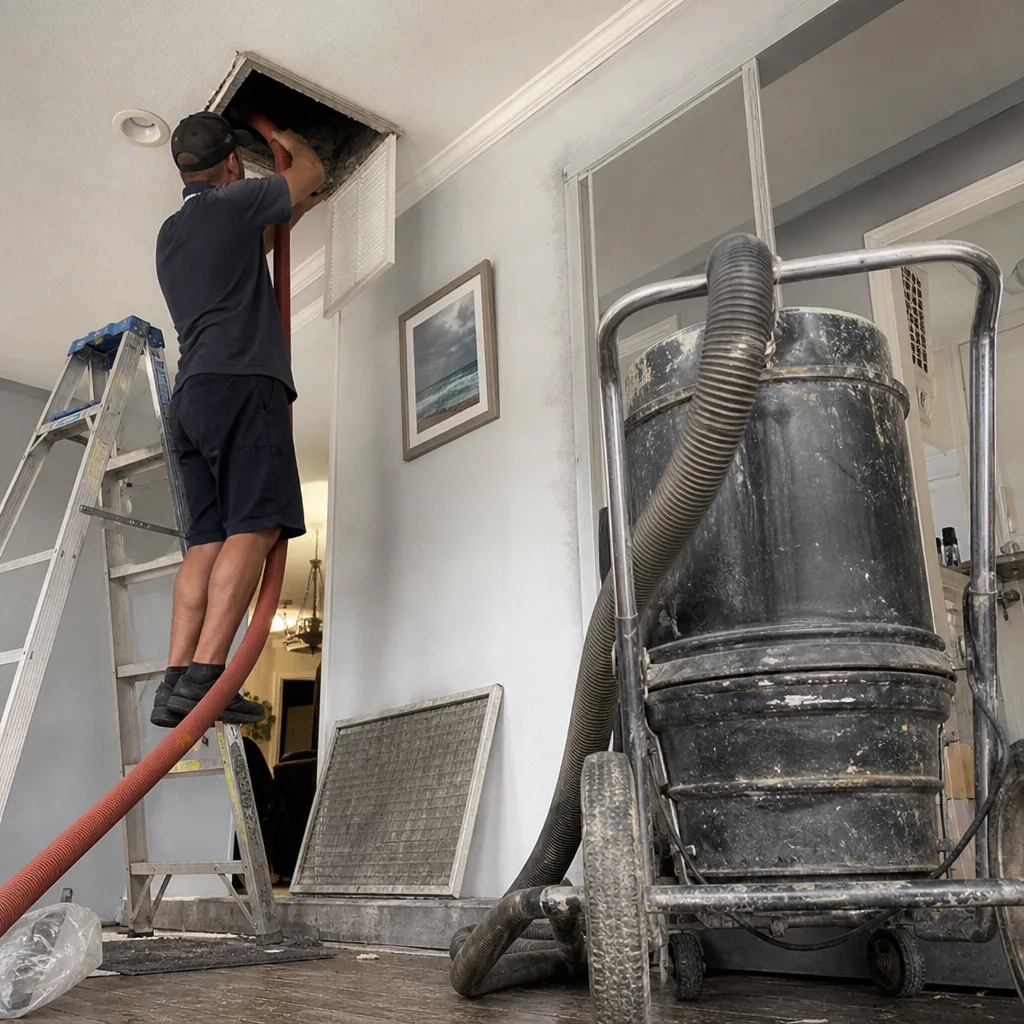 Before
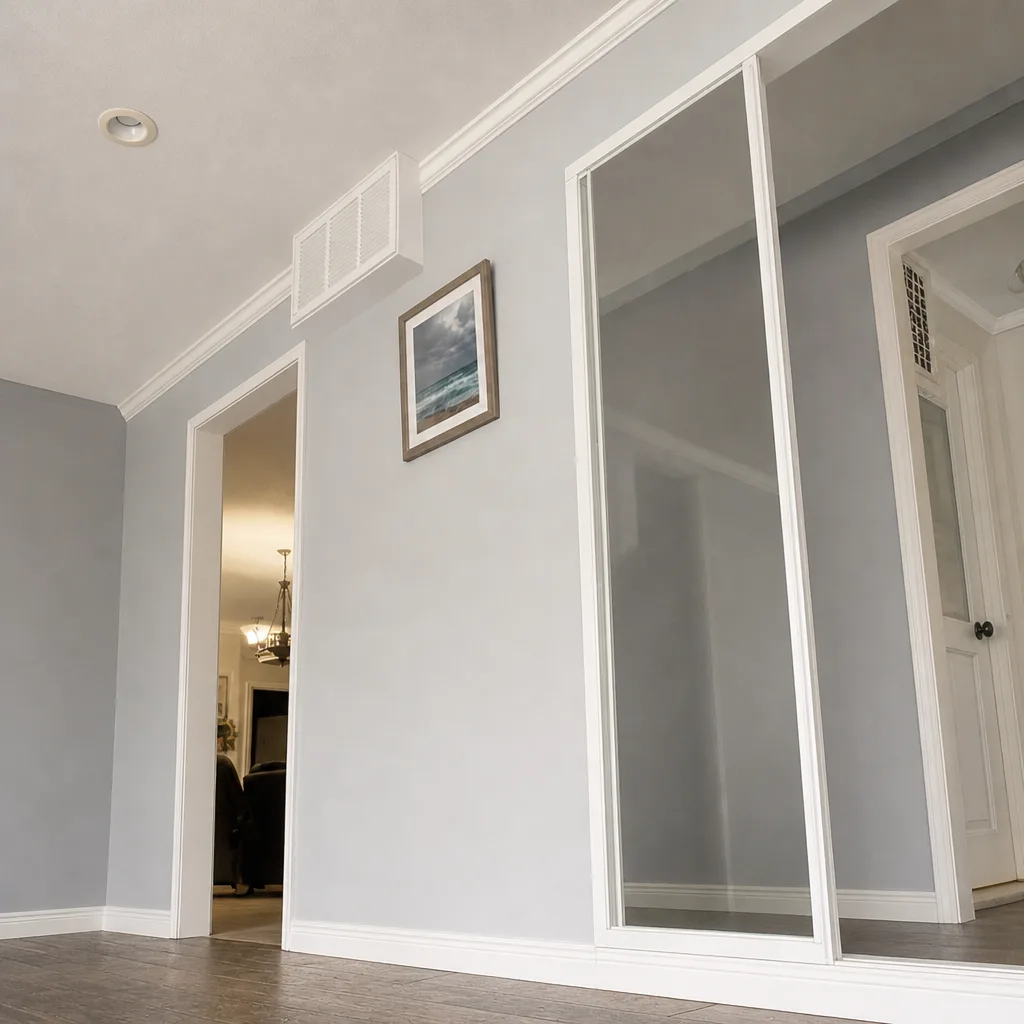 After
When to Call a Professional
Call a professional when the signals point to more than surface dust. Visible debris on registers, a musty smell that returns within a week of filter changes, or an airflow drop across multiple rooms are all reasons to get a documented assessment rather than another filter swap. Pet owners in Clearwater homes often notice a faster re-accumulation of dust than the filter change interval suggests, which points to the system rather than the filter. Allergy sufferers should look at a clean when the symptom pattern tracks the HVAC cycle. After a renovation, air duct cleaning is worth a walkthrough before drywall dust settles into the liner. When you find disconnected or damaged ductwork during any of these moments, that’s the repair case and it should be fixed in the same visit if the contractor offers it. Duct Cleaning Clearwater offers free estimates in Clearwater. Call (844) 238-0931. We answer 24/7. Fast dispatch from 7am to 7pm, Sunday through Friday.
Frequently Asked Questions
Rotobrush, Nikro, and Abatement Technologies are the brands to look for on a professional rig, though the presence of a brand alone doesn’t guarantee quality. What matters is whether the contractor can explain the drive system, filter specifications, and negative-air setup behind the name. A company that names the brand and describes how it’s configured is demonstrating real capability. One that only name-drops without specifics hasn’t told you anything yet. Call (844) 238-0931 for an exact quote on your Clearwater home. Estimates are free.
Duct cleaning in Clearwater is priced per system by a written estimate, not by the vent count, and the estimate is the price. Whole-system ranges depend on the number of branches, system age, and whether repair is needed. Any per-vent quote is a flag, because it creates an incentive to add vents during the job. Call (844) 238-0931 to schedule a free estimate; you’ll get one flat price per system before any work begins.
Cheap quotes usually reflect cheaper equipment. A repurposed shop vacuum and a brush on a stick costs far less than a Rotobrush system paired with a HEPA-filtered negative air machine, and the price reflects it. Cheaper quotes also often use per-vent pricing that grows during the job. The cheaper number at the start is not the cheaper number at the end. Call (844) 238-0931 for an honest whole-system estimate.
The two forms of evidence are before-and-after photos of your own ducts and the collection filter at the end of the job. If the filter is loaded, the cleaning captured real material. Photos of your actual system are the documentation. A technician who can’t produce either hasn’t demonstrated that the work was performed. Duct Cleaning Clearwater provides before-and-after photos on every job. Call (844) 238-0931 for a free estimate.
Clearwater systems run hard through the long warm season, so the timing depends on the household. Homes with pets, allergy sufferers, older duct systems, or recent renovation work generally benefit from cleaning sooner than the general recommendation. If you notice recurring dust, a smell that comes back after filter changes, or an airflow drop, that’s the trigger rather than a fixed number. Call (844) 238-0931 and we’ll assess your system and give a straight recommendation.
Some can and some can’t. A clean-only contractor usually refers damaged ductwork to a separate company, which means a second visit and a second invoice. Duct Cleaning Clearwater offers air duct repair alongside cleaning, so disconnected joints and worn sections can be corrected during the same appointment. If you’ve had a prior contractor flag damage they wouldn’t fix, that’s a call worth making. Call (844) 238-0931 for a free estimate.
The Bottom Line
Equipment brands are a proxy for the rest of the job. A contractor who names Rotobrush, Nikro, or Abatement Technologies and can explain the drive system, filter spec, and containment setup has demonstrated an investment threshold you can verify. A contractor who can’t is telling you what kind of operation will show up. Match the equipment to the Clearwater property’s needs: sustained flow for long duct runs, HEPA capture for allergy and pet households, repair capability if the system is older, and dryer vent service as its own safety-focused job. When a company can do all four, the clean actually does what you paid for. Duct Cleaning Clearwater brings professional-grade equipment, one flat price per system agreed before work begins, and before-and-after photos of the ducts we cleaned. Ready to book a free estimate? Call (844) 238-0931. We answer 24/7. Fast dispatch from 7am to 7pm, Sunday through Friday. We’re closed Saturday.
Written by the team at Duct Cleaning Clearwater.